Venice is expensive. This is not negotiable and it is not going to change. It is an island city with no road access, where everything — food, building materials, appliances, and the plumbers who fix the pipes — must arrive by boat. The logistics of running a city on water inflate costs across every category, and the tourist industry, which knows that visitors cannot easily substitute a cheaper alternative, has layered its own significant markup on top of that structural cost.
But expensive is not the same as unmanageable. The gap between a clueless tourist day in Venice and a smart budget day in Venice is wider than in almost any other major European city. In Paris or Rome, an uninformed food choice might cost you an extra €5. In Venice, sitting at a table in Piazza San Marco for a coffee and a pastry can cost €30 where the bar alternative costs €3. The difference is not about what you do — it is about knowing where the money leaks and closing those gaps before you arrive.
Before You Book: The 2026 Day-Tripper Access Fee
New since 2024 and continuing in 2026: Venice charges a “Contributo di Accesso” (Access Fee) to day-trippers — anyone entering the historic center without an overnight booking — on roughly 60 peak dates between April and July. For 2026 that means every Friday, Saturday, and Sunday from early April through July 26, plus a handful of extended holiday blocks (Easter week, late April, early June). The fee runs €5 per person if booked at least four days ahead, or €10 for late/last-minute registration, and applies from 8:30am to 4pm. Children under 14 are exempt, and anyone with an overnight stay in Venice is automatically exempt too — but even overnight guests should register for the exemption QR code, since spot checks happen and fines run up to €300.
The minor islands (Murano, Burano, Torcello, Lido) are excluded. Register and pay (or claim your exemption) at the official portal, cda.veneziaunica.it — no third-party booking sites are needed and any site charging extra for this is a markup you don’t need to pay. If your trip falls after July 26, 2026, the fee doesn’t apply for the rest of the year under the current calendar.

How Venice Pricing Works
The single most important thing to understand about eating in Venice: you pay more to sit down. A coffee at the bar in any Venice café costs €1-2. That same coffee, ordered at a table with a waiter, costs €4-8. At a café on Piazza San Marco with a seat facing the Basilica, the same coffee can cost €10-15 during live music hours when a supplement is added.
This is not price gouging in the usual sense — table service in Venice involves a waiter, a view, and genuinely scarce real estate on one of the world’s most famous squares. The posted prices are legal and required by Italian law to be displayed outside. But if you are budget-travelling and order your coffee sitting down at Caffè Florian because you did not read the menu posted outside, the €12-15 bill is your own doing and no one’s fault but yours. The menu is always outside. Read it before you sit.
The music supplement: cafés on the Piazza San Marco sometimes add a live music surcharge of €6 or more per person when their house orchestra or pianist is playing. This is also posted on the menu. The music is sometimes very good. Knowing about the surcharge in advance means you can decide whether you want it — rather than discovering it on the bill.
The rule: eat and drink at the bar. Standing at the counter costs the bar price. Moving to a table triggers the table price. Apply this across breakfast, lunch snacks, and afternoon drinks and you save €20-30 per day without giving up any food quality.
Food: The Cicchetti System
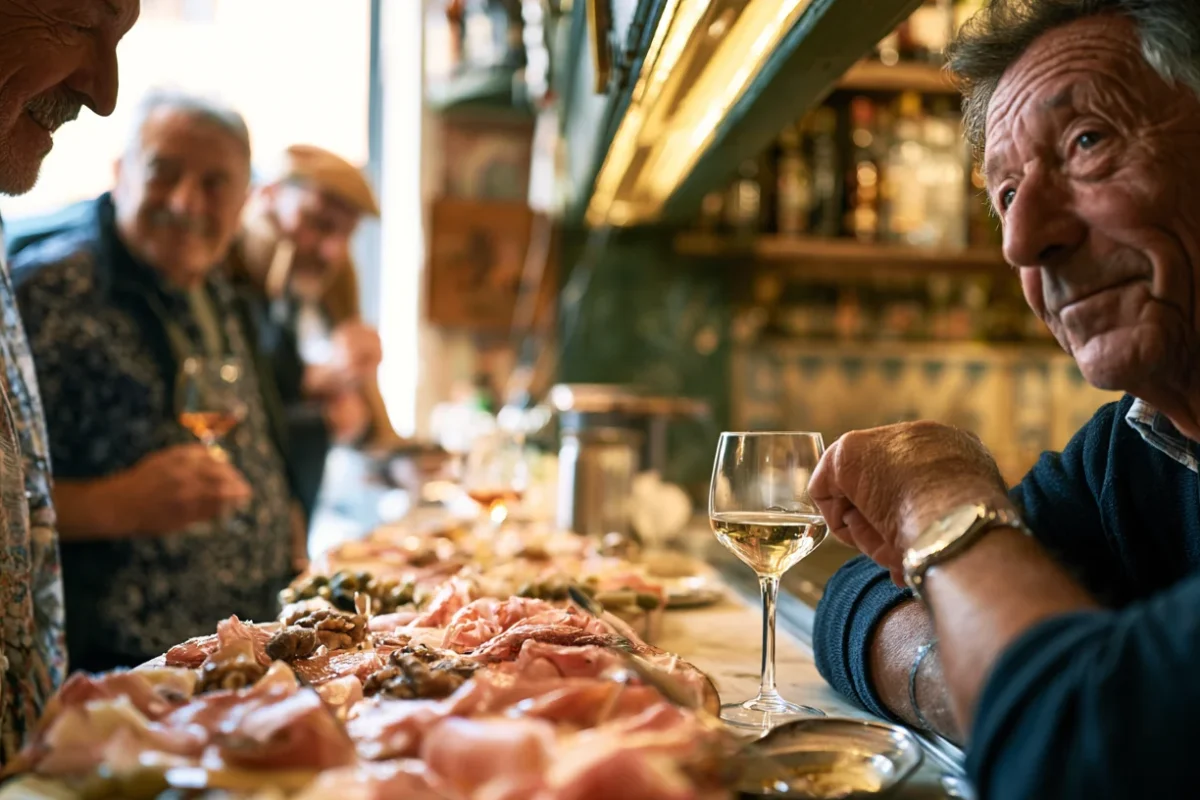
Cicchetti (the Venetian equivalent of tapas — small bites of crostini, fried seafood, stuffed vegetables, polenta slices) eaten at a bacaro counter with a small glass of wine is the cheapest and most authentic way to eat in Venice.
What it costs: individual cicchetti typically run €1.50-4 per piece, and an ombra (a small glass of house wine, roughly 100ml) usually costs €1.50-3 at a neighbourhood bacaro. A full cicchetti lunch — five or six pieces plus two glasses of wine — comes to roughly €12-18 depending on what you choose and where you are. This is significantly less than a sit-down tourist lunch for the same number of calories. Prices vary bar to bar, so treat these as a planning range rather than a fixed menu.
The best cicchetti bars are clustered around the Rialto market area (the streets behind the fish market, especially around Calle dei Botteri and the area around Cantina Do Mori) and along the Fondamenta della Misericordia in Cannaregio. Alla Vedova in Cannaregio and Cantina Do Mori near the Rialto are both frequently cited as some of the most reliable traditional bacari in Venice for quality cicchetti. The key rule: avoid bars immediately adjacent to major tourist sights. The same cicchetti — sometimes from the same supplier — cost significantly more within 100 metres of the Piazza San Marco than they do in a Cannaregio side street.
For dinner, sit-down restaurants in the Dorsoduro, San Polo, and Cannaregio areas run roughly €15-25 for a main course at a genuine neighbourhood trattoria. Avoid any restaurant with laminated picture menus or a person standing outside calling you in — these are tourist traps and the food reflects it.
Supermarkets exist in Venice — look for Conad or similar chains near the train station area and in Cannaregio — and are a legitimate resource for breakfast supplies, lunch picnic ingredients, and evening snacks. Buying your morning yogurt, fruit, and bottled water at a supermarket rather than a tourist café saves a material amount per day across three days. A supermarket baguette with cheese and cold cuts eaten on a campo bench is cheaper than any sit-down lunch option and lets you eat in a square without paying table service.
Water
Venice’s public drinking fountains (fontanelle) provide clean tap water, free, with dozens across the city. Fill a reusable bottle at any fontanelle rather than buying bottled water throughout the day. At €2-3 per half-litre at a tourist café, buying water all day in summer adds up fast.
Transport: Vaporetto vs. Walking
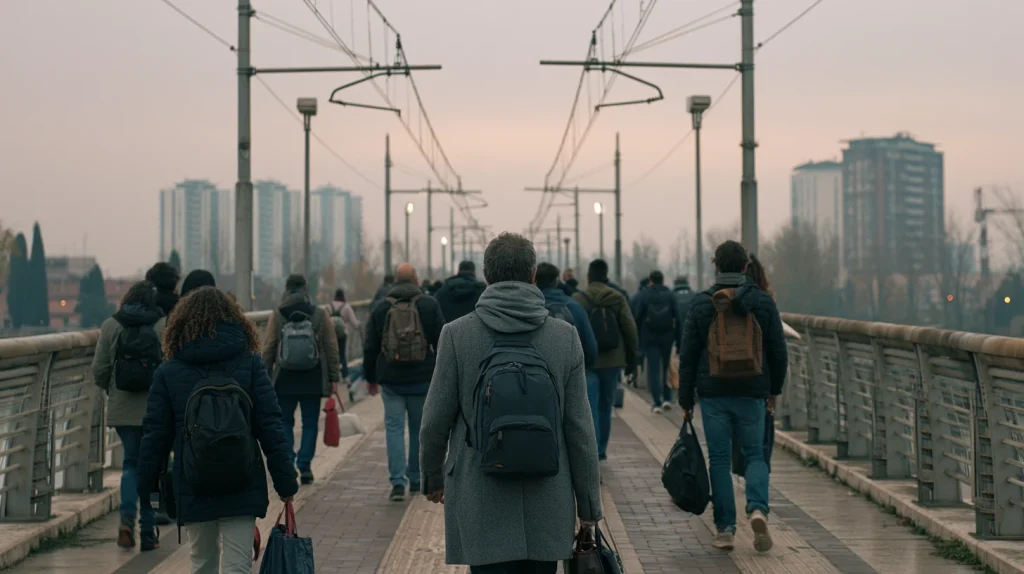
Walking is free and covers 80% of what you need to do in Venice. The island is small enough that you can cross it on foot in 35-40 minutes. For most first-time visitors, the major question is whether to buy a vaporetto pass or pay per ride.
Verified 2026 ACTV prices:
- Single ticket: €9.50, valid 75 minutes, unlimited rides within that window
- 24-hour pass: €25
- 48-hour pass: €35
- 72-hour pass: €45
- Rolling Venice Card (ages 6-29, €6, valid one year): drops the 72-hour pass from €45 to €27 — the single biggest discount available to young travellers
Break-even calculation: if you take 3+ vaporetto rides per day, the multi-day pass is cheaper than individual tickets. A round trip to Murano, Burano, and Torcello alone eats up 4-6 single tickets (€28.50-57), so the 24-hour pass pays for itself on an island day almost immediately. For a three-day trip that includes an island day trip, the 72-hour pass almost certainly saves money.
Note that regular ACTV tickets are not valid for Marco Polo Airport transfers — that’s the separate Alilaguna water bus network (around €18 one-way) or the ACTV land bus/Aerobus to Piazzale Roma.
The traghetto (gondola ferry across the Grand Canal, rowed standing up by two gondoliers) costs €2 per person and takes about 2-5 minutes. There are several crossing points including San Tomà, Santa Sofia, and Dogana. It is the honest answer to the question “how do I experience a gondola without paying €90.”
Sights: Free vs. Paid
Free:
- Piazza San Marco (the square itself)
- Rialto Bridge and market exterior (fish and vegetable market, Tue-Sat mornings)
- Walking any canal, sestiere, or neighbourhood
- Jewish Ghetto streets and campo (museum and synagogue tours cost extra)
- Public beaches on the Lido
- Most Venetian churches during public visiting hours (confirm before entering — some charge small fees)
- Squero di San Trovaso gondola workshop, viewed from the opposite canal bank
- Fondamenta delle Zattere (Dorsoduro waterfront)
- Campo Santa Margherita (Dorsoduro’s main neighbourhood square)
Low cost — churches: The Chorus Pass covers 16 of Venice’s major historic churches (including the Frari, with its Titian and Bellini works) for €16, valid one year, with a single admission to each. Individual church entry runs about €3, so the pass pays for itself after roughly 6 churches. If churches are a real priority, it’s worth it; if you’ll see two or three, pay individually.
Paid but worth it — updated 2026 prices:
- St. Mark’s Basilica: basic admission is €10 (mandatory reservation strongly recommended in peak season); combined tickets adding the Pala d’Oro, Museum, and Loggia dei Cavalli run €20-30
- Doge’s Palace: doesn’t sell a standalone ticket — it comes bundled in the St. Mark’s Square Museums ticket (Doge’s Palace + Correr Museum + Archaeological Museum + Marciana Library) at €30 booked 30+ days ahead, or €35 full price
- Gallerie dell’Accademia: roughly €15, sometimes up to €17-20 in peak season — free on the first Sunday of the month as a state museum
- Peggy Guggenheim Collection: roughly €17.50-18
- Venice Museum Pass (all civic museums beyond St. Mark’s Square, including Ca’ Rezzonico and Ca’ Pesaro): €40 adult, valid 6 months — worth it once you’re adding a third venue beyond the Doge’s Palace package
Accommodation: Venice vs. Mestre
Staying in Venice itself is ideal but expensive. Hostel dorm beds across the city average around €13-30 per night depending on season and location, with peak-season and weekend spikes pushing well above that — budget €20-40 as a realistic range for a central dorm bed in high season. Mid-range private rooms in Cannaregio or Castello start at roughly €80-120.
The mainland alternative: Mestre, the urban area immediately across the bridge from Venice, has hotels starting at €40-60 for a private room — noticeably less than comparable accommodation in Venice proper. The train from Mestre to Venice Santa Lucia takes about 10-12 minutes and runs frequently. The tradeoff: you cannot wake up and walk to the Rialto before the crowds arrive, and you lose the experience of being in Venice at dawn and dusk when the city is at its best.
Mestre works best for: people on a tight budget who plan to spend their full days in Venice and only need somewhere affordable to sleep, or who are using Venice as a one or two-night stop on a longer Italy trip. It’s also practical for families with cars, since Mestre has parking and Venice does not.
Mestre works least well for: anyone who wants early morning walks and late evening canal-side drinks as part of the experience. The train runs until late but not all night, and the commute adds a logistical layer that affects spontaneity.
What to Skip
Gondola rides: the official 2026 city-set rate is €90 for 30 minutes during the day (8am-7pm) and €110 at night (7pm-8am), per boat (holding up to 5-6 passengers), non-negotiable and posted at every station. Worth budgeting for if it matters to you, ideally in off-peak hours on a quiet side canal rather than the Grand Canal at noon. But the traghetto gives you a few minutes on a real gondola across the Grand Canal for €2, and vaporetto Line 1 gives the full Grand Canal view for the cost of your pass.
Tourist set menus near San Marco: typically €12-18 for a two-course meal using cheaper ingredients and bulk prep for high turnover. The cicchetti route at a bacaro produces better food for less money and teaches you more about Venetian cuisine in the process.
Bottled water at tourist cafés: as covered above — public fontanelle are everywhere and the water is clean. At €2-3 per bottle from a tourist café, drinking two or three litres a day from bottles in summer costs €6-9 daily you could avoid entirely with a reusable bottle.
Gondola serenade add-ons: if booking a gondola, the musical accompaniment option adds significantly to the base price. Strictly optional and quality varies considerably between operators.
Souvenir glass from the first shop you see near Murano: the same glass items are priced very differently depending on whether you buy from the tourist-facing factory showrooms right at the Murano vaporetto stop or from smaller shops further into the island. Walk a few minutes further from the water for less aggressive pricing.
Budget Estimates
These are rough daily targets — actual costs vary significantly by season, dates (remember the access fee on peak 2026 dates), and behaviour:
- Tight budget (hostel dorm, cicchetti and supermarket meals, walking with selective vaporetto use): €60-85/day
- Mid-range (private room in Cannaregio or Castello, one sit-down dinner per day, 72-hour vaporetto pass): €150-220/day
- Comfortable (private room anywhere, full sit-down dining, museum passes and boat taxis): €300-400/day
The biggest single variables are accommodation (where you sleep determines most of the daily cost) and whether you order at the bar versus a table for coffee and drinks. Control those two behaviours and Venice becomes substantially more manageable on a limited budget. Everything else — skipping the gondola, filling your water bottle, finding a cicchetti bar, and checking whether your dates fall on an access-fee day — is additional saving on top.
One final note on timing: prices in Venice are significantly lower in the off-season (November through February outside Carnival, and January specifically), and the day-tripper access fee doesn’t apply outside the April-July window under the current 2026 calendar. The same room that costs €150 in June costs €80-100 in January. The city is quieter, the prices are honest, and the experience — cold and atmospheric and genuinely local in a way summer Venice is not — is different and for many people better.