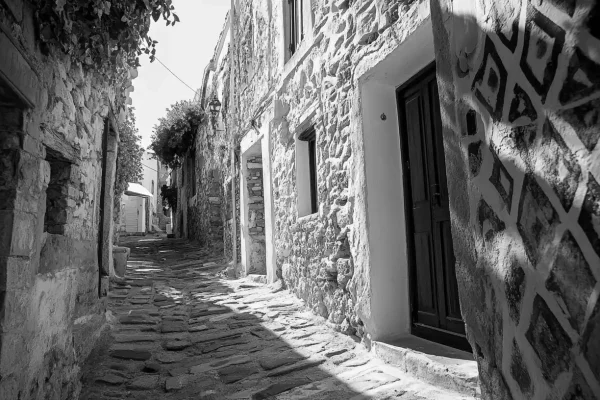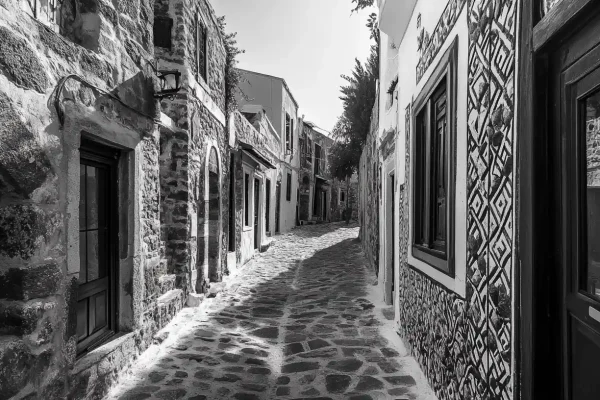
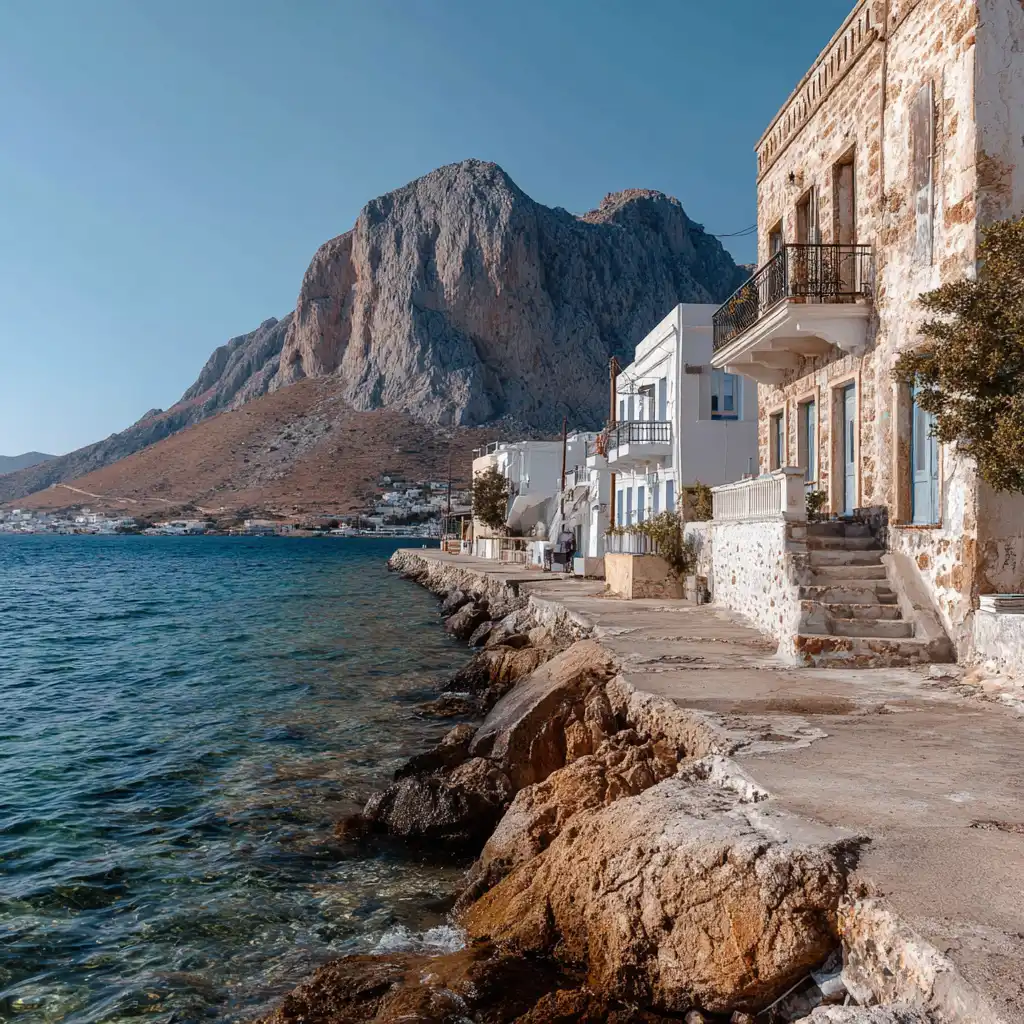
Kalymnos is a Greek island about the size of Washington, D.C., sitting just off the Turkish coast between Kos and Leros. It used to be famous for sponge divers. A viral disease in 1986 wiped out most of the sponge beds and the industry collapsed. Then, in 1997, an Italian climber named Andrea di Bari arrived, saw the limestone cliffs, and started bolting routes. Today, Kalymnos has over 4,000 sport climbing routes and attracts a specific kind of traveler who doesn’t care about beach clubs and wants to be on a wall by 7am. It is genuinely one of the best sport climbing destinations on Earth. It also happens to be a pleasant Greek island with decent food, clear water, and none of the mass tourism machinery of Santorini or Mykonos.
| Best time to visit | April–June and September–October |
|---|---|
| Getting there | Fly to Athens (ATH), connect to Kos (KGS), 30–45 min ferry to Kalymnos |
| Budget per day | $60–100 USD (climbers); $80–130 (non-climbers with activities) |
| Visa for Americans | No visa required; Schengen 90-day rule applies |
| Language | Greek; English widely spoken in tourist areas |
| Currency | Euro; cards accepted at most places; carry some cash |
Is Kalymnos Worth It If You Don’t Climb?
Honestly — partially. If you’ve never touched a climbing harness, the island has enough for a pleasant 4–5 day trip: good beaches, a working harbor town (Pothia), the valley village of Vathi surrounded by citrus groves, Rabbit Beach near Masouri, and the ferry to tiny Telendos Island (10 minutes, €2) where you can find complete silence and a taverna serving the day’s catch. But the cultural gravity of the island is built around climbing. Every conversation at dinner involves someone’s project wall. Every café in Masouri has a chalk bag on the chair. If that energy energizes you, excellent. If it will make you feel like you’re missing out on the main event, consider basing yourself on Kos and doing a day trip to Kalymnos instead.
If you’re a beginner climber or thinking about trying it: Kalymnos is actually a great place to start. Several local guides offer intro sessions ($60–90 USD for a half-day), and the easier sectors like Symplegades and Kasteli have plenty of 5a–6a routes on good limestone with flat grassy bases. The climbing community here is international and unusually welcoming to newcomers.
The Climbing: Where to Go
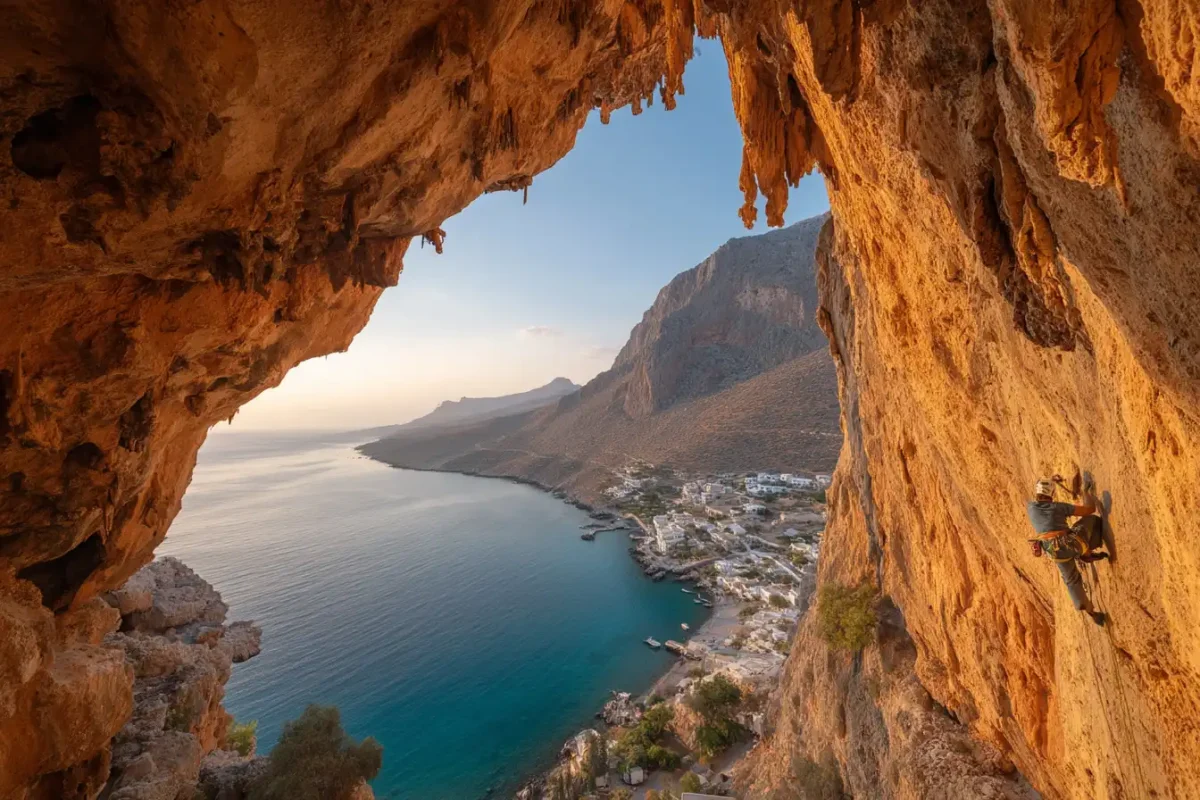
Grande Grotta is the postcard image — a massive sea cave dripping with tufa stalactites, with routes running up and through the formations. It’s steep, powerful, and genuinely beautiful even as pure spectacle. The sector sits above a small beach accessible from Masouri. DNA (7a) is the classic moderate for visiting climbers.
Panorama, immediately right of Grande Grotta, has better grades distribution for mid-level climbers and the same dramatic views of Telendos Island and the Aegean. Go here if Grande Grotta is busy.
Sikati Cave is an enormous sinkhole — a collapsed sea cave — with dramatic overhangs suited to experienced climbers (7b and above). It’s a 20-minute walk from the road and feels genuinely remote.
For families or beginners: Kasteli, in the hills above Masouri, has short routes with flat grassy bases, afternoon shade, and grades in the 5–6 range. Arginonta on the north coast has similar accessibility.
The official Kalymnos guidebook (climbkalymnos.com, €50) covers 4,200+ routes. Pick it up at any climbing shop in Masouri. Cheaper and more current than anything available digitally.
The Kalymnos Climbing Festival
The annual climbing festival usually runs in early October. It brings climbers from across Europe for a week of route openings, guided days, gear demos, and a social scene centered on the Masouri seafront. If you’re a climber, it’s worth planning around. If you’re not a climber, October is genuinely beautiful on the island — warm sea, clear skies, fewer summer crowds — but the festival will make accommodation harder to find and the climbing crags will be busier than usual. Book well in advance for October visits regardless.
Beaches and Non-Climbing Activities
Masouri Beach is the most accessible — a strip of pebble-sand directly below the climbing areas, popular with swimmers. Melitsachas Beach, a short walk north of Masouri, is smaller and quieter. Rabbit Beach (near Vathi) requires a walk through citrus groves to reach and rewards the effort with cleaner water and fewer people.
Telendos Island: Take the 10-minute ferry from the small dock in Masouri (€2 each way) to this tiny island that broke off from Kalymnos in a 6th-century earthquake. One main taverna, one small guesthouse, goats on the road, and no cars. It’s an afternoon — take the ferry over, walk to the far beach, have a late lunch, take the last ferry back.
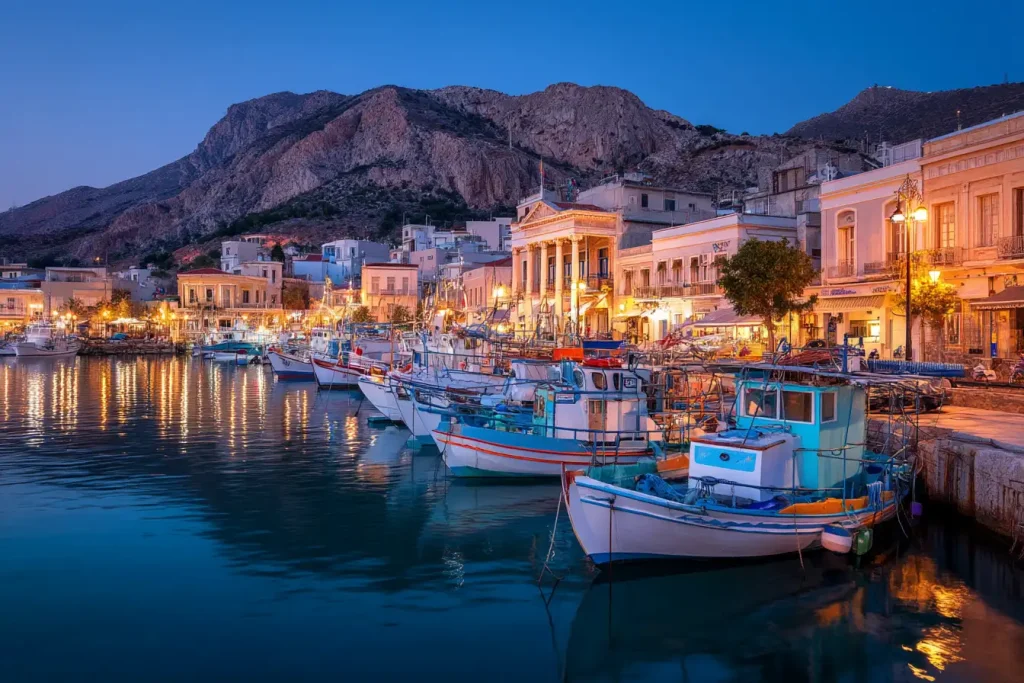
Pothia (the capital): The working harbor of Kalymnos, where the sponge trade still echoes in the shops. Worth an afternoon — the Archaeological Museum has finds from across the Dodecanese, and the traditional sponge shops along the waterfront sell the real thing. Local honey is another Kalymnos specialty worth buying.
Vathi: A valley village 10km from Pothia surrounded by the densest concentration of lemon, orange, and mandarin trees in the Aegean. It smells extraordinary in spring. Reached by road through dramatic limestone hills.
Getting to Kalymnos from the US
The most practical route: fly to Athens (ATH) from JFK, MIA, or LAX (usually $700–1,100 round trip), then take Aegean Airlines or Sky Express to Kos airport (KGS, about 45 minutes, $60–100 USD one way). From Kos airport, taxi to the ferry terminal ($15 USD) and take the 30–45 minute ferry to Kalymnos ($8–12 USD). Total travel time from the US is typically 16–20 hours door to door. Direct flights to Kalymnos’s small airport exist from Athens but are less frequent and not always cheaper.
Where to Stay
Masouri is the base for climbers and the most convenient location — climbing shops, gear rental, restaurants, and beach access all within walking distance. Pothia (the capital) is cheaper and more authentically Kalymnian but requires transport to reach the crags.
Budget ($30–60/night): Studios with kitchenettes near the climbing sectors — Masouri has dozens of independently run studios. Look for options with sea-view balconies; price differences between sea-view and inland are small.
Mid-range ($70–120/night): Kalymnos Climbing Village — an apartment complex purpose-built for climbers near the crags, with gear storage and a social atmosphere that makes finding a climbing partner trivially easy.
Splurge ($150+/night): Masouri Bay Hotel — comfortable, good views, pool. Not a climbing-focused property but well-located for both crags and beach.
Best Time to Visit
April–May: Best spring conditions for climbing and hiking. Sea is cooler but swimmable by May. Accommodation often 20–30% cheaper than summer. Some beach bars not yet open, which is fine.
June: Good balance — warm enough to swim, not yet at peak heat. Crags manageable in the morning before temperatures peak.
July–August: Hot. Peak tourist season. The limestone walls become furnace-like mid-day. Climbing happens at dawn and late afternoon. Beach crowds. Book accommodation months ahead.
September–October: The best months. Sea still warm from summer, crowds thin after mid-September. Climbing conditions ideal. October festival brings one busy week but the island is otherwise quieter.
Practical Tips
Rent a scooter or small car to access the crags and explore the island beyond Masouri. Scooter rental runs $15–25 USD/day. Roads are generally good but some access tracks to climbing areas are rough — a small 4×4 or scooter handles everything.
For climbing: bring at least 12–15 quickdraws, an 80m rope (the Grande Grotta routes especially benefit from this length), and a good chalk bag. Most gear is available at the shops in Masouri if you forget something, often at prices comparable to or better than the US.
Tap water is safe for brushing teeth but not recommended for drinking — bottled water is cheap and widely available. Many restaurants include a small carafe of water; always ask.
The one thing most tourists get wrong: climbing in mid-day July heat. Even experienced climbers underestimate how hot the walls get. Plan crags with shade for afternoon, or accept that 11am–4pm is beach time in summer.
Frequently Asked Questions
How do I get to Kalymnos from Athens?
Fly Athens to Kos (45 min, $60–100 USD one way on Aegean or Sky Express), then ferry Kos to Kalymnos (30–45 min, $8–12 USD). Total travel time is about 3–4 hours including connections. Alternatively, take the overnight ferry from Piraeus port directly to Kalymnos (9–14 hours, $30–50 USD).
Is Kalymnos good for beginner climbers?
Yes. Several sectors (Kasteli, Symplegades, parts of Arginonta) have plenty of 5a–6b routes with good protection and flat bases. Local guides offer intro sessions for $60–90 USD. The climbing community is welcoming to newcomers.
When is the Kalymnos Climbing Festival?
Typically early October, with exact dates varying each year. Check climbkalymnos.com for current year dates. The festival runs about a week and includes guided days, route openings, gear demos, and social events in Masouri.
What is the best base in Kalymnos?
Masouri, on the west coast. It has the most climbing infrastructure (gear shops, guide services, accommodation studios), direct access to Grande Grotta and other key crags, a beach, and the ferry dock for Telendos Island. Most visiting climbers base here.
Is Kalymnos worth visiting if you don’t rock climb?
For a shorter trip (3–4 days), yes — clear water, Telendos Island, Vathi valley, good food, no mass tourism. For a week-long trip without climbing, you’ll likely feel the pull of other Dodecanese islands (Kos, Rhodes) which offer more variety of activities.