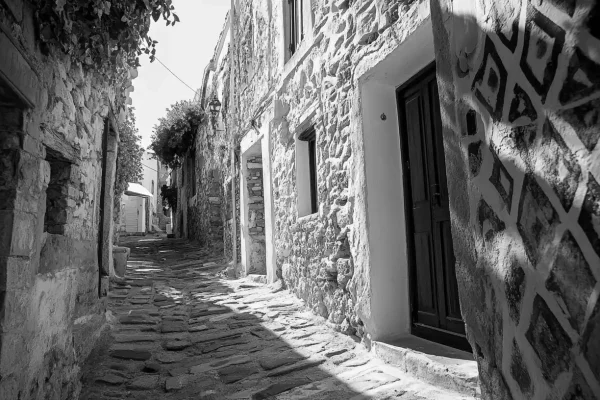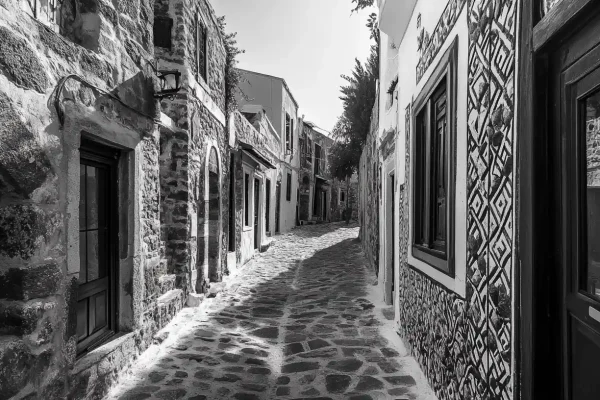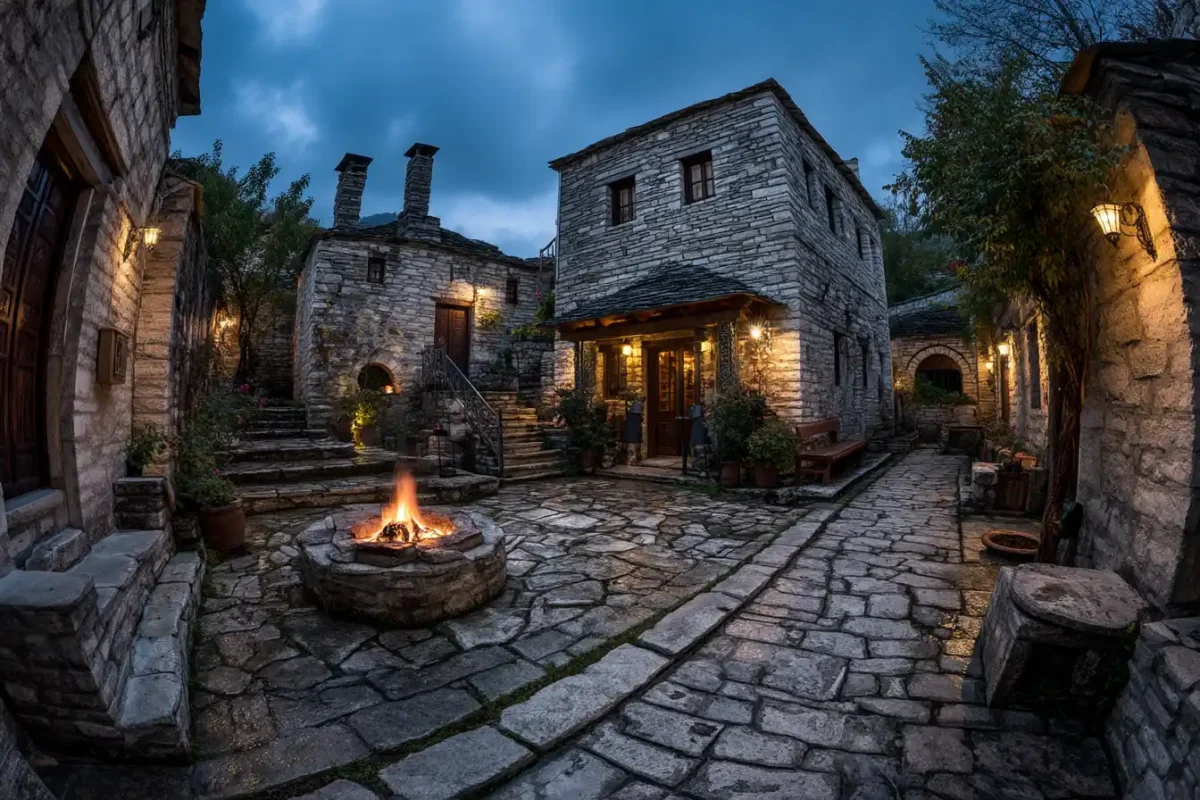
Every American who books Greece books the islands. Most return saying they wish they’d gone somewhere less crowded. Zagori is the answer they’re looking for — a mountain region in northwestern Greece where 46 stone villages sit above one of the world’s deepest gorges, connected by medieval footpaths and arched stone bridges, with almost no organized tourism. Think of it as the Appalachian Trail’s more dramatic, more medieval European cousin, except you end each day eating lamb stew in a family-run stone guesthouse.
| Best time to visit | April–June and September–October |
|---|---|
| Getting there | Fly to Athens (ATH), connect to Ioannina (IOA), 1 hr to Zagori by car |
| Budget per day | $70–120 USD (mid-range comfortable) |
| Visa for Americans | No visa required; Schengen 90-day rule applies |
| Language | Greek; English spoken at guesthouses and restaurants |
| Currency | Euro; cards accepted at most guesthouses; carry some cash for small villages |
Is Zagori Worth It?
Worth it if you can drive, because Zagori without a rental car is significantly more difficult. Worth it if you want to hike, or want mountains, or want a Greece that looks nothing like Santorini. Worth it for at least three days, preferably five. Not worth it if you’re looking for beaches or island nightlife — that’s not what’s on offer here.
The downside: the roads are genuinely winding and narrow. The villages are spread across a large area and getting between them takes longer than it looks on a map. Some of the stone guesthouses fill up quickly in peak season (July–August), when you also get the most crowds on the Vikos Gorge trail. Planning a May or September visit avoids both problems.
Vikos Gorge: The Flagship Hike
Vikos Gorge holds a Guinness World Record as the deepest gorge in the world relative to its width — depths of 490 meters in places, with sheer limestone walls that drop straight from the villages perched on the rim. The classic hike runs from the village of Monodendri down into the gorge and along the floor to Vikos village — about 12km, 4–5 hours, with some sections requiring scrambling over dry river rocks. It’s not technical but it’s not a casual stroll either. Wear proper hiking shoes.
Start from Monodendri early morning (before 8am if possible in summer) to beat heat and day-trippers from Ioannina. The path is well-marked with red and yellow blazes. The Voidomatis River flows through the gorge in spring but can be completely dry by late summer — the canyon is impressive either way, but spring visits are more dramatic.
The gorge viewpoint from Oxya, just outside Monodendri, is accessible without hiking into the gorge and gives you the big panoramic view. From this viewpoint on a clear morning, the scale of the limestone walls stops people mid-sentence. It took me a moment to understand what I was looking at — a gorge visible from the rim looks abstract until you see a tiny shepherd track at the bottom and realize how far down it is.
The Villages: Which Ones to Base In
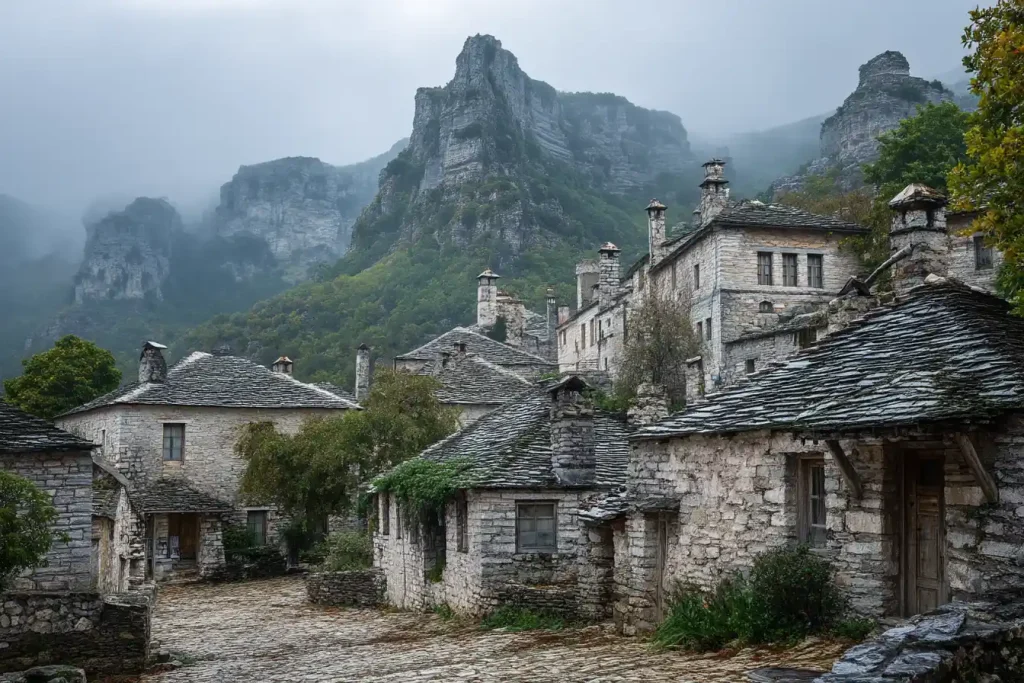
There are 46 Zagori villages (Zagorohoria) but you realistically need a base of one or two. Monodendri is convenient for the gorge access and has several good guesthouses. Papingo — split into Megalo and Mikro Papingo — is more picturesque, sitting directly under the dramatic Astraka limestone towers, and has the famous Papingo rock pools (natural swimming holes in the river) nearby. Kipi is quieter, central to the best stone bridge cluster, and less visited than either.
I’d recommend basing yourself in Megalo Papingo for at least two nights. The walk up to the Astraka Plateau (about 2.5 hours from the village) gives you a completely different angle on the landscape than the gorge hike. Astraka Mountain Hut at 1,950m serves food and has bunk accommodations for hikers who want to continue to the summit — call ahead to check availability.
Stone Bridges and Other Highlights
The region’s stone bridges — arched constructions built in the 18th and 19th centuries to connect villages across the river valleys — are the other signature image of Zagori. The three-arched Plakidas bridge (also called Kalogeriko) between the villages of Kipi and Koukouli is the most photographed and genuinely impressive up close. Bring waterproof shoes if you want to walk across it — the river can rise to the pathway level in spring.
The village of Dilofo has some of the best-preserved stone architecture in the region and a standout viewpoint on the approach road. It’s not on most itineraries. Drive through it.
For local food, the Zagori specialty is pies. Not Greek spanakopita — proper Epirus-style pies made in wood-fired ovens with whatever is in season: wild greens, local feta, cheese and corn flour. Any taverna in any village will have them. A slice costs about $3–4 USD. Order one at your first meal and you’ll order them at every meal after.
Getting to Zagori from the US
Fly into Athens (ATH) from most major US cities — expect $700–1,000 round trip on direct flights. From Athens, connect on Aegean Airlines to Ioannina (IOA, about 45 minutes, $60–100 USD one way). Rent a car at Ioannina Airport — you genuinely need one. Driving to the first Zagori villages takes about an hour on winding mountain roads. Budget cars run $40–70 USD/day. GPS navigation works fine throughout the region.
Alternatively, take an Athens-to-Ioannina bus (about 5 hours, $25 USD) and arrange a taxi from Ioannina to your village base ($30–40 USD one way). Without a car, you’re limited to one or two base villages and can’t explore freely.
Where to Stay
Budget ($50–80/night): Astraka Guesthouse in Papingo — simple stone rooms, reliable, good value. Petroto in Fragkades is also good, with mountain views, often under $100/night.
Mid-range ($80–150/night): Aristi Mountain Resort in the village of Aristi — nicely designed, good food, pool, a bit more polished than a basic village guesthouse without losing the stone-house character.
Splurge ($180+/night): Zagori Suites in Vitsa or Kores Hotel & Spa — boutique hotels in traditional buildings, spa facilities, stunning views. Genuinely competitive with mountain hotels anywhere in Europe at this price point.
Best Time to Visit
April–June: Wildflowers, the Voidomatis River at full flow under the stone bridges, lush green mountains. Best for serious hikers. Snow can still close the higher passes in April. May is ideal.
July–August: Peak season, warmest, busiest on the Vikos Gorge trail. Accommodation books up, especially on weekends. Still manageable if you’re not hiking mid-day.
September–October: Golden larches, crisp air, smaller crowds after mid-September. One of the best times to visit any Greek mountain region. Accommodation prices drop noticeably from July-August peaks.
Winter: Some guesthouses close December–February. The villages are beautiful in snow but road access can be restricted. Check ahead.
Practical Tips
Rent a car. This is not a region you can navigate without one. International driving license is not required for EU countries for Americans, but carry your regular US license.
Cell signal is patchy in the gorge and between some villages. Download offline maps (Maps.me or Google Maps offline) covering the Zagori area before you go.
The hiking trails are marked but not always obviously. The EOS (Greek Mountaineering Club) trail markers (red/yellow) are the ones to follow. The wander-lush.org Zagori guide has the most accurate current trail information online.
Most tourists get one thing wrong: they come for one day from Ioannina and do the Vikos viewpoint only. The villages themselves — the architecture, the old bridges, the afternoon light on stone walls — require slowing down and staying.
Frequently Asked Questions
How do I get to Zagori from Athens?
Fly Athens to Ioannina on Aegean Airlines (45 minutes, $60–100 USD one way), then rent a car at Ioannina airport. Drive to your chosen village base — about 1 hour. Alternatively, take a 5-hour bus from Athens to Ioannina for $25 USD, then taxi to the villages.
How hard is the Vikos Gorge hike?
Moderate. The Monodendri to Vikos village route is about 12km with some rocky scrambling on the gorge floor. It takes 4–5 hours. Proper hiking shoes are required — trail runners work, flip flops don’t. Not technical, but not a casual park walk either.
What is the best base village in Zagori?
Megalo Papingo for dramatic scenery and proximity to rock pools and the Astraka trails. Monodendri for easiest Vikos Gorge access. Kipi for the best stone bridges and a quieter base. All are within 30–45 minutes’ drive of each other.
When is the best time to visit Zagori Greece?
May–June for wildflowers and full rivers. September–October for autumn colors, fewer crowds, and cooler hiking temperatures. Avoid peak August if you want solitude on the trails and easier accommodation booking.
How many days do I need in Zagori?
Minimum three days to see the gorge, a few villages, and one stone bridge cluster. Five days is better — it lets you hike to the Astraka Plateau, explore the quieter eastern villages, and not feel rushed on the trails.