The standard answer to when’s the best time to visit Mont Saint-Michel and Normandy is May or September. Both are right. This guide explains why, and when a different answer applies instead.
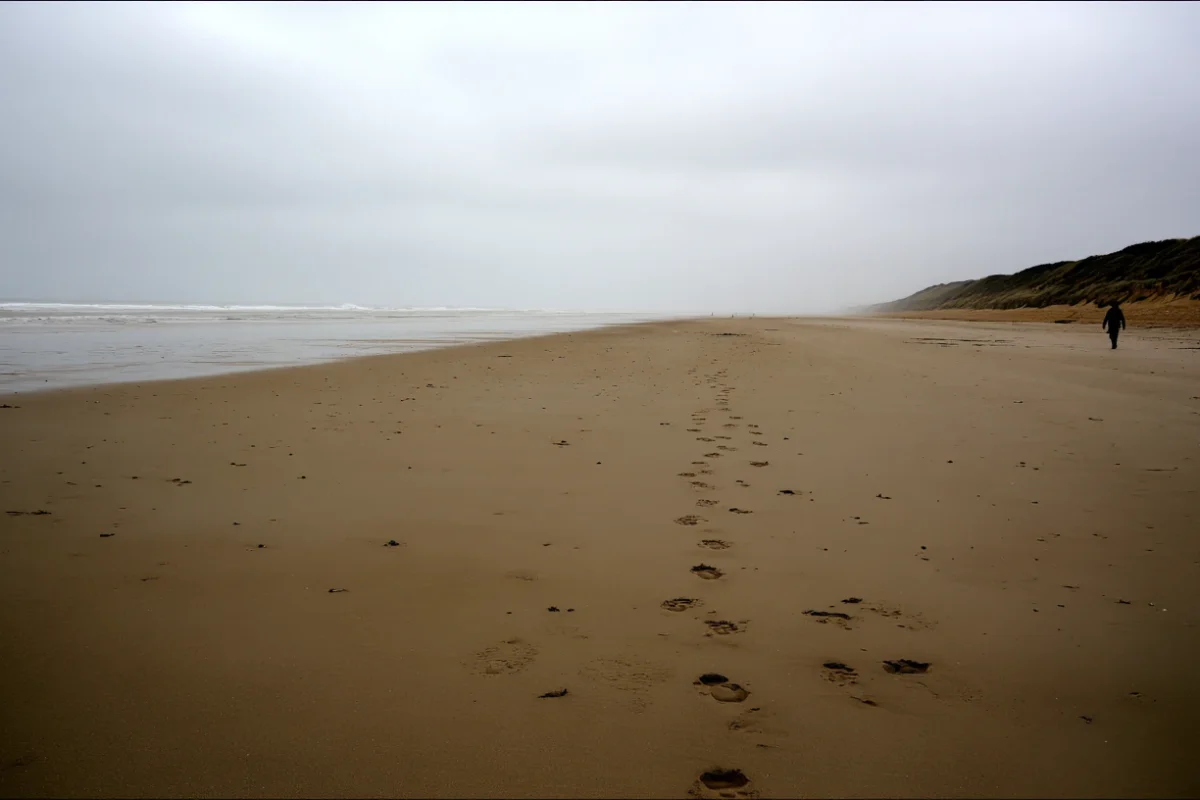
The two regions don’t behave identically. Normandy and Mont Saint-Michel sit in the same broad area but have different crowd patterns and different reasons to visit in different seasons. The D-Day beaches are best in dry weather with thin crowds — standing at Omaha Beach in a grey November rain is its own experience, but most people want some visibility when they’re there. Mont Saint-Michel has its own considerations: the tide calendar, the abbey schedule, and a winter situation that most guides underrate.
Here’s the real picture by month.
March and April
Early spring in Normandy is unreliable. March days generally run cool and damp, with frequent rain and daytime temperatures more often in the low-to-mid teens Celsius than anything warmer. The D-Day beaches are accessible and uncrowded, but the exposed Atlantic headlands at Pointe du Hoc and the Étretat cliff paths are cold and often wet.
April improves week by week. By late April, temperatures climb into the mid-teens and rain frequency drops off somewhat. The apple orchards in the Pays d’Auge begin to blossom, and late April is one of the more photogenic times to drive the Route du Cidre.
In 2026, Easter Sunday falls on April 5, with Easter Monday on April 6, and the long Easter weekend brings a temporary crowd spike to Mont Saint-Michel and the main D-Day sites. If you’re visiting in early April, either lean into the weekend atmosphere or shift your plans to the following week.
Mont Saint-Michel in March and April: quiet, which is the appeal. Crowds are thin on weekdays, the abbey runs on its regular off-season schedule (9:30am to 6pm), and hotel prices are lower than summer. The tidal patterns in this window include some genuinely strong spring tides — the 2026 calendar’s single highest coefficient of the year, around 105, falls in mid-to-late April, with another strong cycle around the March equinox. Check the official tide calendar for the exact dates before you plan around it.
The risk: a cold, wet weekend in early April in Normandy is uncomfortable. This isn’t Mediterranean spring — pack layers and a waterproof. The beaches can be genuinely bleak in early spring rain, which is not without its own appeal if you’re prepared for it, but less so if you were expecting something warm and green.
May: The First Best Month
May is the most reliable choice for combining good weather, manageable crowds, and full access to everything. Daytime temperatures generally reach the high teens to low twenties, sunshine hours pick up, and the apple orchards are in bloom through mid-May.
The D-Day sites are accessible and not yet at summer capacity. The American Cemetery and Omaha Beach see more visitors on weekends, especially around any long holiday weekend that lands in late May, but weekdays remain genuinely quiet.
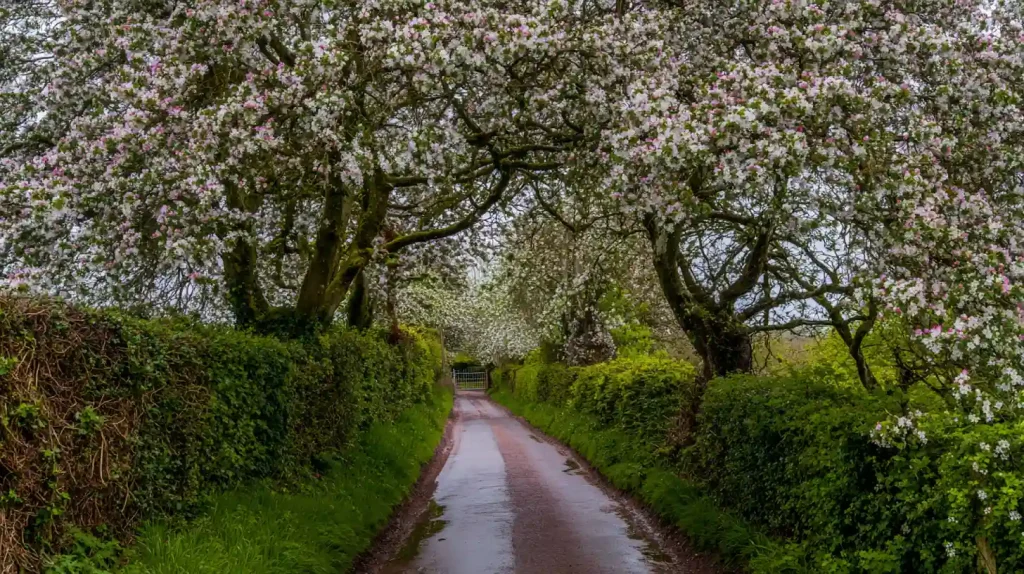
Mont Saint-Michel in May: good. The abbey moves onto its extended summer hours from May 1 (9am to 7pm), and crowds are noticeably lower than July or August. You can have the cloister largely to yourself on a Tuesday morning in May in a way you simply can’t in August.
May is also the best month for the coastal hikes at Étretat — the cliff paths are green, the light is good, and the Manneporte arch sees very few people.
June: The Complicated Month
June has the best weather in Normandy on paper. Average temperatures push into the low twenties, with long daylight hours and generally good sunshine totals. It’s excellent for the outdoor sites — the beaches, the cliff walks, the abbey.
The complication is June 6.
The D-Day anniversary brings large crowds to the American sector — Omaha Beach, the cemetery, Pointe du Hoc. There are official commemorative ceremonies, heavier media presence, and more visitors than almost any other day of the year. Road closures near the main sites are common in the days around the anniversary, so check local advisories if you’re driving through the area that week.
2026 marks the 82nd anniversary of D-Day, and if you want to attend the commemoration ceremonies, early June is the right time — they’re moving and worth attending deliberately. If you want to visit the beaches at your own pace without crowds or ceremony disruption, avoid roughly June 4 through 8 entirely.
The rest of June is one of the best times to be in Normandy. The countryside is at its greenest, the farms are active, and French schools are still in session until late June, keeping crowds lower than July.
July and August: The Honest Picture
The warmest months are also the busiest. Mont Saint-Michel gets genuinely packed in August, with the main street at capacity from roughly 11am to 7pm. The American Cemetery and Omaha Beach are crowded by mid-morning. The Étretat cliff viewpoints have queues.
None of this makes July or August wrong. The weather is the most reliable of the year. If your schedule only allows a summer trip, go — just adjust the timing within each day to arrive early or stay late at the main sites.
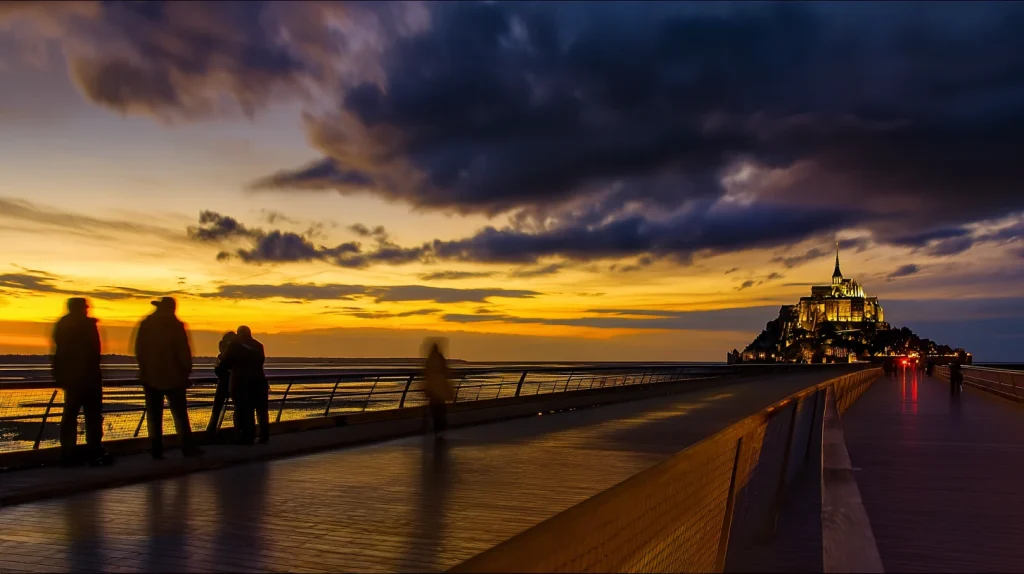
At Mont Saint-Michel in summer: arrive before 9am or after 6pm. The evening light on the abbey from the causeway in July is genuinely beautiful, and most visitors are leaving rather than arriving at that hour. If you can stay overnight on the island, the pre-dawn atmosphere — near-empty lanes, the sound of the tide, the abbey lit from below — is one of the best arguments for any night spent anywhere in France.
The D-Day beaches in July and August are manageable at 8am. By 10am, the parking at the American Cemetery is crowded. By 1pm, Pointe du Hoc often has a school-group problem. Start early, get the main sites done by noon, and use the afternoon for Utah Beach, which is consistently quieter than Omaha, or the drive back through the bocage.
September: The Other Best Month
September is the strongest single month for combining weather, crowds, and one unique factor at Mont Saint-Michel: the tide calendar.
Temperatures average in the high teens to low twenties for most of the month, dropping noticeably toward the end but staying pleasant for walking and outdoor sites. Crowds drop sharply from August as French schools return in early September. The Étretat cliff paths are much quieter from the second week of September onward.
On tides: September’s spring tide cycle, clustered around the autumnal equinox in late September, is a genuinely strong one, though it isn’t the single highest of the year — that distinction usually belongs to a cycle in March or April. Still, any coefficient above roughly 95 to 100 produces the dramatic version of Mont Saint-Michel as a near-island, and September’s equinox tides comfortably clear that mark most years. Check the official SHOM-based tide calendar for the specific dates and coefficients before you build a trip around it, since exact figures shift slightly year to year.
The D-Day beaches in September are excellent. The cemetery is quiet on weekday mornings. The parking at Omaha is manageable. The hedgerow countryside starts to turn gold through the month, and the Pays d’Auge orchards are preparing for harvest by late September — a good preview if you’re combining the food route with the historic sites.
October and November: Fall Shoulder
October is the apple harvest in the Pays d’Auge. Cider pressing begins. The orchards are at their most visually dramatic — heavy with fruit, leaves turning, the smell of fermentation from the farms. If the Route du Cidre and farm visits are part of your Normandy plan, October is specifically the best month for that portion.
The weather turns: October generally runs cooler than September, with more frequent rain. The cliff walks at Étretat are still open and very good in autumn light, but pack a waterproof.
November is the first month where weather becomes a real constraint. Rain is frequent, temperatures drop into single digits or the low teens Celsius, and some smaller farms and tourist-dependent businesses begin to close for the winter. Mont Saint-Michel is quieter but fully accessible.
For the Étretat cliffs specifically, October and November offer some of the best photography conditions of the year. The low autumn light hits the chalk at oblique angles, the sea goes dark green, and the cliff paths are almost empty. The Jardins d’Étretat move onto reduced hours in early November and typically close for the season by early December, reopening in mid-February — check current dates before visiting late in the year. The cliff walks themselves remain open year-round regardless.
Winter (December–February): The Underrated Option for Mont Saint-Michel
Here is the timing take that most guides skip: winter at Mont Saint-Michel is genuinely good.
Visitor numbers drop dramatically compared to summer — this is one of the most seasonal destinations in France, and a January weekday bears almost no resemblance to an August afternoon. Hotel rates on and around the island fall well below summer pricing. The main street is walkable. The abbey feels like an actual medieval site rather than a tourist experience.
The winter light in Normandy — low, flat, atmospheric — suits the abbey better than the harsh midday light of August. The tidal flats in winter are dramatic in grey weather, and if the tide coincides with fog, the island emerging from the mist is a photographer’s specific ideal.
The Normandy war sites are also excellent in winter. The American Cemetery is quieter, more contemplative. Omaha Beach on a January morning, empty of visitors, is one of the more powerful things you can experience in France.
Practical caveat: some businesses close or reduce hours. Call ahead for farm visits on the Route du Cidre. The Jardins d’Étretat close for the season. Focus the itinerary on the historic sites and the island itself, which remain open year-round.
The Tide Calendar: Independent From Season
One point that deserves separate treatment: the tide schedule at Mont Saint-Michel operates on its own logic, largely independent of the seasons or the tourist calendar.
The most dramatic versions of the island — surrounded by water on all sides, causeway edge to edge — happen during spring tides, generally defined as a coefficient of 95 or above. These cluster around the March and September equinoxes, when the sun, moon, and Earth align most precisely, with the single strongest cycle of the year in 2026 landing in spring rather than fall. A handful of these spring tide days each year push high enough to briefly submerge the footbridge and turn the Mont back into a true, cut-off island for a few hours.
If the “island surrounded by water” experience is what you’re specifically coming for, check the official tide calendar before booking, since the strongest dates shift slightly from year to year. Arriving roughly two hours before the listed high tide gives you the full progression of water rising around the rock.
Frequently Asked Questions
What is the absolute best month to visit Normandy and Mont Saint-Michel? May or September. Both offer the best combination of weather, manageable crowds, and full access to all sites. September has a specific advantage for Mont Saint-Michel thanks to the equinox spring tides, while May is better for the apple blossom in the Pays d’Auge.
Should I avoid June 6 when visiting Normandy? It depends on what you want. If you want to attend D-Day commemoration ceremonies, June 6 is when they happen, and attending is genuinely moving. If you want to visit the beaches at your own pace without crowds, road closures, and ceremony logistics, avoid roughly June 4 to 8 and visit in May, September, or October instead.
Is winter a good time to visit Mont Saint-Michel? Yes, specifically. Winter sees dramatically fewer visitors than summer, hotel prices drop significantly, and the atmosphere is genuinely different and better for photography. The abbey is open year-round on its off-season hours. The main downsides are cold weather and some smaller businesses being closed; the historic sites themselves are unaffected.
How do tides affect the best time to visit Mont Saint-Michel? The highest tides, known as spring tides or grandes marées, produce the most dramatic “island surrounded by water” experience. These cluster around the March and September equinoxes but shift in exact date and strength each year. If you want the dramatic tide visual, check the current year’s official tide calendar and plan your visit around a high-coefficient day rather than assuming any particular season guarantees it.
Is July or August too crowded for a good visit? Not if you plan the timing within each day. Arriving before 9am at Mont Saint-Michel or the American Cemetery, ahead of the shuttle buses and tour groups, makes the summer experience substantially better. Staying on the island overnight gives you access to the early morning and late evening, when day visitors have already left.