The mistake most people make when planning Mont Saint-Michel and Normandy together is trying to fit too much in.
Two days is enough time to see the D-Day beaches properly and visit Mont Saint-Michel properly — but not if you’re also trying to squeeze in Rouen, Saint-Malo, Honfleur, and the Bayeux Tapestry. That version of the trip produces a blur of half-seen things and too many hours in a car. The American Cemetery deserves two hours. The cloister at Mont Saint-Michel deserves twenty minutes of quiet. You can’t have either if you’re watching the clock to make the next site 45 minutes away.
This itinerary makes different choices. It keeps two main experiences — the D-Day beaches and Mont Saint-Michel — and does them at the right pace. It also builds in a base that’s worth being in, not just sleeping in. Bayeux serves as the base for both nights, and everything is reachable by self-drive without an early-morning departure.
One practical update for 2026: the Bayeux Tapestry Museum has been closed since September 2025 for major renovations and isn’t due to reopen until October 2027. The tapestry itself is on loan to the British Museum in London from September 10, 2026 to July 11, 2027. If the tapestry is the main reason you were considering Bayeux, adjust your expectations accordingly. The town is still worth using as a base — the cathedral, the war cemetery, and the market are all worthwhile on their own — but knowing this in advance saves disappointment.
The Base: Bayeux
Bayeux is the right place to spend both nights. It’s small, well-preserved (one of the few Norman towns not heavily bombed in 1944), and centrally located for both the beaches and the drive west to Mont Saint-Michel.
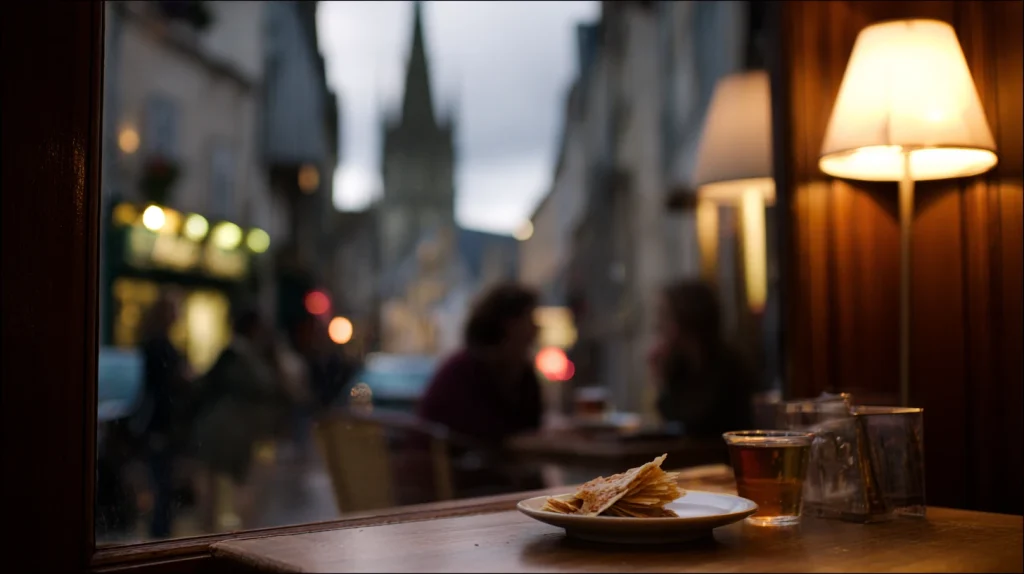
The town has genuine character. The cathedral is large and impressive, with Romanesque lower sections dating largely to the 11th and 12th centuries and Gothic elements added in later rebuilding, topped by a distinctive central tower. It takes about 45 minutes to walk through properly, and the crypt and nave are among the better-preserved Romanesque interiors in northern France.
The Wednesday and Saturday markets are worth timing your stay around if possible. The market covers the streets around the cathedral and sells Norman produce — cheese, cider, calvados, butter, vegetables, and prepared foods. A Saturday morning market walk and breakfast here is a better Bayeux experience than any restaurant.
For accommodation, Bayeux has a wide range of options from budget guesthouses to boutique hotels in the old town. Book ahead for July and August — the town fills up during the D-Day anniversary weeks in June. A decent two-star hotel in the old town typically runs somewhere in the €70–110 per night range, though this varies with season and demand. Breakfast at the hotel is rarely the best option; the market or a local bakery is better and cheaper.
Hotels in the old town center are more atmospheric than the chain options on the outskirts, and the town is small enough that walking to the cathedral from most central hotels takes under ten minutes.
The Bayeux War Cemetery, a short walk from the cathedral, is worth 30 minutes on arrival day or departure morning. It’s the largest Commonwealth cemetery of the Second World War in France, containing 4,144 Commonwealth burials, plus a memorial opposite bearing the names of more than 1,800 men with no known grave. Unlike the American Cemetery at Colleville-sur-Mer, this one sees far fewer visitors and has a quieter, more contemplative atmosphere — which makes it hit differently.
Day 1: The D-Day Beaches
Morning (8:30am–12pm): Leave Bayeux early and drive to the Normandy American Cemetery at Colleville-sur-Mer first — it opens daily at 9am and crowds build through mid-morning. It’s about 30 minutes from Bayeux.
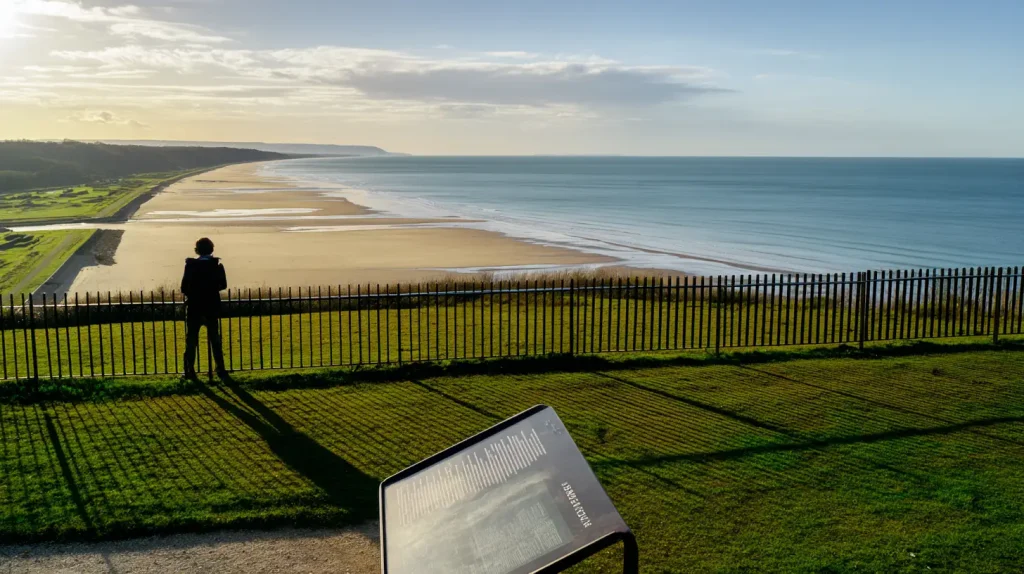
Allow one and a half to two hours at the cemetery. Don’t rush the grounds. The Walls of the Missing — inscribed with the names of 1,557 Americans missing in action — deserve as much time as the main burial ground. The visitor center has a well-produced exhibition that gives context to what you’re seeing outside.
From the cemetery, walk or drive a short distance to the Omaha Beach overlook. Stand at the top of the bluff and look down at the beach. The geometry of the assault becomes clear from here in a way no film quite captures. This alone is worth the morning.
Midday (12pm–1:30pm): Drive to Pointe du Hoc, about 15 minutes west of Omaha. Bring lunch from Bayeux or buy it in the small town of Vierville-sur-Mer on the way — there are no facilities at Pointe du Hoc itself.
Note that Pointe du Hoc is currently mid-way through an 18-month restoration project that began in February 2026, which has closed the visitor center and restricted access to parts of the historic site, including some pathways and bunkers, since mid-May 2026. The site remains open to visitors during its normal 9am–5pm hours, just along a more limited route than in previous years — check the American Battle Monuments Commission’s website for the current access map before planning around this stop. Given the reduced footprint, budget closer to 45 minutes to an hour here rather than the longer visit this site used to warrant. Wear real shoes regardless — the ground is uneven and the paths are grass, not paved.
Afternoon (2pm–5pm): Drive back east to Utah Beach. The Utah Beach Museum is the best single museum on the Normandy landing sites, set right beside the actual landing site in Sainte-Marie-du-Mont, organized across ten sequential exhibits with a documentary film that gives a useful overview of the Utah operation. Adult admission is €10. Allow around 1.5 hours.
From Utah, drive back toward Bayeux through the bocage countryside. The route via Saint-Lô takes you through some of the most historically significant landscape of the Battle of Normandy — the hedgerow country that slowed the Allied advance through the summer of 1944.
Evening in Bayeux: Dinner in the old town. The area around the cathedral has several restaurants serving Norman food. A galette or a crêpe at a crêperie with a bowl of local cider is the right meal for the end of a day at the beaches. The town is quiet on weekday evenings, and a sit-down dinner with a drink is generally affordable by French standards.
Day 2: Mont Saint-Michel
Morning departure (8am): The drive from Bayeux to Mont Saint-Michel is roughly 1.5 hours by car under normal traffic, covering about 120km. Leave by 8am to reach the island before the main rush.
Parking is on the mainland, and free shuttle buses run regularly from the car parks to the island. Walking is also an option if you want to approach on foot across the causeway — at low tide, arriving this way gives you one of the better perspectives on how the island actually sits in the bay.
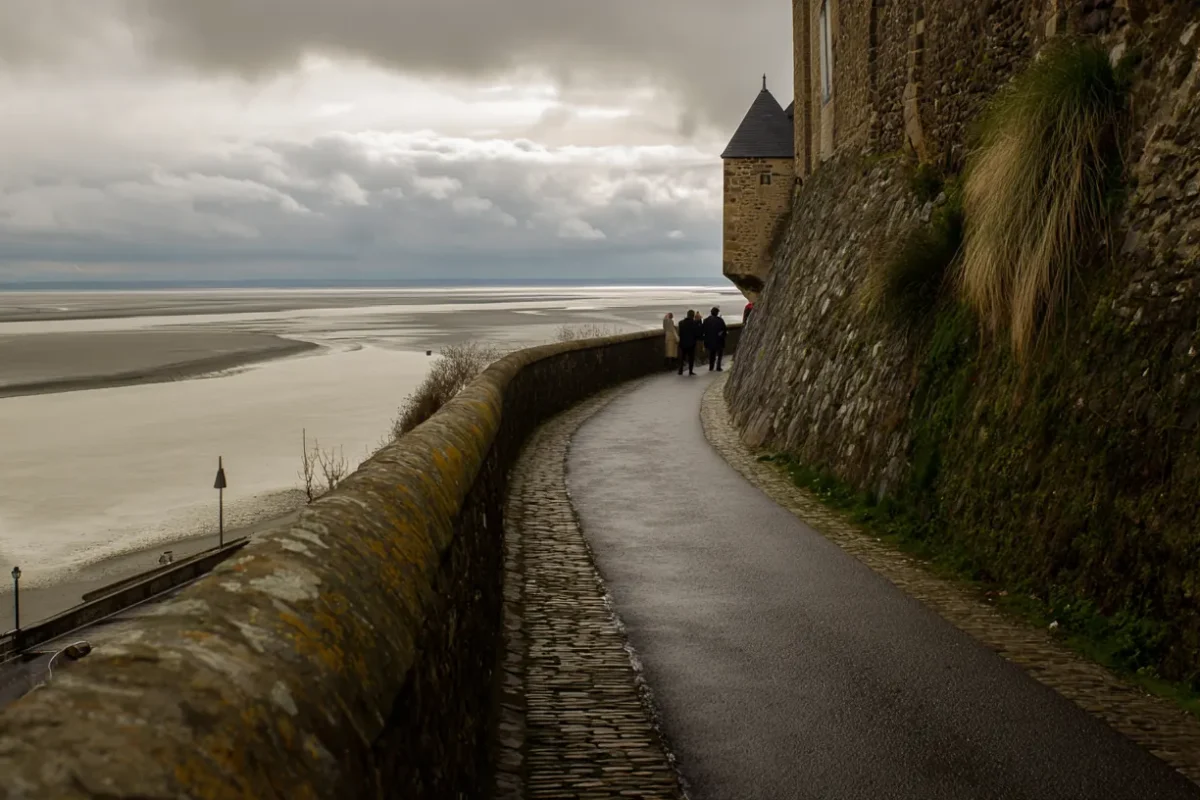
Mont Saint-Michel village (9am–10am): Resist the urge to do the abbey immediately. Walk the main street (Grand Rue) before the tourist wave arrives, buy something from a local bakery, and find the rampart walk. The ramparts circle most of the island and give you views across the bay that the main street doesn’t. A croissant and coffee standing on the ramparts at 9am, looking out at the bay before the first shuttle buses arrive, is genuinely one of the better travel moments available in France.
Grand Rue is narrow and mostly medieval — souvenir shops now, but the architecture above the shopfronts is genuine 14th- and 15th-century work. The crowds make it easy to miss if you’re staring straight ahead. Look up.
The Abbey (10am–12:30pm): As of 2026, individual adult tickets for a self-guided visit run €13 from April through September and €11.50 from October through March (entry is free for under-18s and for EU residents aged 18–25). Book online in advance through the official abbey ticketing site to avoid the entry queue, which can run long in peak season.
The abbey visit takes 1.5 to 2.5 hours at a proper pace. The cloister and La Merveille — the Gothic complex on the north face of the rock — are the highlights. The view from the top terraces looks south across the bay to the mainland, with the coast toward Brittany visible on a clear day.
Lunch and afternoon (12:30pm–3pm): Eat on the island or descend to the mainland for a cheaper meal — the island’s restaurants charge a real premium for location, La Mère Poulard among them, which is famous for its omelettes but priced well above what the dish would cost anywhere else. If trying it matters to you, go at lunch before the evening rush. The view of the abbey from the causeway is different in afternoon light than morning light, and worth a second look if the tides work in your favor.
Return to Bayeux or departure (3pm–5pm): The drive back to Bayeux takes roughly the same 1.5 hours as the morning trip out. If you’re heading to Paris by train instead, Bayeux to Paris Saint-Lazare takes somewhere around 2 to 2.5 hours depending on the specific service.
What to Skip
Rouen: Worth visiting, but not as part of this specific two-day itinerary. Adding Rouen means removing a full afternoon from the D-Day circuit or rushing Mont Saint-Michel. Save it for a separate Normandy trip.
Honfleur: A beautiful harbor town, but two to three hours from the D-Day beaches and a significant detour from the Mont Saint-Michel route. It fits better into a separate Étretat/Honfleur coastal loop than bolted onto this itinerary.
Gold, Juno, and Sword beaches: If you’ve chosen to focus on the American sector (Omaha, Pointe du Hoc, Utah), the British and Canadian beaches require a separate morning or afternoon to do properly. Don’t attempt all five beaches in one day — you’ll spend the day driving, and the beaches deserve more time than that. They’re best done as a separate eastern circuit from a different base, perhaps Caen or a night in Arromanches.
Saint-Malo: The walled city in Brittany is worth a visit in its own right, but it adds roughly 45 minutes to the Mont Saint-Michel drive and warrants a completely separate half-day. Combining it with Mont Saint-Michel in a single day produces two half-experiences instead of one proper one.
FAQ
Is two days enough for Normandy and Mont Saint-Michel? Yes, if you focus. Two days covers the American D-Day sector (Omaha, the cemetery, Pointe du Hoc, Utah) plus a full day at Mont Saint-Michel — but only if you’re based in Bayeux and not trying to add Rouen, Saint-Malo, or the British and Canadian beaches. Every additional stop reduces depth at the main ones.
Is the Bayeux Tapestry available to see in 2026? Not in Bayeux. The Bayeux Tapestry Museum closed in September 2025 for major renovations and isn’t expected to reopen until October 2027. The tapestry itself is on display at the British Museum in London from September 10, 2026 to July 11, 2027. Bayeux is still worth visiting as a base — just plan without the tapestry as a draw.
Do you need a car for this itinerary? Yes. The D-Day beaches, Pointe du Hoc, and Utah Beach aren’t connected by practical public transport. Mont Saint-Michel has shuttle connections from nearby train stations, but connections from Bayeux specifically are neither frequent nor direct. A rental car from Caen or Bayeux gives you full flexibility.
Where is the best base for a Normandy and Mont Saint-Michel trip? Bayeux. It’s the most walkable town in the area with genuine character, it’s 30–40 minutes from the main D-Day sites, and it’s roughly 1.5 hours from Mont Saint-Michel by car. It has better accommodation options than the beach towns themselves and a more useful selection of restaurants.
How far is Mont Saint-Michel from the D-Day beaches? Roughly 1.5 hours by car from Bayeux under normal traffic, covering about 120km. The drive goes through the bocage countryside of the Manche department and takes you off the tourist circuit — a pleasant drive with little traffic on weekday mornings.