Nobody is fully ready for the D-Day beaches in Normandy, and Omaha Beach in particular.
You’ve seen the footage. You’ve heard the numbers. You’ve probably seen the film. None of it quite prepares you for standing at the top of the bluff on a quiet morning, looking down at the sand below and the sea beyond, and understanding in a more physical way what the men coming off those boats were looking at.
The beach is just sand. That’s what gets you. It’s a normal beach. And it’s not.
This guide covers what’s actually worth your time across the five D-Day landing beaches — where to go first, what to skip if you’re short on time, and what’s changed recently that older guides might not mention.
What You’re Actually Dealing With
The D-Day beaches cover more than 80km of Normandy coastline between the Cotentin Peninsula and the Orne River. Five beaches, each assigned to a different Allied force on June 6, 1944.
Going east to west: Utah (American), Omaha (American), Gold (British), Juno (Canadian), Sword (British/International).
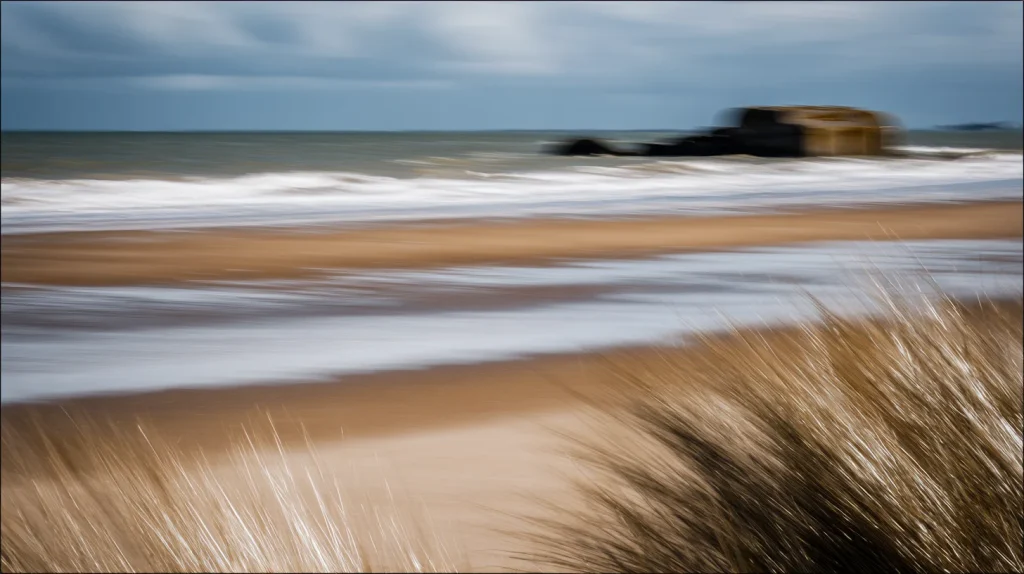
From Utah Beach to Sword Beach is roughly 75km. With country roads, stops, and parking, covering all five in one pass would mean well over an hour of pure driving — and you wouldn’t want to rush it that way regardless. Most visitors don’t attempt all five beaches in a single day, and it’s genuinely not the best way to experience them. Doing Omaha, Pointe du Hoc, and the American Cemetery properly is a full day on its own. Utah adds a morning. Gold, Juno, and Sword call for a separate circuit further east.
The beaches themselves are public and free to walk. Museum admission generally runs somewhere in the €8–14 range per site. Budget roughly €30–50 if you’re planning to enter several museums and memorials across the day.
A car is genuinely non-negotiable for this trip — public transport between the sites is minimal to nonexistent for a practical itinerary. Bayeux is the best base: central, well-connected by train from Paris, and about 30–45 minutes from the main American sector.
Omaha Beach
Start here.
Omaha was the bloodiest beach of the invasion. American forces landing here faced steep bluffs, exposed sand, strong currents, and heavily fortified German positions, and the landing went wrong in nearly every possible way. The first waves suffered catastrophic losses. By the end of the day, American casualties at Omaha are generally put at around 2,400 — killed, wounded, and missing combined, based on the U.S. Army’s own after-action figures, though exact numbers have always been difficult to pin down precisely and different historical accounts vary somewhat.
The beach today is wide, flat, and usually quiet. The German bunkers are still visible on the bluffs above. Standing on the sand looking back up at them is the single most useful thing you can do here — more useful than any museum panel or tour description. The geometry explains itself. The distance from water to bluff is several hundred meters of open ground with no cover. That’s what they ran across.
Drive or walk up to the bluff for the other angle: looking down at where the boats came in. The memorials along the bluff are worth the walk — the American monument and the Les Braves sculpture (three steel arches rising from the sand, created in 2004) are both understated and more affecting for it.
The American Cemetery
Adjacent to Omaha Beach on the bluffs at Colleville-sur-Mer sits the Normandy American Cemetery. It contains 9,388 graves, most belonging to Americans who died during the D-Day landings and the fighting that followed. Entry is free. The cemetery is maintained by the American Battle Monuments Commission and open daily, 9am to 4:45pm.
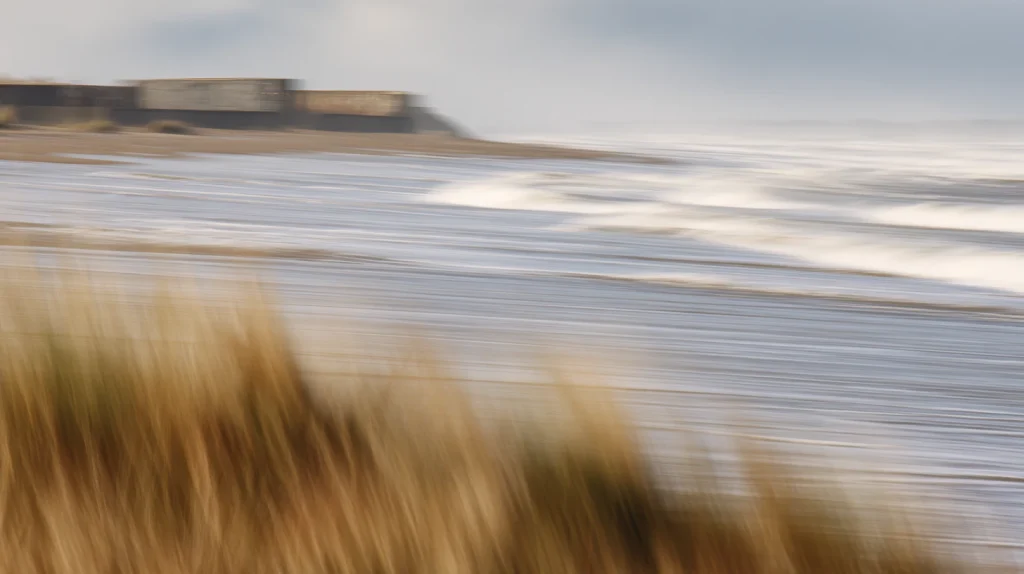
The visitor center has a well-produced exhibition covering the planning and execution of D-Day, worth seeing before or after walking the grounds — it gives the numbers human context.
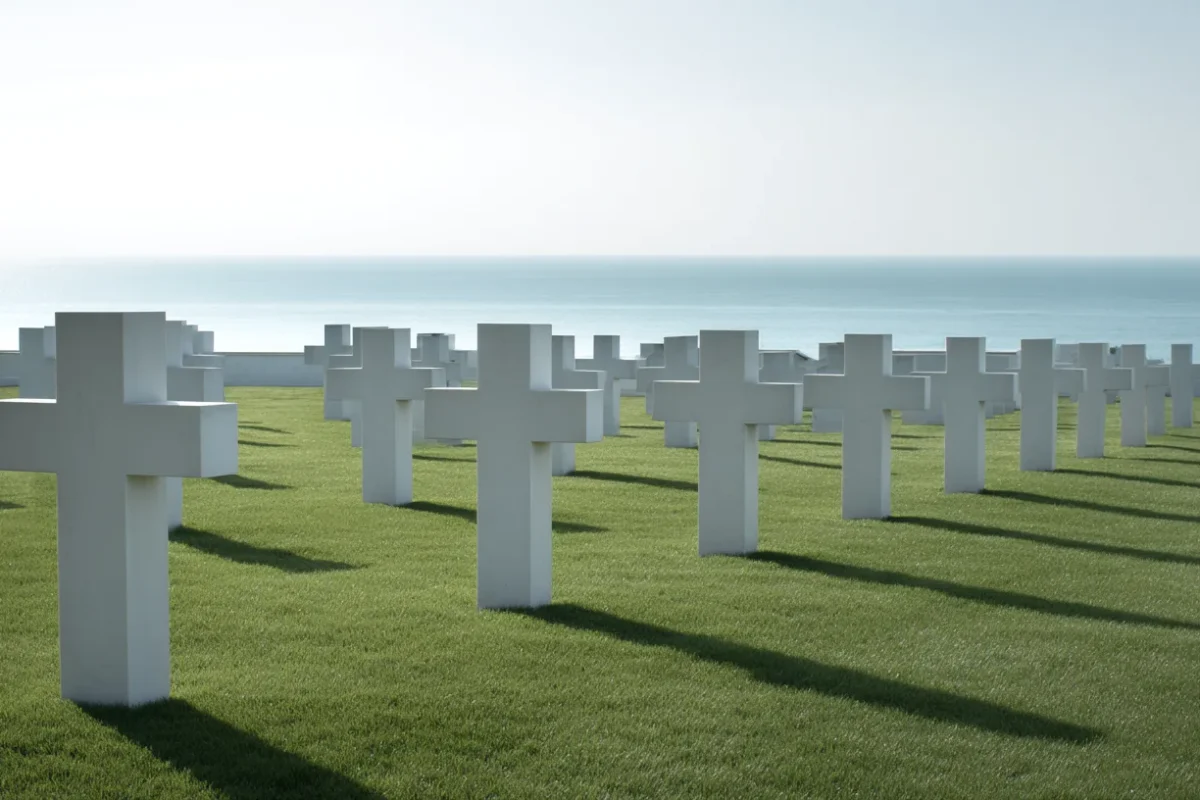
The cemetery itself: row upon row of white marble crosses and Stars of David, laid out with a precision that paradoxically makes the scale harder to absorb. You’re told there are 9,388 graves. You walk for twenty minutes and can only see a fraction of them. The math takes time to land.
Most visitors spend an hour here; two is better. The grounds look out over the sea and the beach below, and you can walk to an overlook point and see Omaha from above.
This is the most visited D-Day site and can get crowded in summer, particularly in late morning, so arriving early is worth it. The visitor center also includes the Walls of the Missing — a curved memorial inscribed with the names of 1,557 Americans whose remains were never recovered. Walking past those names is a different experience from standing among the crosses, and worth doing.
Pointe du Hoc
A few kilometers west of Omaha, Pointe du Hoc is the site where US Army Rangers scaled roughly 100-foot cliffs under fire to knock out German artillery batteries on the morning of D-Day.
The cliffs are real and steep. The craters from Allied bombing still scar the headland in every direction, and the German bunkers and command posts remain largely intact.
This is the most visually arresting of all the D-Day sites — the combination of ruined concrete, bomb craters, and cliff edge is something photographs can’t quite capture. Wear proper shoes; the ground is uneven and can be slippery after rain.
One important update for anyone planning a visit in 2026 or into 2027: Pointe du Hoc is currently undergoing an 18-month, roughly $10 million restoration project that began in February 2026 to address erosion and stabilize the cliffs and monument. The visitor center has been closed since March 2026, and parts of the historic site, including some pathways and bunkers, have been closed since mid-May 2026, with access routed along a single western pathway. The site remains open to visitors during the daily 9am–5pm hours throughout the project, just with a more limited footprint than in previous years — check the American Battle Monuments Commission’s website for the current access map before you go.
Entry is free.
Utah Beach
The westernmost of the five beaches, Utah feels different from Omaha — more remote, quieter, less heavily visited. The terrain is flat, with low dunes and open sand, a contrast to Omaha’s bluff drama.
The Utah Beach Museum is the best single museum on the Normandy beaches. It’s housed beside the actual landing site in Sainte-Marie-du-Mont and covers the beach’s specific operation across ten sequential exhibits, with good artifacts, maps, vehicles, and a documentary film. Adult admission is €10 (students €7.50, children 6–15 €6.50, under-6 free). It’s open daily, 9:30am to 7pm from May through September, and 10am to 6pm from October through April, with ticket sales closing an hour before closing time.
The Utah operation, while still costly, succeeded more fully than Omaha’s — a navigational error inadvertently landed troops on a less heavily fortified sector of the beach, and casualties were comparatively far lower. The gap in outcome between Utah and Omaha, two operations carried out under broadly similar conditions on the same morning, is one of the more sobering lessons of the day.
The museum is good enough that even visitors who don’t think they’re especially interested in military history tend to leave having learned something they didn’t expect. Allow around ninety minutes. The beach directly in front of the museum still has a German fortification sitting in the sand, visible from the entrance — an odd thing to look at on a bright summer day at the seaside.
Gold, Juno, and Sword
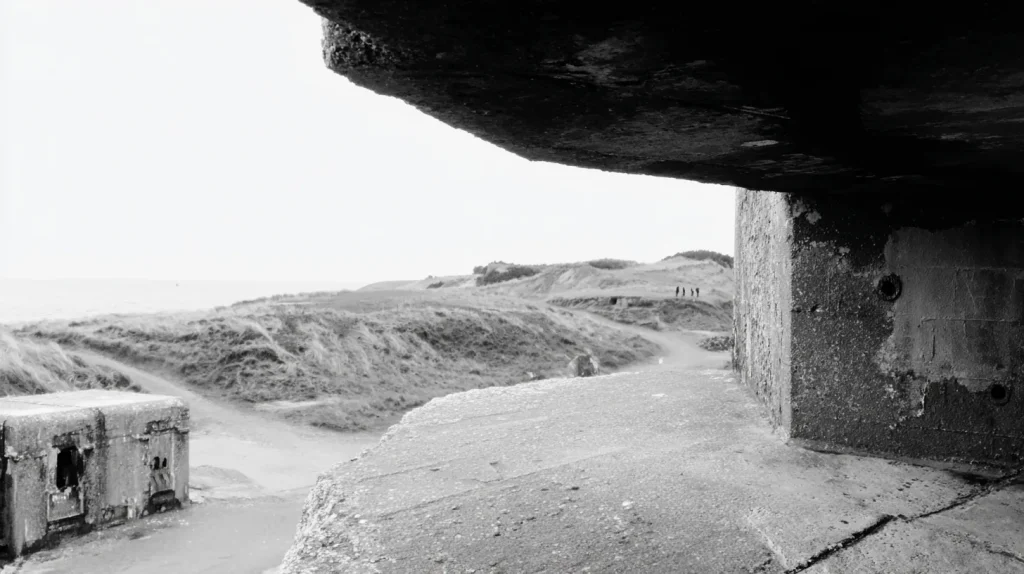
The British and Canadian beaches sit east of Omaha, roughly 25–40km along the coast toward Ouistreham.
For a first-time visitor, these beaches tend to land less viscerally than Omaha and Pointe du Hoc. That’s not because the fighting there was less significant — the British and Canadian sectors saw fierce combat and real casualties — but because the memorial and museum infrastructure is more spread out, the beaches carry less surviving physical evidence, and many of the towns have been rebuilt into lively modern vacation destinations.
Gold Beach is near Arromanches, where the remains of the Mulberry Harbour — a prefabricated artificial port the Allies built after D-Day to supply the invasion — still jut from the sea. The ruins are visible from the beach and genuinely fascinating from an engineering standpoint. The Allies built two of these artificial harbors in a matter of weeks and used them to land millions of tons of supplies while the main French ports remained in German hands. One was destroyed in a storm shortly after construction; the other, at Arromanches, partially survives. The nearby Arromanches 360 circular cinema shows archival D-Day footage projected onto a curved screen and is worth about 20 minutes.
Juno Beach has the Juno Beach Centre in Courseulles-sur-Mer, the only Canadian museum on the D-Day beaches, dedicated to Canada’s role in D-Day and the wider war. It honors the roughly 45,000 Canadians who died during the Second World War, including 381 on D-Day itself. Standard adult admission is €9 (€13.50 with a guided bunker tour added), with reduced rates for students and families. Hours run 9:30am–7pm in May through August, narrowing gradually through the shoulder and winter months — check current hours before visiting. If you have Canadian family history connected to this battle, this is the museum to prioritize.
Sword Beach is the least developed for tourism of the five. The beach around Colleville-Montgomery and Lion-sur-Mer has some memorials and remaining bunkers but fewer dedicated visitor facilities, which makes it quieter — something some visitors prefer. Sword was where French Commandos under Philippe Kieffer, the only French unit to land on D-Day itself, came ashore, and there are memorials to their landing along this stretch of coast. Pegasus Bridge, where British Airborne troops landed by glider and seized a critical canal crossing in the first minutes of D-Day, is preserved nearby in Bénouville and absolutely worth a stop if you’re in the eastern sector.
How to Plan Your Visit
One day: Focus on the American sector — Omaha Beach, the American Cemetery at Colleville-sur-Mer, and Pointe du Hoc. This is a full, emotionally demanding day. Start around 9am and allow three to four hours for the cemetery and Omaha combined, plus one to two hours at Pointe du Hoc, given its current reduced access. If time allows, finish at the Utah Beach museum.
Two days: Day one is the American sector above. Day two covers the British and Canadian beaches eastward — Arromanches and the Mulberry Harbour remains, the Juno Beach Centre, and Sword if you want to go further.
Guided vs. self-guided: Guided tours from Bayeux or Caen are widely available and typically run in the €50–90 per person range, varying by tour length and group size. They’re efficient and pair well with an expert guide who can bring the history to life between sites. Self-guided by car gives more flexibility and lets you linger longer wherever it feels warranted — which, at Omaha, might be longer than you expect.
Getting to the Beaches
From Paris, take the train to Bayeux from Gare Saint-Lazare; the journey typically runs somewhere between about 2 hours and 2 hours 30 minutes depending on the specific service. A rental car from Bayeux or Caen is necessary for reaching the beaches themselves, since no practical public transport connects the sites.
From Caen, it’s about 30 minutes by car to Omaha Beach. From Bayeux, it’s roughly 30–40 minutes to Omaha, slightly less to the American Cemetery.
Book your rental car in advance from Caen or Bayeux — these are small towns with limited rental fleets, and availability can tighten up during peak season.
FAQ
How many D-Day beaches are there in Normandy? Five: Utah, Omaha, Gold, Juno, and Sword. They span roughly 80km of Normandy coastline, and each beach was assigned to a different Allied force on June 6, 1944. Utah and Omaha were American sectors; Gold was British; Juno was Canadian; Sword was British and International.
Is it worth visiting the D-Day beaches without a guide? Yes. A self-guided visit by car gives you more time at the sites that move you and less time at ones that don’t. The museums at Utah Beach and the American Cemetery’s visitor center provide enough historical context to understand what you’re seeing on their own. A guide adds depth but isn’t required for a meaningful visit.
How long do you need at the D-Day beaches? One full day covers the American sector — Omaha, the Cemetery, Pointe du Hoc, and Utah if time allows. Two days lets you add the British and Canadian beaches. Don’t rush it; Omaha Beach and the American Cemetery alone can easily absorb two to three hours if you let them.
Is the Normandy American Cemetery free? Yes. Entry, parking, and the visitor center exhibition are all free of charge. It’s maintained by the American Battle Monuments Commission and open daily, 9am to 4:45pm, year-round.
When is the best time to visit the D-Day beaches? May and September balance good weather with manageable crowds. June 6, the D-Day anniversary, brings commemorative events that can be moving but also considerably more crowded depending on the year. July and August are the busiest months at the main sites. Arriving early in the morning, before 10am, tends to give the most peaceful experience at Omaha and the Cemetery.