The lavender photo that convinced you to go? It was taken in a roughly three-week window in late June or early July. Plan your entire Provence trip around recreating that shot and you’ll be competing with several tour buses for the same angle — at 10am, in blistering heat, with nowhere left to park.
The honest answer about the best time to visit Provence is that it depends entirely on what you came for. And the “visit in May or September” advice most guides give you skips some real tradeoffs. September is increasingly crowded as the word has spread. October — commonly recommended as a shoulder season — is actually the wettest month in the region’s climate calendar. And the Mistral, a fast, cold, relentless wind, can turn a winter walk through a hilltop village into something that requires real rethinking.
Here’s what each part of the year actually gives you, and what you’re trading away for it.
Spring in Provence (March–May): the underrated season
March starts slowly. Many restaurants in the Luberon villages are still closed after winter, and the hilltops feel quiet in a way that reads as peaceful or sparse depending on your expectations. By mid-April, that shifts. Wildflowers cover the Alpilles and the Luberon slopes. Orchards bloom in sequence — almond first in March, then cherry in April, poppies through May. The light is soft, the air is cool, and the viewpoints at Gordes and Roussillon are yours without a crowd.
May is probably the best single month for most travelers who aren’t specifically chasing lavender. Highs typically run somewhere around 19°C. Summer crowds haven’t arrived yet. Markets carry spring produce — asparagus, strawberries, early cherries. The Cannes Film Festival takes over the Riviera in mid-May each year; official events are industry-only, but the Cinéma de la Plage on Macé Beach screens classics outdoors for free in the evenings — a strange, genuinely enjoyable bonus if you’re passing through the coast at the right time.
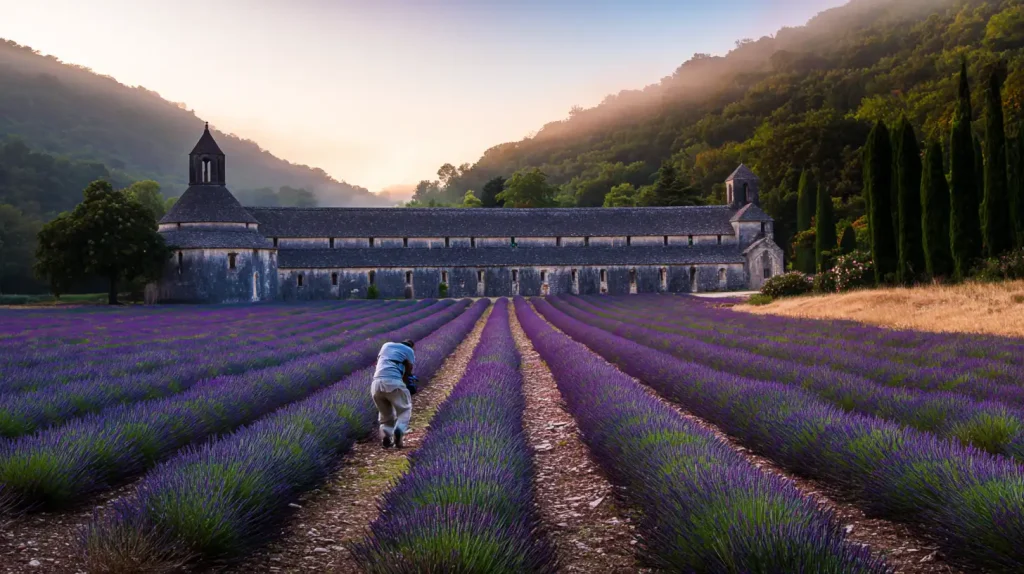
The downside: no lavender. If the fields are your primary reason for going, spring doesn’t deliver.
May is also when hiking in the Luberon Regional Natural Park is at its best. The GR trails across the Petit and Grand Luberon ridges pass through oak forest and open garrigue scrubland, with wildflowers everywhere and the air carrying thyme and rosemary in the sun. Temperatures are cool enough to walk comfortably at midday, which can’t really be said of July. If walking is a serious part of your Provence trip, spring is genuinely the best window for a full day on the trails.
One real caveat for March and April specifically: the Mistral wind (more on this below) is especially active in these months. You can have a glorious warm afternoon and a genuinely cold morning on the same day. Layers aren’t optional.
June: the window opens
Early June still feels like shoulder season — crowds are building but manageable, temperatures are warm without being brutal (typically around 23°C highs), and the countryside is green and full after spring rains.
Lavender starts opening at lower Luberon elevations from around mid-June. Sénanque Abbey’s field typically comes into peak bloom from the last two weeks of June through the first week of July, though the exact timing shifts year to year with weather. Late June, for many experienced travelers, is the sweet spot of the whole year: the first wave of lavender with meaningfully fewer people than peak July, long evenings, full restaurant hours, and prices that haven’t yet hit their summer ceiling.
Saint-Rémy-de-Provence and several other Provençal towns hold traditional transhumance parades in June — flocks of sheep, goats, and sometimes donkeys driven through the village streets by shepherds and their dogs, marking the seasonal move to summer pasture. Exact dates shift year to year, so check locally if this is something you want to plan around, but if you’re visiting with children, or just like the idea of a flock filing through a medieval square, it’s worth the effort.
Book Luberon accommodation well ahead — ideally by spring — if you’re going in late June. Properties fill from June onward, and the best stone farmhouses (mas) sell out early.
July: peak everything
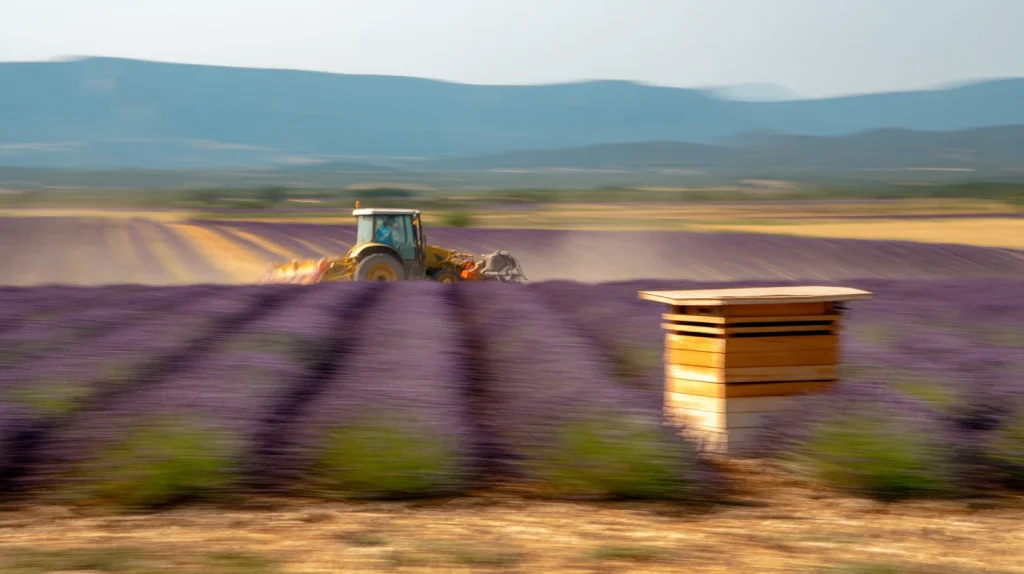
July is when Provence becomes the Provence of the photographs. Lavender fields hit peak bloom in early July across Sénanque Abbey, the Valensole plateau, and the higher-altitude fields around Sault. The whole region turns purple-grey and it is genuinely arresting. It’s also extremely crowded — Gordes parking gridlocks by 10am on weekends, Roussillon’s ochre trail bakes by noon, and every restaurant worth eating at in the Luberon needs a reservation.
The Avignon Festival — both the official Festival IN and the independent Festival OFF — runs for three weeks in early-to-mid July (in 2026, from July 4 to 25). If you want to be in Avignon during it, book months ahead. The festival is extraordinary — performances in the Palais des Papes courtyard, in churches, in the streets — but prices spike and the city is packed for the entire run.
The Chorégies d’Orange, France’s oldest lyric festival, held in the Roman theatre at Orange, typically runs from around late June into mid-July rather than August — worth noting since older guides sometimes place it later in the summer. The 2026 season in particular is a notably reduced programme following organizational changes, so check the current year’s schedule directly before planning around it.
July climate: highs generally around 26°C, and it’s the driest month of the year with rainfall typically well under 30mm for the whole month. If the heat bothers you, plan your Luberon days for early morning or after 5pm — midday in a stone hilltop village with no shade is a different kind of challenge.
August: hot, crowded, but not entirely wrong
Everyone warns you about August. It is the busiest month in Provence. Luberon hotel rates can climb sharply from May pricing. The French take their own summer holidays in August, layering domestic travel on top of international tourism at the same time.
But August has underrated upsides. Temperatures peak somewhere around 27°C, yet evenings stay long and cool enough for outdoor walking well into the night.
Early mornings in the Luberon in August — before 8am — are some of the most peaceful experiences the region offers. If you can stay inside the Luberon circuit rather than driving in from outside, the villages at dawn belong to you before the day-trippers arrive.
One honest note: lavender harvesting begins in earnest in July and August, and the fields start looking brown and cut through this stretch. If you came for the purple, plan for late June or July — not August.
September: the consensus pick (with caveats)
September is what almost every guide names as the best month, and they’re mostly right. Temperatures drop to pleasant highs typically around 24°C. The summer surge thins out. La vendange — the grape harvest — starts in mid-September, and the vineyards around Châteauneuf-du-Pape, Gigondas, and the Luberon fill with activity. Many wine estates welcome visitors during harvest, and tastings at this time of year have a different character: the press is running, the cellars smell of fermenting fruit, and winemakers who are otherwise hard to book become more accessible because everyone’s working outdoors.
Worth knowing: September is no longer especially quiet. Enough experienced travelers have caught onto the same tip that the month fills up faster than it did a decade ago. A Luberon village on a September Saturday still looks meaningfully better than July — less traffic, cooler air, lower prices — but it’s not empty either.
One specific note: early September still feels like summer. Late September shifts — some smaller Luberon restaurants start closing Mondays and Tuesdays as the season winds down, so it’s worth confirming hours before driving somewhere specifically for dinner.
September also does something the other months don’t: it makes Provence feel lived-in rather than overrun. Markets in Apt, L’Isle-sur-la-Sorgue, and Lourmarin return to something closer to their regular rhythm, restaurants that were booked solid in July have tables again, and the viewpoint above Gordes has room to breathe. That slower pace — still warm, still sunny, still full of good things to eat and drink — is often the version people are actually hoping for when they start dreaming about a trip to the south of France.
October: the month that surprises people
October often appears on “best time to visit” lists because it sounds right on paper — harvest season, golden vineyards, warm days, fewer crowds. And October does give you all of that.
It also tends to be genuinely the wettest month of the year in Provence’s climate — commonly averaging somewhere around 90 to 100+ mm of rain, several times July’s total. It doesn’t rain every day, but October storms in the south of France can arrive suddenly and hit hard. If your trip catches one, the hilltop villages are beautiful in a different way — wet stone, empty streets, firelight glowing from restaurant windows — but it’s not the itinerary you planned.
Many smaller Luberon village properties — hotels, restaurants, gîtes — begin closing progressively through October, and by late in the month, options outside Avignon and Aix-en-Provence become noticeably more limited. If you’re going in October, earlier in the month is generally the safer bet on both weather and opening hours.
One thing October does well: olive harvest begins. Provence’s olive mills start pressing from late October through November, and visiting a moulin during pressing season is one of the more underrated experiences the region offers.
Winter (November–February): for those who know what they’re going for
Most Luberon village restaurants and hotels close from November through March. Gordes, Roussillon, Bonnieux — the circuit that defines the classic Luberon visit — largely shuts down for the season. If your Provence trip is built around the hill villages, winter isn’t the right window.
What winter actually gives you: Avignon, Aix-en-Provence, and Arles stay open year-round and are noticeably quieter. Christmas markets in Aix and Avignon run from late November through December, with genuinely good local produce, crafts, and santons (the hand-painted nativity figurines that are a real Provençal tradition). Truffle season peaks in January and February, with dedicated markets in towns like Richerenches and Carpentras drawing buyers early on Saturday mornings — schedules are worth checking directly with the local tourism offices, since exact market days can shift. Fresh truffle shaved over scrambled eggs at a village café in the depths of winter is a genuinely good way to spend a morning.
Snow occasionally falls in the Luberon region in winter. When it does, the empty villages under snow look extraordinary and entirely different from their summer selves.
Mimosa trees bloom along the coast from January into February — early and bright yellow against grey stone. If you’re in Avignon or Arles in January and the weather cooperates, the light can be excellent: low-angled, clean after a Mistral passes through, with none of the summer haze. You can often have a whole restaurant to yourself, and the locals tend to treat you like a regular person rather than a tourist. For a certain kind of traveler, this is the only time to go.
The Mistral: the factor nobody warns you about
The Mistral is a cold, dry wind that blows from north to south down the Rhône Valley. It reaches well over 60 km/h at its strongest, can run for days without stopping, and makes outdoor activity in the Luberon and Alpilles genuinely difficult while it’s blowing. Most travel guides skip it entirely. That’s a mistake.
The Mistral is most common in winter and spring, but it can arrive in any season, including summer. You won’t find it mentioned in most seasonal guides because it’s inconvenient to include, but two days in Gordes with a sustained cold wind is a meaningfully different experience from the calm summer version of the same village.
The upside: after a Mistral passes, the sky is scoured clean and the light is exceptional. Provence’s famous photographic clarity — the brightness that drew Cézanne into the countryside — comes partly from the Mistral scrubbing the atmosphere. A day after a Mistral, in any season, is often the most beautiful day of a trip.
Matching your trip to the calendar
If you’re going for lavender: aim for late June or early July, focusing on Sénanque Abbey and the Valensole plateau. Book Luberon accommodation well in advance — ideally by spring.
If you’re going for wine harvest: mid-September, around Châteauneuf-du-Pape or the Luberon estates. Combine with Bonnieux and Lourmarin for the best autumn hill-village experience.
If markets and food are your focus: May or September, when produce is at its seasonal peak and you won’t need reservations two weeks out for dinner.
If you’re a hiker: May or early June. The GR trails through the Luberon Natural Park are green, temperatures are walkable all day, and the light lasts long into the evening.
If you want to mostly avoid everyone: February in Avignon. Cold, possibly windy from the Mistral, a handful of restaurants closed for the season — but truffle season, post-Christmas-market calm, and a city seen without the summer filter.
Frequently asked questions
When is the single best month to visit Provence? September is the most consistent recommendation — warm temperatures, grape harvest in full swing, and crowds noticeably lower than July and August. If lavender is specifically your goal, though, late June or early July is the better window, since the fields are cut and brown by September.
When does the lavender bloom in Provence? Peak bloom generally runs from around the last two weeks of June through the first week of July at Sénanque Abbey and the lower Luberon, with higher-altitude fields around Sault sometimes holding color into August. Exact timing shifts year to year with rainfall and temperature, so check closer to your travel dates if the lavender is the main draw.
Is October a good time to visit Provence? It has real appeal — harvest season, golden light, thinner crowds — but it’s also typically the wettest month of the year in the region, and many smaller village hotels and restaurants begin closing through the month. Early October is a safer bet than late October on both fronts.
What is the Mistral and when does it happen? The Mistral is a strong, cold, dry wind that blows down the Rhône Valley, most common in winter and spring but possible in any season. It can make outdoor time in the Luberon and Alpilles genuinely uncomfortable while it’s blowing, though the days immediately after it passes tend to have exceptionally clear light.
Is Provence too crowded in summer? July and August are genuinely the busiest months, especially in postcard villages like Gordes and Roussillon, and prices climb accordingly. If lavender isn’t the priority, late spring or September generally deliver a more comfortable trip with a similar range of things to see and do.