Nice has a reputation for being expensive. The French Riviera, the yachts in the harbor, the €18 glasses of rosé at Promenade des Anglais beach clubs — it all reads like a place where money evaporates without much to show for it.
That reputation is partially earned. If you eat every meal on the Cours Saleya or along the Promenade, rent a sunlounger at a private beach every day, and book a hotel with sea views in July, Nice will cost you more than almost anywhere else in France.
But here’s what most budget guides miss: the expensive version of Nice is largely a choice. The city has genuinely free beaches, good food for under €10, museums that are free on the first Sunday of every month, and public transport that costs less than €2 per ride. You can do Nice well on a modest daily budget as a solo traveler, or a bit more for two. Here’s exactly where the money goes, where it doesn’t have to, and what to actually expect.
What Does Nice Actually Cost? The Honest Numbers
Accommodation:
- Hostel dorm bed: €25–50/night
- Hostel private room: €75–100/night
- Budget hotel (city center): €75–100/night
- Mid-range hotel: €120–200/night
- Summer premium: add 30–50% to all of the above in July–August
Food and drink:
- Socca from a street stall: €3.50–5
- Pan bagnat (local sandwich): €5–7
- Prix-fixe lunch at a sit-down restaurant: €12–20
- Casual sit-down dinner: €15–22 per person
- Glass of wine at a café: €4–8
- Beer: €5–7
- Cappuccino: €3
- Groceries for a day of self-catering: €10–15
Transport:
- Single bus or tram ticket: €1.70 (valid 74 minutes, including transfers)
- Day pass: €7
- 7-day pass: €20
- Bike share (Lime or Pony, both app-based, per-minute pricing): roughly €3–4 for a short trip; costs rise quickly with duration, so this only makes sense for short hops
Attractions:
- Nice’s municipal museums (Matisse, Palais Lascaris, Beaux-Arts, and others): individual admission generally runs around €10 (a combo ticket valid 48 hours across the municipal museums), though residents of Nice and the wider metropolitan area get free entry year-round, as do visitors under 18. All of these museums are also free to everyone, no exceptions, on the first Sunday of every month.
- MAMAC (contemporary art): closed for renovation since January 2024, with a “nomadic” program of exhibitions in partner venues around the city in the meantime — check current listings before planning around it.
- Nice Museum Pass (covers the municipal museums for several consecutive days): around €15.
- Musée National Marc Chagall (a national museum, not a city one, so it isn’t covered by the municipal pass): around €10–12, also free on the first Sunday of the month.
- French Riviera Pass (24/48/72 hours): roughly €30/€45/€65 — bundles museum and attraction access, a hop-on hop-off bus, a guided Old Nice tour, and access to Palais Lascaris. It does not include regular public transport.
Suggested daily budgets:
- Backpacker: €50–80/day (hostel dorm, self-catering some meals, public transport, free sights)
- Mid-range: €130–175/day (private hotel room, eating out most meals, one or two paid activities)
- Comfortable: €200–300/day (3-star hotel, restaurant for every meal, day trips)
The Money Traps: Where Tourists Overspend
Private Beach Clubs
The single biggest invisible cost for first-timers. The beaches along the Promenade des Anglais alternate between private sections (attached to beach clubs) and public sections. The private clubs rent sunloungers with an umbrella for €20–40 per person per day. You’ll spot them from the promenade — neat rows of identical loungers with attentive staff.
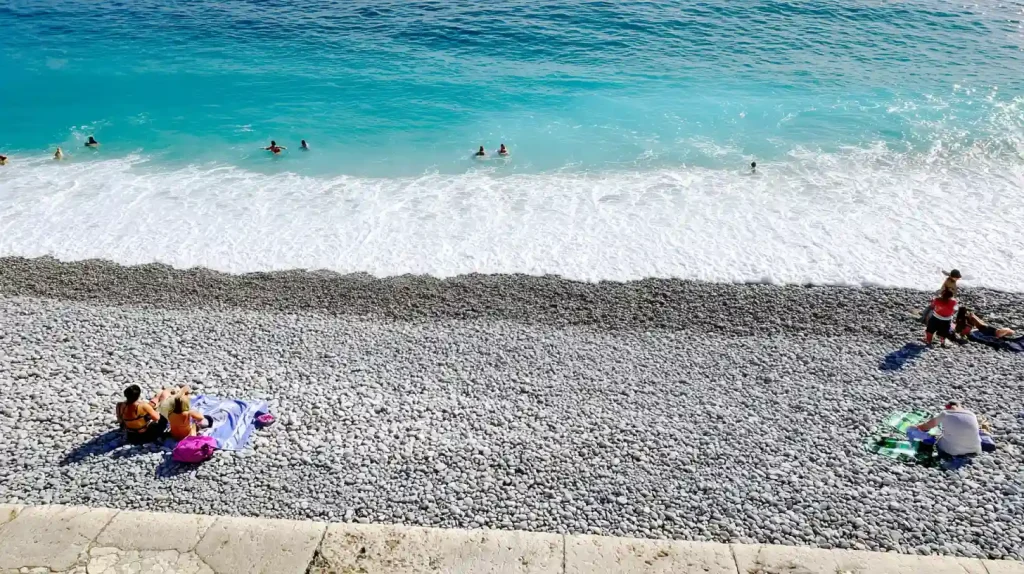
The public sections are free. They’re pebble, the same pebble as everywhere else in Nice, with access to the same Mediterranean water. In July and August the public sections get genuinely crowded, but they exist, and they cost nothing.
If the idea of a lounger, towel service, and a waiter bringing drinks appeals to you, that’s a perfectly reasonable choice — just know it’s a choice, not a necessity.
The Promenade and Cours Saleya Restaurant Strip
Restaurants directly on the Promenade des Anglais, and those lining the tourist end of the Cours Saleya, tend to charge tourist prices — €18–25 for a main course, with quality that doesn’t really justify the markup. They’re positioned for convenience and view, not value.
Better options are two or three streets inland from the Promenade, and in the residential end of Vieux Nice away from the market square. Local set lunch menus — prix-fixe — run €12–15 for two or three courses at good neighborhood restaurants. These exist in Nice; you just have to walk past the obvious choices to find them.
Peak Season Pricing
Nice in August genuinely costs more than Nice in October, and the difference isn’t small. A budget hotel room running €70/night in October can climb to €110–130 in July. A hostel dorm at €25 in November might be €45–50 in August. If your dates are flexible, shifting your trip to May, June, September, or October saves real money without sacrificing the actual Nice experience.
What’s Actually Free (There’s More Than You’d Think)
Nice’s free attractions are genuinely good, not just consolation prizes.
The Promenade des Anglais itself — the 7-kilometer seafront walk — is free. Walking it at dawn before the crowds arrive is one of the better experiences the city offers, no admission required.
The public beaches are free.
Castle Hill (Colline du Château) is free to enter, including the elevator if you’d rather not walk up. The views from the top are the best in the city and the park itself is pleasant.
Jardin Albert I, Nice’s central park near Place Masséna, is free and has a good fountain feature.
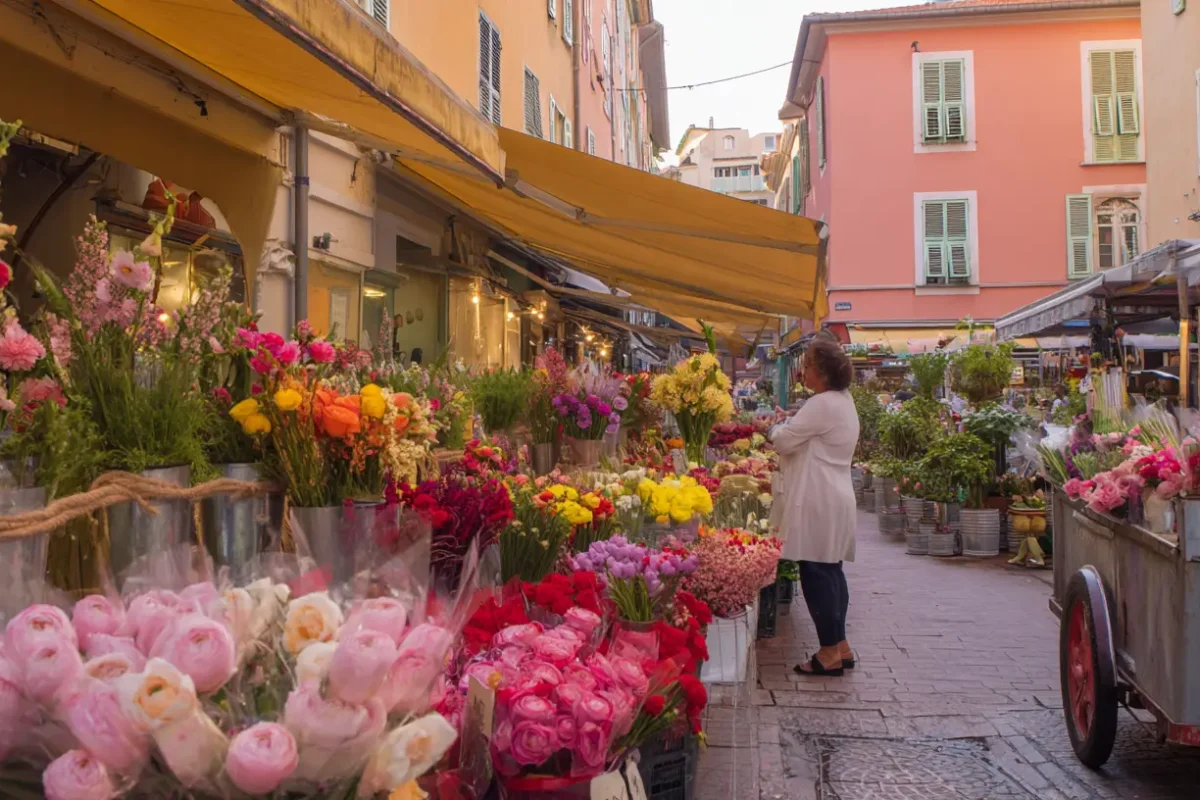
Vieux Nice — the old town — is entirely free to walk around. The Cours Saleya market costs nothing to browse; buying a cup of socca and eating it while wandering the lanes is a €4 morning activity.
Most of Nice’s municipal museums are free for residents of the city and metropolitan area, free for anyone under 18, and free for everyone on the first Sunday of each month — for other visitors on other days, expect to pay around €10 for a combo ticket, so it’s worth timing a museum-heavy day around that first Sunday if your schedule allows.
The Russian Orthodox Cathedral of St Nicholas is free to enter.
Where to Eat Well Without Overspending
Socca stalls — Chez René Socca, just off the main tourist square on Rue Miralheti in Vieux Nice, moves a fast-moving line and the socca comes straight off the pan. Under €5 for a satisfying portion. This is local fast food, not a tourist attraction dressed up as street food.
Pissaladière — The Niçois answer to pizza: a tart topped with slowly caramelized onions, anchovies, and black olives. Sold by the slice at bakeries and market stalls throughout Vieux Nice, usually under €4.
Pan bagnat — The city’s signature sandwich, a round roll soaked in olive oil and stuffed with tuna, hard-boiled egg, anchovies, tomatoes, and salade Niçoise ingredients. The good ones come from bakeries rather than tourist-facing sandwich counters. Budget €5–7.
Prix-fixe lunch — The best-value sit-down meal in France is lunch, not dinner. Restaurants throughout Nice offer a two- or three-course set lunch (entrée + plat, or plat + dessert) for €12–18. The same kitchen that charges €25 for a main course at dinner will often serve you two courses at noon for €14. Go at lunch rather than dinner whenever you can.
Supermarket self-catering — Monoprix, Carrefour City, and Casino all have decent prepared-food sections where a full meal costs €8–12. A baguette, a wedge of good cheese, some charcuterie, and fruit from the Cours Saleya market makes one of the better cheap meals in the city. This is genuinely the single most effective budget strategy in Nice.
Getting Around on a Budget
The Lignes d’Azur public transport system covers Nice well with buses and three tram lines. A single ticket costs €1.70 and is valid for 74 minutes, including transfers between bus and tram. If you’re moving around the city a lot in a day, the €7 day pass makes sense; a €20 seven-day pass is good value for a week-long stay.
The old town and much of the city center is walkable. Castle Hill, Vieux Nice, the Promenade, Cours Saleya, and Place Masséna are all within comfortable walking distance of each other — you can spend entire days without needing any transport at all.
One thing worth knowing if you remember Nice’s old Vélobleu bike-share system: it no longer exists. The city-run scheme was replaced in 2024 by two private operators, Lime and Pony, both app-based with per-minute pricing rather than the old flat day-pass model. They’re genuinely useful for a quick, mostly electric-assisted hop across town, but they cost noticeably more than the old system did, especially for longer rides — budget a few euros for a short trip and check the app’s pricing before committing to anything longer.
Budget Day Trips by Train
One underrated budget move in Nice: the regional TER train network runs along the coast and makes day trips genuinely cheap.
Monaco by train from Nice-Ville takes around 20–25 minutes, with one-way fares typically running €4–7. You can spend a full day in Monaco — walking the palace square, watching the harbor, having an affordable lunch at the market — and return to Nice without the cost of a guided tour.
Villefranche-sur-Mer is about 6 minutes away and roughly €2–4 by train. Antibes takes around 20–25 minutes and costs roughly €5–6 each way. These are some of the cheapest, easiest day trips on the whole Riviera.
The Train des Merveilles, a scenic mountain railway running from Nice up into the Roya Valley and the village of Tende, is worth the detour if you want a day that looks nothing like the coast — gorges, viaducts, and mountain villages. A dedicated unlimited day pass for the line runs around €20 per person, which works out cheaper than buying a standard round-trip TER ticket for the full route. It typically runs daily from June through early October, with a scaled-back weekends-only schedule outside that window, so check current dates before planning around it.
The Passes: Are They Worth It?
Nice Museum Pass (around €15): Makes the most sense if you’re planning to visit several of the paid municipal museums back to back over a few days. Since residents get in free and everyone gets in free on the first Sunday of the month, it’s worth checking your specific dates and museum list against the pass price before buying — for a short visit outside the free Sunday, two or three museum entries at roughly €10 each can already approach or exceed the pass price.
French Riviera Pass (roughly €30/€45/€65 for 24/48/72 hours): Bundles museum and attraction access, a hop-on hop-off bus, a guided Old Nice tour, and entry to Palais Lascaris, though it doesn’t include regular Lignes d’Azur public transport. It tends to pay for itself if you’re packing in multiple paid activities and sites in a short window — run the numbers against your actual planned itinerary before buying, since the value swings a lot depending on how many attractions you’ll realistically fit in.
The Honest Bottom Line
Nice is not cheap in the way that Eastern European cities or Southeast Asian destinations are cheap. The cost of living here is high, the location is aspirational, and the tourist-facing economy prices accordingly.
But it’s entirely possible to do Nice well without burning through your budget. Free first-Sunday museum access, cheap public transport, market food, public beaches, and inexpensive train day trips to Monaco or Villefranche — all of this exists. The expensive version of the city is real, but it’s not mandatory.
Budget-conscious or not, the strategy is the same: eat lunch rather than dinner at sit-down restaurants, use the tram rather than taxis, stay two streets back from the Promenade, and let the free beach do the work that a €30-a-day sunlounger charges for.
FAQs
Is Nice expensive to visit? It can be, particularly in July and August and if you’re eating at tourist-facing restaurants on the Promenade or renting private beach club sunloungers daily. But Nice also has free public beaches, museums that are free on the first Sunday of every month, cheap public transport (€1.70 a ride), and street food under €5. A daily budget of €60–80 per person is achievable with some planning.
What can you do for free in Nice? Walk the Promenade des Anglais, explore Vieux Nice, swim at the public beaches, hike up Castle Hill, browse the Cours Saleya market, and visit the municipal museums (including the Musée Matisse) on the first Sunday of the month, when admission is free for everyone. Nice residents and under-18s get free museum entry year-round; other visitors on other days generally pay around €10.
How much does food cost in Nice? Street food like socca costs €3.50–5. A prix-fixe lunch at a sit-down restaurant runs €12–18 for two courses. A casual dinner is €15–22 per person. Self-catering with market produce and supermarket food cuts costs significantly.
What is the cheapest way to get around Nice? The Lignes d’Azur bus and tram network. A single ticket costs €1.70 (valid 74 minutes with transfers), a day pass is €7, and a 7-day unlimited pass is €20. Most of the central tourist area is also walkable, and much of it can be covered on foot alone.
Is Nice cheaper in the off-season? Yes, significantly. Hotel prices in October–November and January are typically 30–50% lower than in July–August. Restaurants are less crowded, the public beaches have actual space on them, and it’s easier to plan a museum day around a quiet, uncrowded first Sunday of the month.