The narrow alley is barely shoulder-width. The walls are orange and faded pink and old yellow, and someone is frying something that smells good enough to stop you mid-step.
That’s Vieux Nice, and the old town actually earns the attention it gets. Most European “old towns” trade on nostalgia while feeling polished into something artificial. Vieux Nice still feels lived in. Locals buy vegetables from the market alongside tourists, women carry flowers back from Cours Saleya, an old man reads the paper outside a bar on Rue Droite. It works.
One question brings most people to this page: do you need tickets for Vieux Nice? The answer is no. Vieux Nice is a neighborhood, not a ticketed attraction — you walk in, wander freely, and leave. The only place inside it that charges admission is Palais Lascaris, a Baroque palace museum, at €5 per person. Everything else — Cours Saleya, the Baroque churches, Colline du Château, the streets themselves — costs nothing.
But free doesn’t mean effortless. Knowing when to go and what’s actually worth your time makes the real difference between a good visit and a hot, crowded, forgettable afternoon.
What Vieux Nice Old Town Actually Is
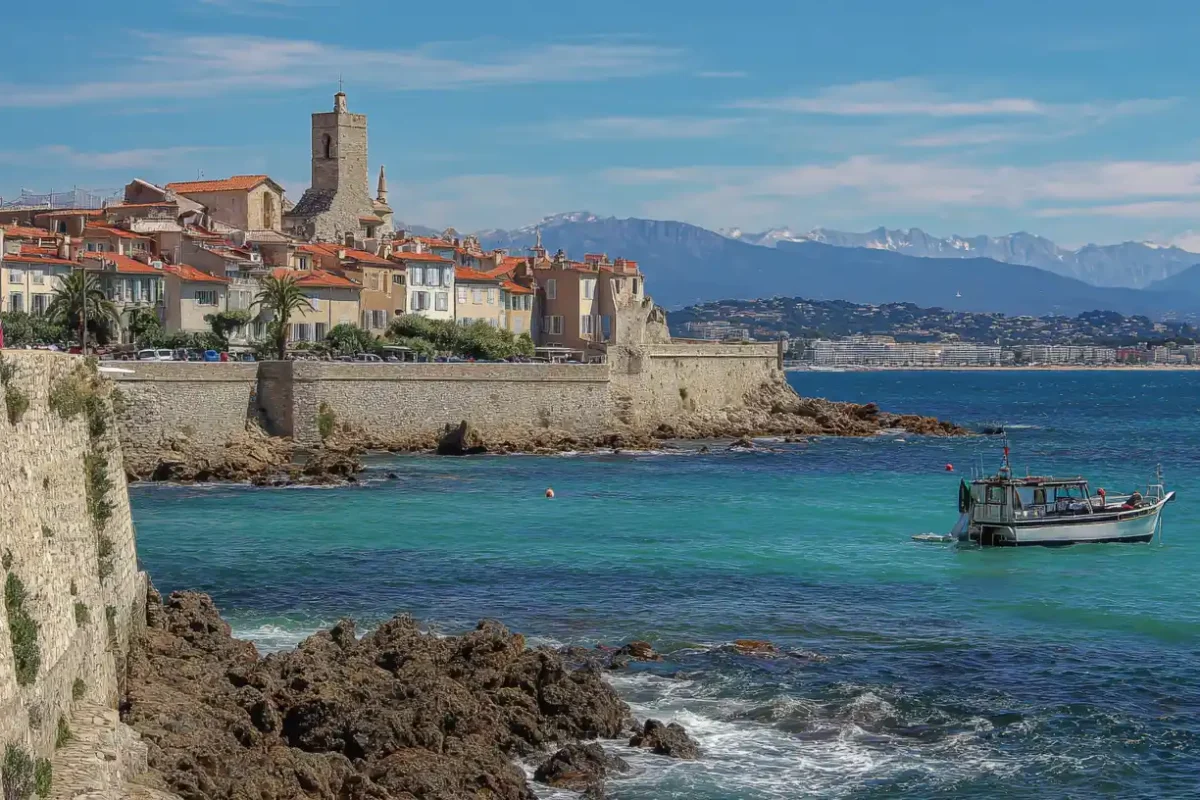
Vieux Nice sits pressed against the western side of Castle Hill, with the Port de Nice to the east and the Baie des Anges to the south. It covers roughly ten blocks of narrow pedestrian streets where most buildings date to the 17th and 18th centuries, built when the Dukes of Savoy controlled this corner of Europe.
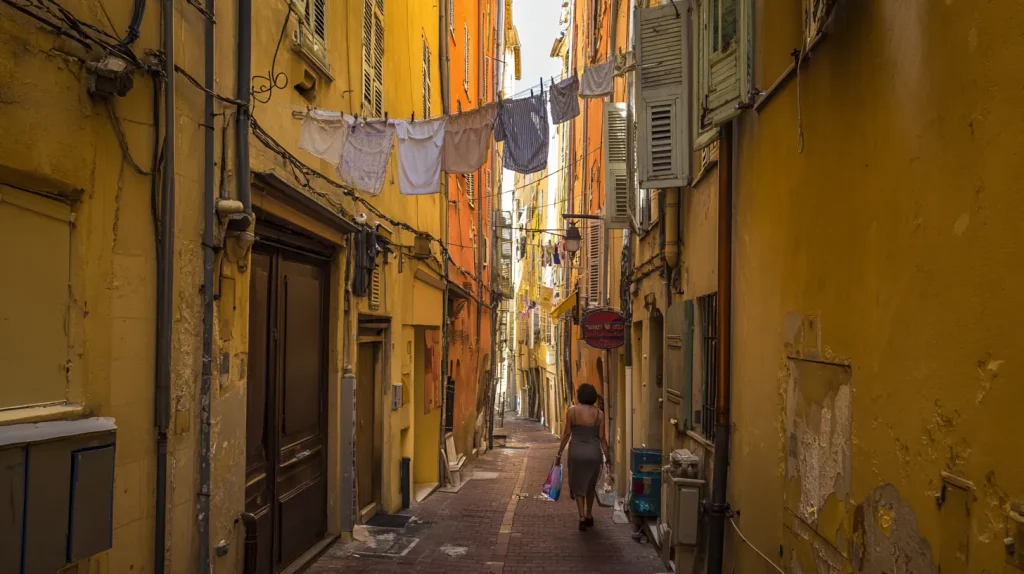
The architecture is Baroque — heavily ornamented, colorful, theatrical. When the nobility moved down from Castle Hill into the lower town, they wanted it to show. Churches with plain stone facades hide frescoed ceilings inside; palaces with grand staircases sit behind unmarked doors. The whole district was built upward, street by street, as the population grew and space ran out. Some buildings genuinely look like they’re leaning slightly. They are.
Every street sign carries two names: French on top, Niçois (or Nissart) below it. Niçois is the old local dialect, related to Occitan and Ligurian. It’s not widely spoken today, but the city keeps it visible as a marker of a distinct regional identity. Nice only became part of France in 1860 — before that, it belonged to the Kingdom of Sardinia for centuries. The old town was built under different rulers, in a different language, for a different culture, which is honestly part of the point of visiting it.
The Cours Saleya Market
Cours Saleya is the main open square at the edge of the old town, and the flower and food market is what draws most visitors. Tuesday through Sunday, stalls stretch along the full length of the street with flowers, vegetables, fruit, local herbs, and a handful of souvenir items — the produce and food side of the market generally runs from around 6am to about 1:30pm, while the flower stalls stay open into the late afternoon. On Mondays, an antiques and flea market takes over the same space instead, running roughly 7am to 6pm.
The honest take: the market is at its best before 9:30am. Arrive early, around 8:30am, and the stalls are full, the light is soft, the paths are navigable, and you can actually stop and look at things. After 10am, tour groups fill the narrow corridors between stalls and the experience shifts from browsing a market to pushing through a crowd.
Most vendors prefer cash. Prices are what you’d expect from a market that knows it’s a tourist draw — not brutal, but not local-market cheap either. The flowers are genuine and often reasonably priced. Chez Thérésa is the most famous stall for socca, the local chickpea pancake, cooked on a large iron griddle, sliced into wedges, and eaten standing up. It’s exactly as good as people say it is.
In summer, roughly mid-May through September, a night artisan market runs along Cours Saleya from around 6pm to midnight — jewelry, handmade accessories, local goods. It’s more relaxed than the morning market and genuinely pleasant if you’re staying nearby.
One honest caveat: the restaurants that line Cours Saleya look great. The outdoor terrace seats on a warm evening look like exactly where you want to be. But you’re largely paying for the view, not the food — the kitchens here range from acceptable to overpriced and uninspired. Eat elsewhere, ideally a street or two back, and come to Cours Saleya for a drink if it’s the atmosphere you’re after.
The Baroque Churches (Free, and Worth Going Inside)
Nice was a center of Baroque art in this region during the 17th century, and the old town has an unusual concentration of churches from that period. The plain exteriors are part of the style — showing wealth outwardly wasn’t always politically safe. Step inside, though, and the ornamentation is extreme: frescoed ceilings, gilt altars, marble floors, carved wooden choir stalls, cherubs distributed liberally across nearly every surface.
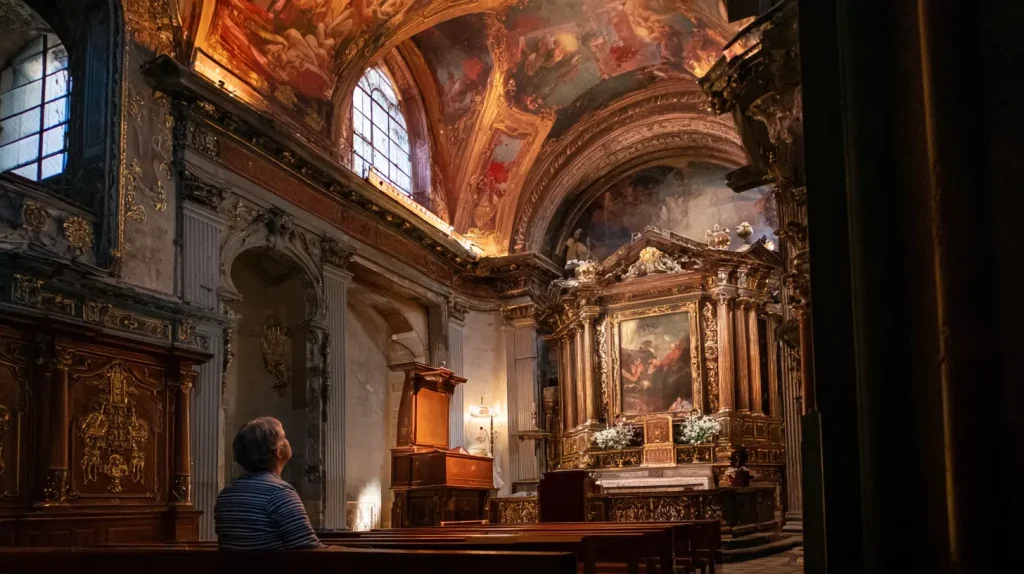
Chapelle de la Miséricorde stands at the corner of Cours Saleya and Place Pierre-Gautier and is regarded as one of the finer Baroque chapels in Europe. The interior has an oval floor plan, ceiling paintings of real quality, and a decorative density that takes a few minutes to properly absorb. It isn’t always open, so check the doors as you pass — if they’re open, go in.
Église du Gesù (formally Église Saint-Jacques-le-Majeur) is at 12 Rue Droite, built in the early 1600s. A yellow and pale blue facade sits outside a gold-heavy interior in the full Jesuit style — cherubs, gilt, and marble throughout. It’s one of those churches where the inside is a complete surprise given the outside, which is more or less the point.
Cathédrale Sainte-Réparate faces Place Rossetti and serves as the main cathedral of Nice; its dome is visible from several streets away. The interior is larger and more ornate than the intimate chapels nearby, and it’s worth a quick visit if you’re already sitting at Place Rossetti.
None of these charge admission.
Rue Droite and the Details Worth Noticing
Rue Droite runs east to west through the heart of Vieux Nice and is the main spine of the old town. Most of the interesting things sit along it, often without any obvious sign pointing them out.
Look up at the porticos as you walk. Many carry the letters IHS carved or painted into the stonework — a Christogram standing for Jesus Hominum Salvator, derived from the Greek letters for Jesus. It repeats across the old town often enough to become a kind of visual grammar of the neighborhood; once you notice it, you’ll keep seeing it.
On Rue de la Poissonnerie, just off Cours Saleya, a fresco of Adam and Eve covers part of a building facade at first-floor height, dating back to the late 16th century. Centuries on a building exterior in a dense, lived-in urban neighborhood, and it’s still visible — easy to walk right past if you’re only looking at street level, so look up.
At the corner of Rue Droite and Rue de la Loge, a cannonball sits mounted on one of the building facades. It was fired during the 1543 siege of Nice, when a Franco-Ottoman fleet under Barbarossa besieged the city — Nice was then under Savoyard rule and allied with Charles V, against whom the French and Ottoman forces were campaigning. Other cannonballs from the same siege remain embedded in the Chapel of the Blue Penitents on Garibaldi Square. The old town is full of these quiet, easy-to-miss records of history that most visitors walk straight past.
Palais Lascaris — The One Thing That Costs Money
Palais Lascaris is at 15 Rue Droite, and it’s the only place inside the old town that charges admission. Entry is €5, free for children under 13. It’s open Monday, Wednesday, Thursday, Friday, Saturday, and Sunday from 10am to 6pm, closed Tuesdays and a handful of public holidays.
Inside, it’s a 17th-century Baroque noble residence with a monumental staircase covered in frescoes, decorated reception rooms, and — the real reason to visit — a substantial collection of historic musical instruments, one of the largest of its kind in France and among the more significant in Europe. Harpsichords, lutes, violas da gamba, early woodwinds. If you have any interest in the history of music, it’s a genuinely unexpected and serious collection. If you don’t, the rooms and the staircase alone make the €5 feel worthwhile.
Budget somewhere around 30–45 minutes. It’s not a full-day museum, but it’s more substantial than the unmarked door on Rue Droite would suggest.
Colline du Château — The View That Changes How You See Everything
Colline du Château, Castle Hill, sits right at the edge of Vieux Nice and gives you the best aerial view of Nice: the Baie des Anges in one direction, the port in the other, the old town rooftops stacked below in all their faded colors.
The hill itself is free and open daily, roughly 8:30am to 8pm from April through September, and 8:30am to 6pm the rest of the year. A free elevator near the Bellanda Tower on Quai des États-Unis cuts the climb significantly, though its operating hours shift with the season and reports of exact closing times vary — plan on it running through most of the day, but don’t count on it right at either end. Alternatively, roughly 300 steps bring you up from near the same entrance, and the gentler Montée du Château path from inside the old town is the easiest option if you’d rather walk a gradual incline than climb stairs.
At the top: benches, shade, a waterfall that genuinely cools the air around it on hot days, and views that earn every step. It’s a municipal park that locals use for lunch breaks and evening walks, not a staged lookout ringed with souvenir stands — and that difference is what makes it worth an hour of your time rather than a quick photo and exit.
It’s easy to skip this if the climb feels like extra effort at the end of a long morning, but it would be a mistake to. Seeing the layout of Nice from above — how the old town sits compressed between the hill and the sea, how the rooftops interlock in patterns invisible from street level — genuinely changes how the rest of the visit lands.
Place Rossetti
Place Rossetti is a small square at the east end of the old town, framed by Cathédrale Sainte-Réparate and ringed by restaurant terraces. It has the settled, slightly worn feel of a square that people actually use rather than one designed for photographs.
The ice cream here is legitimately good. Fenocchio has been at this address for decades and is known for unusual flavors — violet, lavender, ginger, tomato, olive — that aren’t just novelty for the sake of it; the lavender and violet scoops in particular are worth trying. Nearby, Azzurra offers equally unusual options, including Provençal fig and cassis. You can make this a difficult decision, or you can just get one of each.
Best Time to Visit Vieux Nice
Early morning, before 9am, is the best window. The market is at full display, the light is clean, and the streets are quiet enough that you can actually stop and look at things. This window closes around 9:30am, when the first tour groups start arriving.
Late afternoon, from around 5pm, is the second-best option. The hard heat of midday is gone, the light turns warm, and both locals and visitors are back out. The market has finished for the day, but the streets and squares settle into their own evening rhythm.
Avoid midday in July and August if you can. The narrow streets trap heat and the crowds peak between roughly 11am and 2pm. It’s not dangerous — just genuinely uncomfortable and crowded in a way that reduces the experience to pushing through people.
November to March is underrated for the old town. The market is smaller, the crowds are thin, and the cold winter light gives the pastel facades a different quality — flatter, more serious, quieter. If you’re in Nice for more than a day and using it as a base for Riviera day trips, a winter visit to Vieux Nice works well.
Practical Notes Before You Go
The whole area is pedestrian-only. Taxis can drop you at the edge, and if you’re staying inside the old town itself, be aware that some hotel entrances are difficult to reach with large luggage through the narrow lanes.
Cash is genuinely useful here. Market vendors often don’t take cards, and small shops vary in what they’ll accept; most cafés and restaurants do take cards. Having roughly €20–30 in coins and small notes makes the market and smaller purchases considerably easier.
Pickpocketing happens here, as in any busy tourist zone. Keep your phone in a front pocket and don’t leave bags hanging on the back of café chairs. Standard city precautions — nothing more dramatic than that.
The nearest tram stops are Place Garibaldi and Place Masséna, both roughly 5–10 minutes’ walk from the heart of the old town depending on exactly where you’re headed.
FAQ
Is there a ticket to enter Vieux Nice old town? No. Vieux Nice is a public neighborhood with no entry fee — you walk in freely from any direction. The only paid attraction inside the district is Palais Lascaris, at €5 per adult.
How long do I need to see Vieux Nice? Two to three hours covers the main streets, a market visit, the key churches, and Place Rossetti. Add Colline du Château and Palais Lascaris and you’re looking at a fuller half-day, more like four to five hours.
When does the Cours Saleya market run? The flower and food market runs Tuesday to Sunday, roughly 6am to early-to-mid afternoon for produce, with the flower stalls staying open somewhat later into the day. Mondays bring an antiques and flea market instead. In summer, roughly mid-May through September, a night artisan market runs along Cours Saleya from around 6pm to midnight.
Is Vieux Nice safe to visit? Yes, generally. Keep the same awareness you’d apply in any busy tourist area — watch your bag in market crowds, keep valuables close in the narrow lanes. Serious incidents are rare.
Do I need a guided tour, or can I explore on my own? A guide isn’t necessary. The old town is easy to navigate on foot, and a lot of the best experience — spotting the centuries-old fresco, finding a quiet square between churches — happens while wandering without a fixed agenda. If you want deeper context on the Baroque architecture and local history, a short walking tour can add real value. Otherwise, a free wander works just fine.