Paris has a reputation for being expensive. That reputation is half deserved. A coffee at Café de Flore can run you €10. A hotel near Saint-Germain in August can hit €400 a night. A croissant from the wrong bakery near the Louvre can cost twice what it should.
But Paris also has free museums, a métro system that reaches the whole city for a couple of euros a ride, a restaurant tradition that’s been serving full French meals for well under €20 since the 1890s, and a park culture so embedded in daily life that a genuinely good afternoon can cost nothing beyond whatever you pick up at the market. The gap between “expensive Paris” and “affordable Paris” isn’t luck or a hidden hack. It’s knowing where to look and what to skip.
Here’s what a trip to Paris actually costs in 2026 — and where the real savings are.
What Paris Actually Costs Per Day
Let’s start with real numbers.
Budget travelers — hostel dorms, market picnics, free museums, public transport — typically spend somewhere around €90 to €120 per day. That’s not a compromise trip. That’s a good one, with full access to the city.
Mid-range travelers — a private hotel room, restaurant dinners a few nights a week, a handful of paid attractions — tend to land around €150 to €220 per day. This is where most first-timers end up.
Luxury travel — nice hotels, wine with dinner, taxis instead of the metro — starts around €350 a day and doesn’t really have a ceiling.
The single biggest variable is accommodation. A dorm bed in a decent hostel generally runs somewhere in the €25–45 range per night, depending on season and location, while a private room in a central hotel averages roughly €120–220 a night — both figures swing a lot with the calendar, so treat them as a starting point rather than a promise. Budget a realistic accommodation figure first, then work backward to see what’s left for food and activities.
Two things worth knowing. First, Paris hotels charge noticeably more in July and August than in March or November — the same room can vary by €60 to €100 a night between peak and shoulder season, which is worth factoring in if your dates are flexible. Second, apartments on short-term rental platforms can offer better value for groups of three or more. A two-bedroom apartment in a livable neighborhood often costs less per person than three separate hotel rooms, and having a kitchen cuts the food budget meaningfully.
The Métro Is Almost Always the Right Answer
As of 2026, a single Metro-Train-RER ticket costs €2.55 per ride, and a separate Bus-Tram ticket costs €2.05 — these two ticket types don’t transfer into each other, so keep that in mind when planning a trip that mixes buses and trains. Single fares are already reasonable by major-city standards, but if you’re staying more than a few days, the weekly Navigo pass at €32.40 is almost always the better deal.
The weekly Navigo covers unlimited travel on the metro, RER, buses, and trams across all zones, including Versailles, Disneyland Paris, and both airports. It runs Monday to Sunday — not seven days from the date you buy it. So if you arrive on a Wednesday, you’re effectively paying full weekly price for three or four days of use. Arriving early in the week gets you the most value out of it.
One thing that surprises people: the weekly Navigo also covers the RER B to Charles de Gaulle airport, which is a real saving over a taxi. Official Paris taxis charge a regulated flat fare of around €56 to the Right Bank and €65 to the Left Bank from CDG, while a single RER B airport ticket runs €14 one-way if you’re not on a pass. Take the train if you can manage your luggage on it.
If you’re only in Paris for two or three days, the Navigo may not actually save you money over single tickets — do the quick math by multiplying your expected daily metro trips by €2.55 and comparing that to €32.40 for the week. Roughly four or more rides a day tips the math toward the Navigo. To load the weekly pass, you’ll need a personal Navigo Découverte card, which costs around €5 and requires a small passport-style photo; note that as of 2025, these physical cards are no longer sold at CDG airport itself, so it’s worth setting one up at a metro station in the city instead, or loading a pass onto the Île-de-France Mobilités phone app if you’d rather skip the card altogether.
Free Museums — But Know the Rules
Paris has more free museum days than most cities, but the rules are more specific than “everything’s free on the first Sunday.”
Here’s what actually happens: the Musée d’Orsay and the Musée de l’Orangerie are free for everyone on the first Sunday of every month, year-round — though online booking is mandatory for that free slot, even though there’s no charge, so reserve ahead rather than just showing up. A number of other national museums, including the Musée Rodin and the Musée national Picasso, also take part in first-Sunday free entry, though a few of them (Rodin among them) only do so seasonally, from October through March, so it’s worth checking the specific museum’s website before planning around it.
One common misconception worth correcting: the Louvre is not part of this scheme. It dropped its free first-Sunday program back in 2019 and hasn’t reinstated it. The Louvre’s own free window is the first Friday evening of the month, 6pm to 9:45pm, October through March only — and even that’s more limited than people assume, so check the current terms before counting on it.
On top of all this, roughly a dozen Paris municipal museums — run by the city rather than the French state — are free every single day, all year, with no conditions attached. These include the Petit Palais, which has an excellent collection of 19th-century European art, the Musée Carnavalet, and the Maison de Victor Hugo on Place des Vosges. No booking gymnastics, no seasonal exception. Just free.
Eat Like a Local: The Bouillon Strategy
The word “bouillon” refers to a style of Parisian restaurant that took off in the 19th century — large, fast, affordable, and unapologetically French. Most of the originals eventually closed. A handful survived, and in recent years a new wave of bouillons has opened specifically because there’s real demand for honest French food at prices that don’t require an expense account.
Bouillon Chartier Grands Boulevards, at 7 Rue du Faubourg Montmartre in the 9th arrondissement, is the original — open since 1896, and still trading in the same cavernous, Belle Époque dining room, with waiters who scribble your order directly onto the paper tablecloth. Starters start around €1, mains start around €7, and a full meal — starter, main, dessert, glass of wine — regularly comes in under €20 per person. It’s not refined cooking. It’s real, fast, classic French food at prices that feel like they’ve barely moved since the last century.
A second, related location, Bouillon Chartier Montparnasse, opened a few years later in 1903 at 59 Boulevard du Montparnasse and runs on the same model in its own historic dining room. Newer bouillons — including Bouillon République and Bouillon Julien — follow the identical formula elsewhere in the city. None of these are tourist traps dressed up to look local. They’re the genuine article, just increasingly well known.
For lunch specifically, look for the “menu du jour” (set lunch menu) at any small bistro — typically a starter and a main, sometimes with a glass of wine included, generally somewhere in the mid-teens to high-teens in euros depending on the place. This is dramatically cheaper than ordering à la carte at dinner. French lunch service runs roughly noon to 2:30pm; miss that window and the prix-fixe usually disappears. It’s worth building at least a couple of days around it — the food is often better than dinner at the same price point, since the kitchen is working fresh off the morning market rather than through evening volume.
Picnics Are Not a Compromise
This is the thing most Paris budget guides mention in passing but rarely commit to: eating in the park is genuinely one of the best ways to eat in Paris. Not a fallback for when you’re short on cash — an actual good choice on its own terms.
The parks are beautiful, and the markets sell excellent produce, cheese, charcuterie, olives, and bread at prices that undercut any restaurant. Marché Bastille runs Thursdays and Sundays; Marché d’Aligre in the 12th runs most mornings. A lunch assembled from a good market typically costs somewhere around €8 to €12 per person and is often better quality than a €25 restaurant meal.
Pair that with a bench in the Jardin du Palais-Royal or the Jardin des Plantes and you’ve had a genuinely good afternoon for very little money.
What to buy: a small wedge of cheese, a baguette, some sliced saucisson from the charcuterie counter, a handful of tomatoes or fruit, and maybe a small bottle of rosé if the weather’s warm. You don’t need a recipe — you just need to buy from people who know their product.
The covered Marché Beauvau at Place d’Aligre, open most mornings in the 12th arrondissement, is particularly good. The outdoor stalls sell produce from regional farmers, while the vendors inside the covered hall carry cheeses, meats, and specialty items. It’s a genuinely working local market rather than a tourist experience — which makes it both cheaper and more interesting.
Attractions That Cost Nothing
Beyond the museums, Paris has a long list of free sights that a lot of first-timers either don’t know about or skip because they’re not on the standard highlights list.
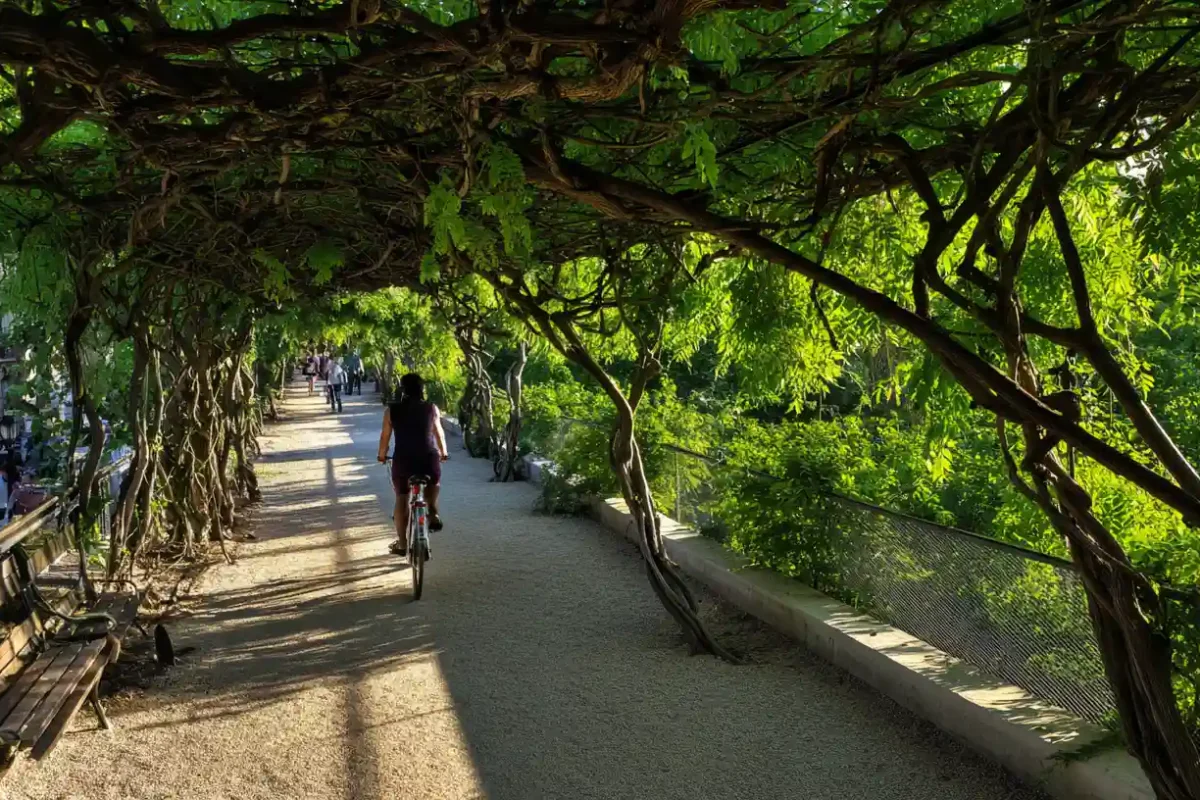
Père Lachaise cemetery is free to enter and is one of the more genuinely interesting places in the city — walking the paths between the graves of Jim Morrison, Oscar Wilde, Édith Piaf, and Marcel Proust takes a couple of hours and costs nothing. The Promenade Plantée, Paris’s original elevated park and the inspiration for New York’s High Line, is free. Sacré-Cœur basilica is free to enter. The Arènes de Lutèce, a 1st-century Roman amphitheater tucked into the Latin Quarter, is free.
Notre-Dame reopened in December 2024 after the 2019 fire, and entry to the main cathedral nave is free, with a free (but optional) online time-slot reservation available to help skip the walk-in queue during busier months. Separate paid tickets apply only to the bell towers and the treasury, not to the cathedral itself.
Walking along the Seine costs nothing at all. The riverbanks stretch for several kilometers, passing under some of the most recognizable bridges in Europe. The Île Saint-Louis, the smaller of the Seine’s two islands, is worth an hour of aimless walking even if the only thing you spend money on is one scoop of ice cream from Berthillon, which has been on the island since the 1950s.
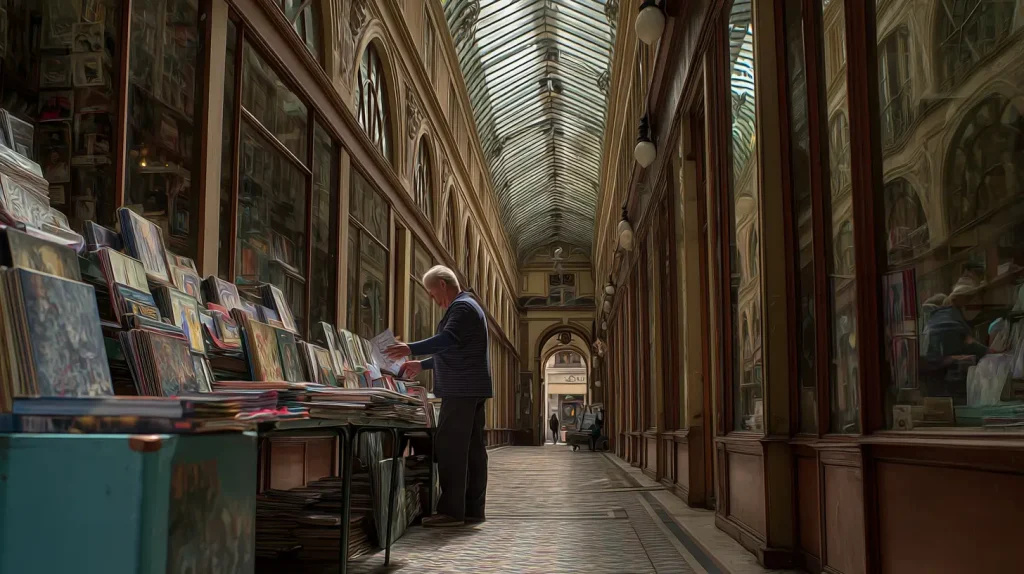
Paris’s covered passages are also free to wander through. Galerie Vivienne, Passage Jouffroy, and Passage des Panoramas are open during normal business hours and cost nothing to enter — beautiful, slightly faded, and full of the kind of small independent shops that don’t really survive in chain-retail Paris anymore.
Travel Timing Makes a Real Difference
Paris in July and August is expensive across the board. Hotels charge peak rates, the popular attractions are at their most crowded, and the city fills up with visitors in a way that pushes prices up generally.
The best-value months tend to be March, early April, late September, and October — decent weather, more manageable crowds, and accommodation prices that drop noticeably compared to summer. November and early December are cold but genuinely affordable, and the Christmas markets add real atmosphere to a stroll without costing anything to enjoy from the outside.
Booking flights mid-week — Tuesday or Wednesday departures — tends to run a little cheaper than weekend travel. It’s not a guarantee, but it’s consistent enough to be worth checking before you book.
One often-overlooked tip: book directly with hotels when you can, rather than exclusively through a booking platform. Some Paris hotels offer a small discount for direct bookings, and it’s always worth a quick email asking whether anything’s available for your dates. The hotel keeps more of the revenue, and you’ll occasionally get a better rate or a small upgrade out of it.
FAQ
How much money do I need per day in Paris? Budget travelers can generally manage on roughly €90 to €120 per day, covering accommodation, food, transport, and a paid attraction or two. Mid-range trips tend to land around €150 to €220 per day. These figures assume smart transport choices (a Navigo pass rather than constant single tickets), at least some market or picnic meals, and a mix of free and paid attractions.
Is the Paris Museum Pass worth it? It depends on how many paid attractions you’re packing into a day. The Museum Pass covers dozens of sites, including the Louvre, the Orsay, Versailles, and the Arc de Triomphe. If you’re hitting three or more paid sites in a single day, it starts to pay for itself. If your visit lines up with a free first Sunday at any of the museums you’re planning to see, the math shifts in the other direction — run the numbers against your specific itinerary before buying.
What’s the cheapest way to get from CDG airport to Paris center? The RER B train. It takes roughly 30–40 minutes to central Paris stations like Gare du Nord and costs €14 for a single airport ticket. A weekly Navigo pass, if you’re buying one anyway, covers this trip at no extra cost. Taxis and rideshares are significantly more expensive — official taxi flat fares run around €56–65 from CDG — and can be slower once traffic is factored in.
Can I eat well in Paris for under €20 a day on food? For food alone, not counting accommodation, yes — if you lean on market picnics for one meal and use the bouillon restaurants or prix-fixe lunch menus for your main meal of the day. It takes a bit of planning, but it’s genuinely doable without eating badly.
Are there ways to see the Eiffel Tower for free? You can’t go up the tower for free — summit tickets run somewhere in the €30s for an adult as of 2026, with cheaper options for the stairs to the second floor. But the view of the tower itself from Trocadéro, from the Champ de Mars, or from along the Seine at night costs nothing. The evening light show runs for a few minutes at the top of every hour after dark and is worth catching from street level at least once.