Three days in Paris is not enough to see everything. It’s enough to see the things that matter, eat well, walk the city properly, and leave with a real sense of what Paris actually is — which is more than a lot of visitors with a full week manage if they spend it rushing between attractions without ever really stopping.
This itinerary is built around walking distance. Paris is more compact than it looks on a map. The Eiffel Tower, the Musée d’Orsay, and Saint-Germain-des-Prés are all within walking distance of each other across the Seine. Notre-Dame, the Marais, and the Pompidou area are all walkable from the same starting point on Île de la Cité. The Louvre, Palais Royal, and the Tuileries Garden sit right next to one another. Three days, three geographic zones — that’s the whole logic here.
The single most important planning decision in Paris is grouping nearby attractions on the same day, so you’re walking between them rather than crossing the city by metro every time you want to see something new.
Before You Go: What to Book in Advance
A handful of Paris attractions will eat your entire morning if you show up without a plan. Book these ahead of time:
Eiffel Tower — Timed tickets go on sale online up to 60 days in advance for the lift, and up to about 40 days in advance for the stairs option. Without a booked slot, the summit queue alone can run two to three hours in peak season.
Louvre — Timed entry is mandatory for every visitor, including those with free admission, and slots are released roughly two to three months ahead. Walk-up availability is unreliable, especially on weekends.
Versailles — If it’s on your list, book Château tickets online rather than relying on the ticket office. Summer queues at the gate can consume most of a morning.
Everything else can generally be handled on the day. Sainte-Chapelle has a queue, but it moves. Notre-Dame’s nave is free to enter and doesn’t require a reservation, though booking one (also free) helps you skip ahead of the walk-in line. Montmartre and the Marais are neighborhoods, not ticketed sites, so there’s nothing to book at all.
Day 1: The Left Bank & the Tower
Morning: Eiffel Tower
Start early. The tower opens at 9:30am for most of the year (9am during the summer high season), and the first hour after opening tends to be the calmest.
If you’ve booked a summit ticket, go up — the view from 276 meters over Paris on a clear morning genuinely lives up to the hype. If you haven’t booked ahead, skip the summit and take the stairs to the second floor instead. The stair queue is usually shorter than the lift line, the view from the second floor is still excellent, and stair tickets can often be bought same-day.
Give the tower and its surroundings 60–90 minutes. Afterward, walk over to the Champ de Mars — the long park just south of the tower — if you want the classic frontal photo and have 20 spare minutes.
Late Morning: Musée d’Orsay
Cross the Seine on the Pont d’Iéna and walk about 20 minutes east along the Left Bank to the Musée d’Orsay, or take the RER C one stop. Either works fine.
The Orsay holds one of the world’s best collections of Impressionist painting — Monet, Renoir, Degas, Cézanne, Van Gogh — inside a converted 19th-century railway station that’s worth seeing in its own right. Give it 90 minutes to two hours. You don’t need to see the whole museum; the Impressionist galleries on the upper floor and the clock-face rooms at either end are the highlights worth prioritizing if time is tight.
One planning note: don’t try to do both the Orsay and the Louvre on the same day. It’s a mistake almost everyone makes once. Museum fatigue sets in fast, and you’ll walk out of the second museum having absorbed very little of it.
Afternoon: Saint-Germain-des-Prés
Walk from the Orsay into the 6th arrondissement — about five minutes on foot. Café de Flore and Les Deux Magots, the famous literary cafés on Boulevard Saint-Germain once frequented by Sartre, Beauvoir, and Hemingway, are touristy and priced to match, but the rooms themselves are lovely, and sitting there for an espresso is a perfectly legitimate use of 20 minutes.
From Saint-Germain, walk south to the Jardin du Luxembourg — a large formal garden with fountains, beehives, an orchard, and Parisians reading in green metal chairs around the central pond. It’s the kind of place where people who actually live in the 5th and 6th arrondissements spend a Tuesday afternoon. Give it 30–45 minutes.
Evening: Dinner on the Left Bank
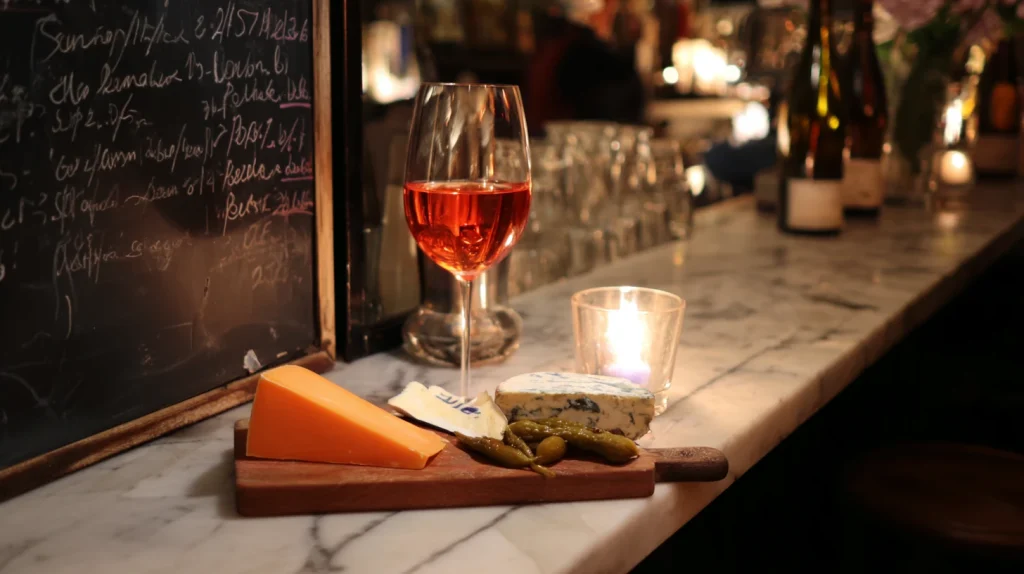
The 6th arrondissement has good bistros within easy walking distance of the Luxembourg. This is a good night for a proper, unhurried bistro dinner — two or three courses, a carafe of wine, ninety minutes at the table. No need to rush any of it.
Day 2: Île de la Cité & Le Marais
Morning: Île de la Cité
Head to Île de la Cité — the island in the Seine where Paris originally began, before the city expanded outward onto both riverbanks.
Notre-Dame de Paris. The cathedral reopened to visitors in December 2024 after five years of post-fire restoration, and entry to the nave is free. Booking a free timed slot online is recommended, especially April through October, since walk-in queues can run anywhere from 30 minutes to a few hours in peak season — though walk-ins are still accepted when capacity allows. Once inside, the exterior is also worth a full lap: the flying buttresses on the south and east sides are one of the great Gothic engineering achievements, and most visitors only ever see the front façade.
Sainte-Chapelle. About 100 meters from Notre-Dame, inside the Palais de Justice complex. This is the sight most first-time visitors skip, and almost everyone who does see it calls it one of the most extraordinary things they encountered in Paris. Built in the 13th century to house relics of the Crown of Thorns, the upper chapel is ringed with towering stained glass windows that cover nearly every wall surface from floor to ceiling. Try to arrive on a sunny morning, when the east-facing windows catch the light — nothing quite prepares you for it. Note that the chapel closes for a security break around 1–2:15pm daily, so plan your visit either side of that window.
Give both Île de la Cité sites 2–2.5 hours combined.
Afternoon: Le Marais
Walk about 15 minutes east from Notre-Dame into Le Marais — the historic Jewish quarter and one of the few Paris neighborhoods that survived Haussmann’s 19th-century redevelopment largely intact. Narrow, pre-Haussmann streets and some of the better casual food in the city.
Head to Rue des Rosiers for falafel at one of the well-known spots along the street — a lunch that costs a fraction of what you’ll pay in the more tourist-saturated areas nearby, and is usually better besides.
Place des Vosges is Paris’s oldest planned square, completed in the early 17th century, with covered arcades running along all four sides and a garden at its center. Victor Hugo’s former house sits on the northeast corner and is free to enter. Give the square 20 minutes or so — walk the perimeter, sit in the garden if there’s a bench free.
If you’re interested in 20th-century art, the Musée Picasso is in the northern Marais and holds the largest Picasso collection in the world — a good use of an afternoon. If not, skip it; the Marais rewards aimless walking more than most single attractions do.
Evening: Marais bars and cafés
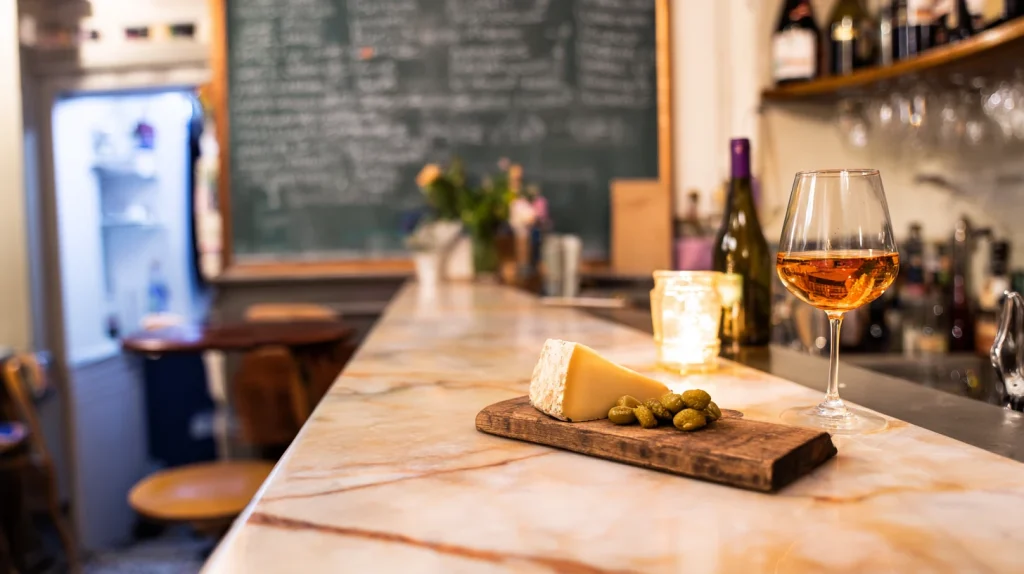
The Marais has some of the city’s better bars, particularly around Rue de Bretagne and up toward the Canal Saint-Martin further north. This is a good evening for exploring the natural wine bar scene, which has a real foothold in this part of the city.
Day 3: Louvre & Champs-Élysées (or Versailles)
Choose: Stay in the City or Go to Versailles
Day 3 splits into two reasonable versions depending on your priorities.
Version A (City): Louvre in the morning, Tuileries Garden around lunch, a walk up to the Champs-Élysées, and the Arc de Triomphe in the afternoon, finishing with dinner in Montmartre.
Version B (Versailles): Take the RER C to Versailles Château–Rive Gauche station (roughly 35–40 minutes from central Paris stations such as Musée d’Orsay or Saint-Michel — Notre-Dame; look for a train signed toward that terminus, since not every RER C service stops there), spend the morning at the Château, walk the gardens after lunch, and return to Paris by late afternoon.
Versailles takes a full half-day minimum to do properly and is genuinely extraordinary — but it also means skipping the Louvre entirely, which is a real trade-off. If you’ve already seen strong Impressionist collections elsewhere, Versailles might be the better use of the day. If the Louvre’s ancient world collections or French Old Masters matter more to you, stay in the city.
Morning (Version A): The Louvre
Book a 9am timed slot if you can — timed entry is mandatory here, even for visitors with free admission, and the Louvre is closed on Tuesdays. As of early 2026, the standard adult ticket runs around €22 for EU/EEA residents and around €32 for non-EEA visitors; under-18s and EU residents aged 18–25 enter free with ID.
The Louvre has more than 35,000 works on display and you genuinely cannot see them all in one visit. Decide in advance what you want to prioritize — the Mona Lisa, the Venus de Milo, the Winged Victory of Samothrace, and Vermeer’s The Lacemaker are the pieces most first-timers gravitate toward. Give the museum 2.5–3 hours maximum, and try to leave while you’re still enjoying it rather than pushing through to see everything.
Afternoon: Tuileries to Arc de Triomphe
Walk through the Tuileries Garden, the formal garden between the Louvre and Place de la Concorde, then continue up the Champs-Élysées to the Arc de Triomphe. The view from the terrace over the twelve radiating avenues is one of the better elevated views in Paris, and it’s typically far less crowded than the Eiffel Tower. Standard adult admission runs around €16 in the off-season, rising somewhat in peak summer months, with free entry for under-18s and EU residents aged 18–25. The climb is 284 steps with no general-access elevator, so budget accordingly if stairs are a concern.
Evening: Montmartre
Take the metro to Abbesses or Anvers and walk up the hill. Montmartre is at its best in the late afternoon, once the light turns warm and the crowds have thinned slightly. The Sacré-Cœur basilica is free to enter, and the steps out front offer one of the better free views south over the city. For dinner, head west toward Rue Lepic — the restaurants there tend to be more neighborhood-oriented and less tourist-focused than the streets directly below the basilica.
What to Cut If You’re Behind Schedule
Every itinerary runs long in practice. Here’s a reasonable priority order for trimming:
Cut first: the Arc de Triomphe’s paid climb (the free street-level view is nearly as good), the Moulin Rouge area on Day 3 (tourist infrastructure rather than the more authentic parts of Montmartre), and any second museum crammed into a day that already has one.
Keep: Sainte-Chapelle (most visitors don’t know about it going in, and it’s genuinely astonishing), one proper bistro lunch or dinner (the meal is part of the trip, not a break from it), and either the Orsay or the Louvre — never both on the same day.
Never rush: the walk through the Tuileries, a croissant from a good boulangerie, or just sitting in a square doing nothing in particular.
The most common mistake first-timers make in Paris is overscheduling, and then feeling like the trip fell short when the full list doesn’t get checked off. Three days is enough to see the best of Paris — it was never going to be enough to see all of it. The rest will still be there if you come back, and there’s a good chance you will.
FAQ
Is 3 days enough for Paris? Yes, for a first visit. You can cover the major sights, eat well, and get a real feel for a few different neighborhoods. Three days won’t let you see everything Paris has to offer — nothing short of living there really would — but it’s enough to leave with a genuine sense of the city.
What should I book in advance for 3 days in Paris? The Eiffel Tower (up to 60 days ahead for the lift), the Louvre (mandatory timed entry, released a few months out), and any restaurant you specifically want to eat at. Everything else — Sainte-Chapelle, Notre-Dame, Montmartre, the Marais — can generally be done as a walk-in, though a free Notre-Dame reservation is worth grabbing if you’re visiting in peak season.
How do I get around Paris in 3 days? Walk as much as you reasonably can — Paris makes more sense at street level, and most of what’s covered in this itinerary is within comfortable walking distance day to day. The metro is efficient for longer crossings, and a multi-day Navigo or Paris Visite pass covers unlimited metro and bus travel if you’re moving around a lot. Taxis and rideshares exist but tend to be slower than the metro in central Paris due to traffic.
Can I visit Versailles in 3 days in Paris? Yes, but it means dedicating a full morning at minimum and giving up something else — most likely the Louvre or a full Marais afternoon. Versailles is worth the trade-off if you haven’t seen it before, but it’s a meaningful one, not a quick add-on.
What’s the best neighborhood for a first-time Paris visitor to stay in? The 4th arrondissement (Marais), 6th (Saint-Germain), and 7th (near the Eiffel Tower) are central and walkable to most of what’s covered in this itinerary. The 2nd and 3rd arrondissements tend to be somewhat more affordable while still being well-placed. Staying farther out — the 15th, 13th, or the far east of the city — isn’t a dealbreaker, but the extra metro time adds up meaningfully across just three days.