Paris rewards people who eat with intention. You can spend a week here on nothing but tourist-menu steak-frites and leave thinking the food was fine. Or you can build your mornings, afternoons, and evenings around a handful of deliberate stops — a boulangerie before 9am, a market at midday, a bistro that hasn’t changed its menu since the 1970s — and leave with a completely different sense of what “Paris food” actually means.
This guide covers the full range: pastries, markets, cafés, bistros, cheese, wine, and the small rituals that make eating in Paris feel genuinely different from eating anywhere else.
Start With the Boulangerie
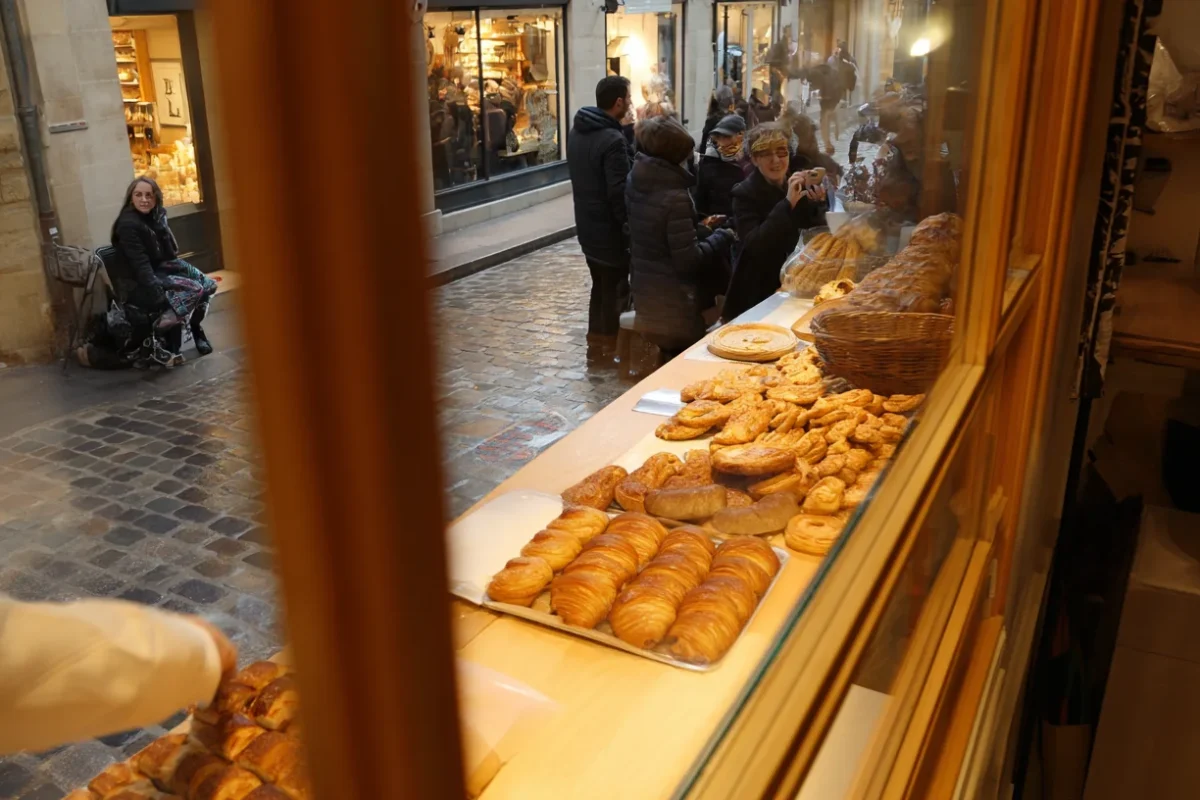
No conversation about Paris food gets very far without bread and pastry, and there’s no better place to understand what “good” means here than standing in a proper boulangerie at 8am.
What to look for in a croissant. The exterior should be a deep, varied gold — caramel-to-dark-gold, never pale or uniformly brown — and it should crackle audibly when you bite in. Pull it apart and you should see a honeycomb of air pockets with thin, visible layers of butter running through it. A dense, gummy interior usually means underproofed dough or butter that wasn’t cold enough when it was folded in.
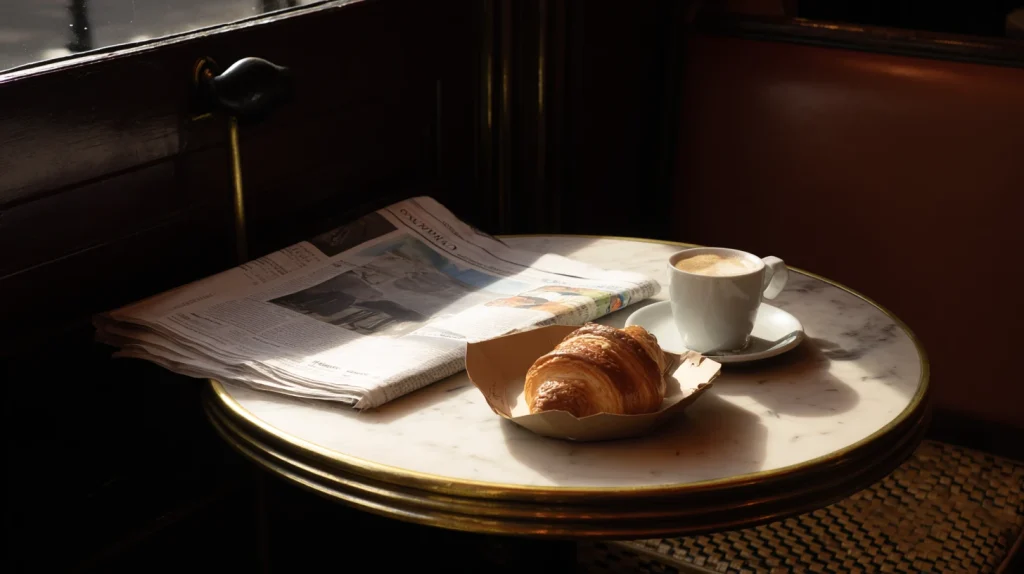
The single most useful phrase to look for on the case is “croissant au beurre.” By French labeling rules, a plain “croissant” can legally be made with any fat, including margarine or vegetable oil blends. A “croissant au beurre” has to be made with 100% real butter — often high-quality French butter, and sometimes specifically AOP-certified butter from regions like Charentes-Poitou or Normandy, though that’s a nice bonus rather than a guarantee. It’s genuinely worth the extra ten or twenty centimes it usually costs. One old rule of thumb you can safely ignore: the idea that a straight croissant means butter and a curved one means margarine. It’s a fun bit of Parisian food folklore, but bakers don’t reliably follow it anymore, so don’t use shape as your guide — just look for “au beurre” on the label.
Beyond the croissant, a good patisserie case has plenty more worth trying:
- Pain au chocolat — south of Paris and in the southwest, ask for a “chocolatine” instead and expect a good-natured correction if you’re in the capital.
- Kouign-amann — a Breton import, denser and more caramelized than a croissant, with a crackling sugar crust on top.
- Pain aux raisins (sometimes called “escargot” for its spiral shape) — swirled dough with pastry cream and raisins, underrated and often passed over.
- Tarte au citron — the best versions have a thin, crisp shell and a curd that’s bright and sharp rather than just sour.
- Mille-feuille — three layers of puff pastry and cream, meant to collapse a little when you cut into it. This one’s meant to be eaten sitting down, not on the go.
A few Paris bakeries worth the detour:
- La Maison d’Isabelle (5th arrondissement, Boulevard Saint-Germain) — a Left Bank spot that won Best Butter Croissant in Paris in a well-known local competition; the title and the queues have stuck around ever since. Go before 9am, since they do sell out.
- Mamiche (9th/10th) — less shatteringly crisp than some of the famous names, more buttery and tender. A good pick if you find the flakiest versions a little too dry.
- Blé Sucré (11th, near Bastille) — a working neighborhood bakery without a line of influencers outside, and reliably excellent.
- Du Pain et des Idées (10th) — famous for its pistachio-chocolate escargot pastries, set inside a beautifully preserved 19th-century shopfront.
- Stohrer (2nd, Rue Montorgueil) — operating continuously since 1730; go as much for the history and the baba au rhum as for the croissant.
Try to eat pastries within a couple of hours of them coming out of the oven — after that, the layers start to soften and the crust loses its snap. Standing at the zinc counter (le comptoir) with an espresso is how a lot of locals do it, and the whole ritual takes about ten or twelve minutes.
Shop a Market Like You Live There
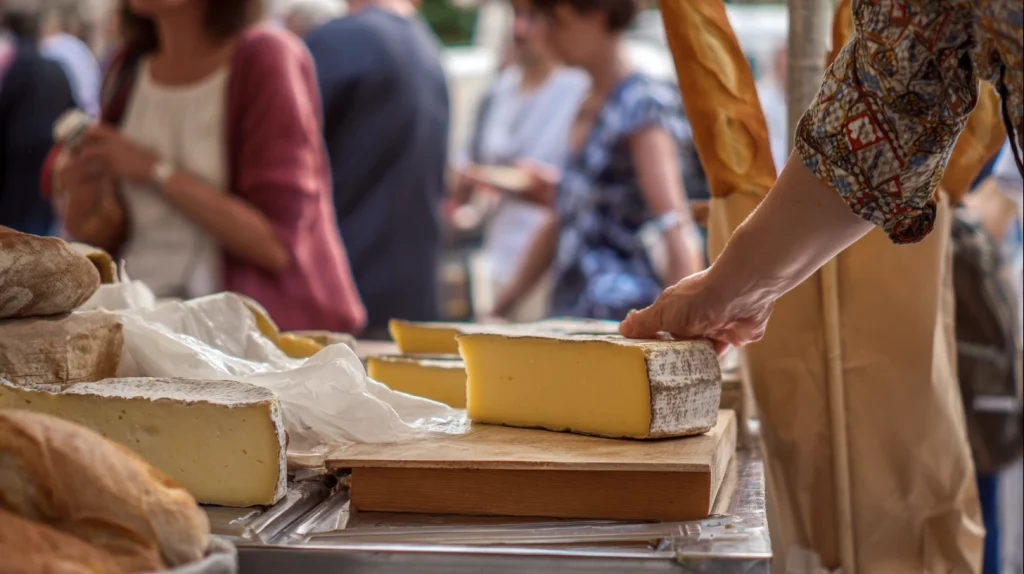
Paris has dozens of open-air and covered markets, and even a twenty-minute walk through one will tell you more about how the city actually eats than most restaurant meals do.
Marché Bastille, running along Boulevard Richard-Lenoir, is one of the largest and liveliest in the city — produce, cheese, seafood, rotisserie chicken, and prepared foods stall after stall. It runs Thursdays from 7am to 2:30pm and Sundays from 7am to 3pm.
Marché des Enfants Rouges, in the 3rd arrondissement, is Paris’s oldest covered market, dating back to the 17th century. These days it’s a mix of produce stalls and small food counters serving everything from Moroccan tagines to Japanese bento to Lebanese food, all meant to be eaten on the spot. It’s closed on Mondays, generally open Tuesday through Saturday from mid-morning into the evening, with noticeably shorter hours on Sundays — worth double-checking the day before if your visit depends on it, since hours shift a bit by season.
Marché d’Aligre (12th arrondissement) pairs a produce market with a covered hall and a genuinely good flea market right next door — easily a full morning if you let it be.
Even if you’re not cooking, a market is worth visiting just for the cheese counters — ask the vendor what’s ready to eat today rather than just pointing at what’s on display — and for the rotisserie chicken with potatoes roasted in the drippings underneath, a Sunday-lunch staple in a lot of Parisian households.
Eat Lunch Like a Bistro Regular
The French bistro is a specific, durable institution: paper or checked tablecloths, a chalkboard menu that barely changes from one year to the next, and a short list of dishes done exactly the same way for decades. This is where a lot of the best, least-photographed food in Paris happens.
Classic dishes worth looking for on a bistro menu:
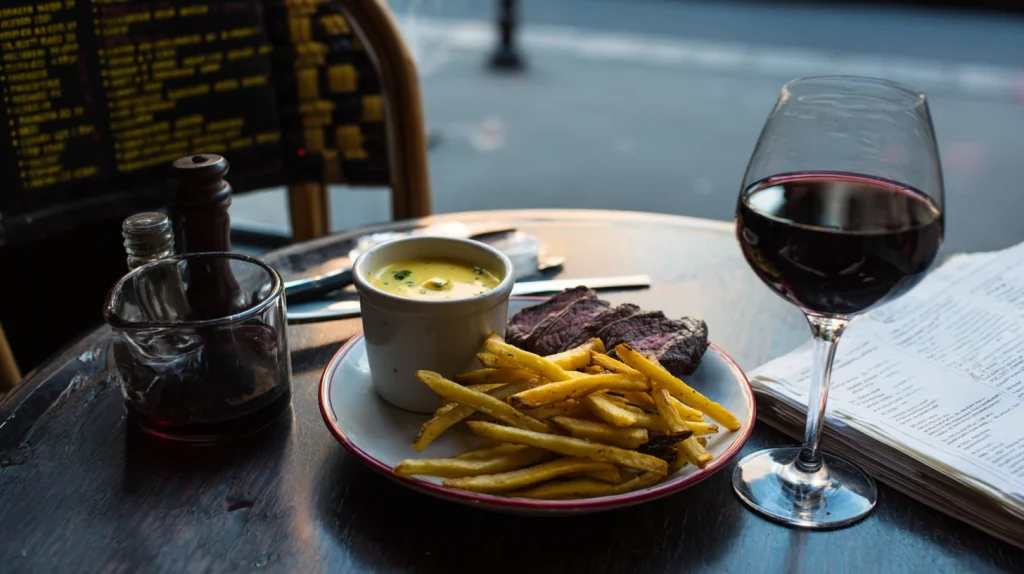
- Steak frites — a properly cooked steak with hand-cut fries. Ask for it saignant (rare) if that’s your preference — French “medium” runs noticeably rarer than American medium.
- Blanquette de veau — veal in a pale, creamy sauce, essentially the definition of French home cooking done at restaurant level.
- Œufs mayonnaise — hard-boiled eggs with mayonnaise, deceptively simple and something of a bistro litmus test: a place that does this well usually does everything else well too.
- Confit de canard — duck leg slow-cooked in its own fat until the skin crisps up, typically served with potatoes cooked the same way.
- Tarte tatin — an upside-down caramelized apple tart, the standard bistro dessert.
Lunch in Paris generally runs from around noon to 2:30pm, and kitchens often close entirely between lunch and dinner service — something that catches a lot of visitors off guard if they’re used to all-day kitchens back home. Reservations matter more than people expect, even for lunch, at anywhere with a real reputation.
Understand the Café, Which Is Not a Restaurant
A café and a bistro overlap, but they’re not the same thing. A café is built around coffee, a drink, and something light — a croque monsieur, a salade niçoise, an omelette — rather than a full sit-down meal. Sitting at a café terrace and nursing a single coffee for an hour is completely normal here and won’t get you rushed out. Prices are usually tiered: cheapest standing at the bar (au comptoir), more if you sit at a table, and a bit more again if you sit on the terrace.
Cheese and Wine, Without Overthinking It
You don’t need expertise to eat well here — you need a fromagerie counter and a decent wine shop (caviste), both of which are genuinely built around answering questions.
At a cheese counter, tell the vendor roughly what you need it for — a picnic tonight, a dinner party in three days — and let them pick the ripeness for you. This is completely normal and expected, not a sign that you don’t know what you’re doing. A reasonable starter trio: a soft cow’s milk cheese like Brie de Meaux or Camembert, a hard aged cheese like Comté, and a blue like Roquefort or Fourme d’Ambert.
At a caviste, the same approach works well: describe the meal or the mood you’re going for, name a rough price, and let the person behind the counter make the call. Paris has a strong scene of small, independent wine bars — particularly clustered in the 2nd, 10th, and 11th arrondissements — that rotate natural and small-producer wines by the glass, and asking the staff at any of them for a recommendation tends to go well.
A Few Things Nobody Tells You
Most boulangeries and plenty of restaurants close one or two days a week, often Sunday and/or Monday — worth checking ahead of any special trip. Many restaurants also close entirely for two to three weeks in August, when a large chunk of Paris goes on holiday at once, so it’s smart to book ahead if you’re visiting that month with a specific place in mind.
Tipping isn’t expected the way it is in the US. Service is included by law (service compris), and while rounding up or leaving a bit of small change for genuinely good service is appreciated, it’s a gesture rather than an obligation.
Tap water (une carafe d’eau) is free and completely normal to ask for — you don’t need to buy bottled water just to get something to drink with your meal.
Building a Food-Focused Day in Paris
Here’s one version of a full day, if you want a loose template to work from:
- 7:30–8:30am — Boulangerie for a croissant au beurre and an espresso at the counter.
- 10am–noon — Walk a market, whether that’s Marché d’Aligre or Marché des Enfants Rouges, tasting as you go.
- 1pm — Bistro lunch, something classic like steak frites or blanquette de veau.
- 4pm — Coffee and people-watching at a café terrace.
- 7pm — Cheese and wine picked up from a fromagerie and caviste, eaten as an early apéro.
- 8:30pm — Dinner, either a second bistro or something more ambitious if you’ve booked ahead.
None of this requires a tour, a reservation booked months in advance, or a rigid checklist — just a willingness to eat in small, deliberate stops rather than one big meal, and to show up early wherever “early” actually matters.
What to Say at the Counter
- “Un croissant au beurre, s’il vous plaît” — one butter croissant, please.
- “Qu’est-ce que vous me conseillez ?” — what would you recommend? (useful at cheese and wine counters especially)
- “C’est pour emporter” — it’s to take away.
- “C’est pour manger ici” — I’m eating here.
- “L’addition, s’il vous plaît” — the check, please.
Frequently Asked Questions
What is Paris actually known for, food-wise? Butter-laminated pastries like croissants, pain au chocolat, and kouign-amann; bistro classics like steak frites and blanquette de veau; and a strong market and cheese culture built around small producers and daily freshness rather than volume.
What’s the difference between a café, a bistro, and a brasserie? A café centers on coffee and light bites, and is available for most of the day. A bistro is a small, often family-run restaurant with a short, traditional menu and set lunch and dinner service times. A brasserie is typically larger and often open all day, with a broader menu that includes things like choucroute and seafood platters.
Do I need to speak French to eat well in Paris? No, but a few phrases go a long way, especially at counters where you’re asking a vendor for a recommendation rather than just pointing at a menu.
What time should I eat lunch and dinner in Paris? Lunch runs roughly from noon to 2:30pm, and dinner starts around 7:30pm, with many kitchens closing entirely between the two services. Book ahead for anywhere popular, even for lunch.
Is tipping expected in Paris? Not in the way it is in the US. Service is included by law. Rounding up or leaving a small amount in cash for good service is a nice gesture, not an obligation.