The moment the gates open and the crowd starts moving, Disneyland Paris does something not many places can: it makes adults forget they’re adults, at least for the first twenty minutes. The scale of Sleeping Beauty Castle down the length of Main Street U.S.A., the nostalgia-calibrated soundtrack, the smell of warm sugar from a boulangerie cart near the entrance — it works on most visitors, Disney fan or not.
Whether it’s worth a day of your Paris trip depends on who you’re traveling with. For families with children, it’s close to non-negotiable. For couples or solo travelers without a Disney habit, it’s a good once-and-done outing. For anyone who’s already done Disneyland or Disney World, it’s a well-run park with a distinctly French character — different castle, different food, different pacing than the American versions.
This guide covers current 2026 prices, how the two parks now differ after this year’s major changes, how to get there without overpaying, and how to time your visit.
Quick Facts: Disneyland Paris in 2026
- Location: Chessy, Seine-et-Marne, about 32km east of central Paris
- Two parks: Disneyland Park and Disney Adventure World (formerly Walt Disney Studios Park, renamed March 29, 2026)
- Standard hours: Both parks generally open at 9:30am; closing time varies by season, from around 9pm in low season to 10:30–11pm in peak summer
- Getting there: RER A train, ~40–45 minutes from central Paris, flat fare of €2.50 each way
- Tickets: Dynamic pricing — a one-park adult ticket starts around €56–62 on low-demand dates and can exceed €100–130 on peak dates for two parks
- Best low-crowd windows: mid-January to early February, mid-May to mid-June on weekdays, and early September
The Two Parks: What Changed in 2026
Disneyland Paris has two separate parks, and your ticket type determines which you can enter.
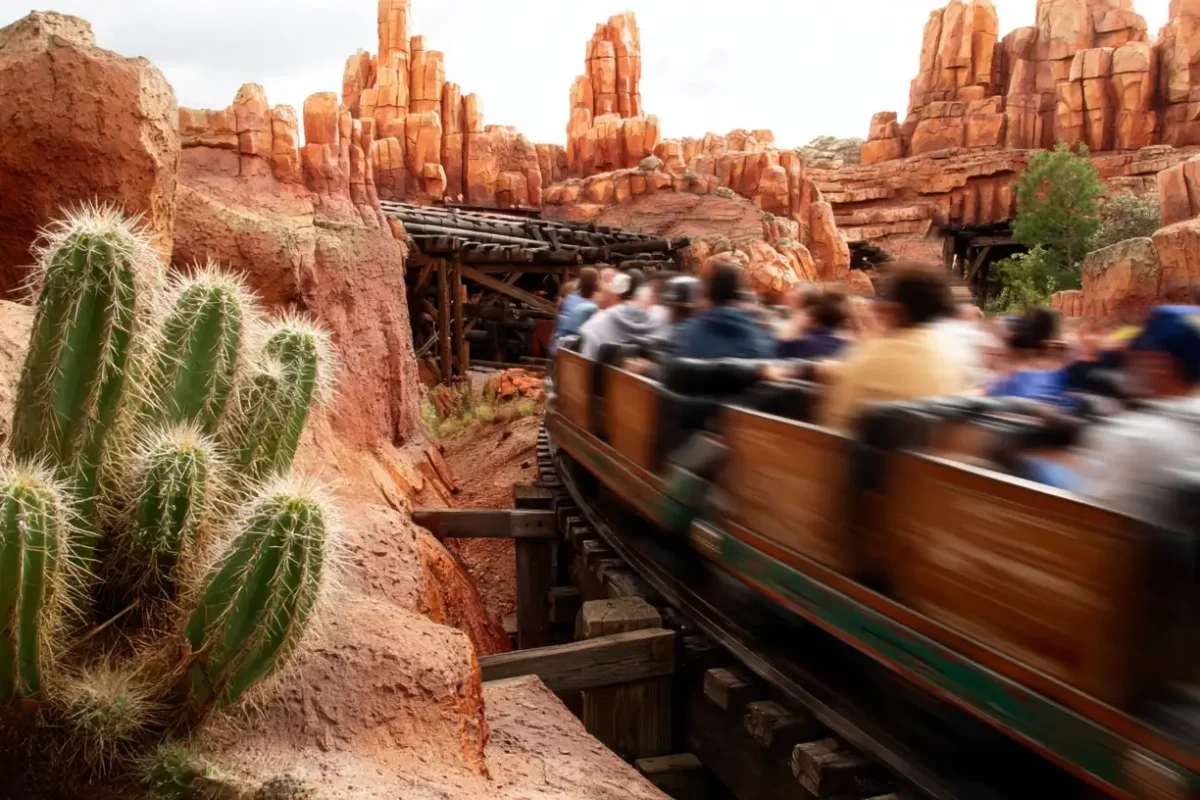
Disneyland Park is the original: Main Street U.S.A., Sleeping Beauty Castle, and the classic lands — Fantasyland, Adventureland, Frontierland, and Discoveryland. This is what most people picture when they say “Disneyland Paris.” Big Thunder Mountain, Pirates of the Caribbean, Phantom Manor, and Star Wars Hyperspace Mountain (the Star Wars-themed overlay of the park’s signature coaster, running here as a permanent attraction rather than a seasonal one) are the headline rides, and they hold up well.
Disney Adventure World is the second park — and it’s essentially a new park compared to what existed a year ago. Formerly Walt Disney Studios Park, it was renamed on March 29, 2026 alongside the opening of World of Frozen, an entire new land themed to Arendelle, complete with Frozen Ever After (a boat ride) and a castle-set character meet with Anna and Elsa. The same day brought Raiponce Tangled Spin, a new Tangled-themed spinner, and a nightly show called Disney Cascade of Lights — a fireworks, water-screen, and drone spectacular staged on the park’s new Adventure Bay lagoon. Ratatouille: The Adventure and Crush’s Coaster remain here too. Where the old Walt Disney Studios Park was a half-day add-on, Disney Adventure World now has enough to fill a full day on its own.
A one-park ticket gets you into one park for the day; a two-park (Hopper) ticket lets you move between both. If it’s your first visit and you only have one day, Disneyland Park alone is enough to fill it. The two-park ticket makes more sense on a second visit, or if World of Frozen or Disney Cascade of Lights is a specific draw for you — the show only runs in Disney Adventure World, after dark.
Ticket Prices in 2026
Disneyland Paris uses dynamic pricing — the cost depends entirely on the date you pick. This is the single most important thing to understand before booking.
As a working range: a one-day, one-park adult ticket runs from roughly €56–62 on low-demand dates up toward €100+ on peak dates. Two-park tickets typically run from around €89 in low season to €130+ on the busiest days. Children generally pay a reduced rate, and children under 3 enter free. Because these figures shift constantly with demand, don’t treat them as fixed — the official Disneyland Paris website shows a live price calendar for your exact dates, and it’s worth comparing a few days either side of your ideal date, since moving by even a few days can meaningfully change the price.
Multi-day tickets lower the per-day cost, but only make sense if you’re genuinely spending multiple days in the parks. Annual Passes exist for frequent visitors and Paris-region residents across several tiers — worth knowing they exist if you’re considering more than one trip, but check current tier pricing on the official site rather than assuming a fixed starting figure, as this changes periodically.
Getting There from Paris
Disneyland Paris sits about 32km east of central Paris, in Chessy.
RER A train (recommended for most visitors): Take the RER A eastbound toward Marne-la-Vallée–Chessy. The journey takes roughly 40–45 minutes from central stations like Châtelet–Les Halles, and trains run every 10–15 minutes through the day. Marne-la-Vallée–Chessy station sits directly at the resort gates — you walk out of the station into Disney Village.
Here’s a real correction worth knowing: as of a January 2025 fare reform, Île-de-France Mobilités replaced the old zone-based pricing with a flat €2.50 metro/RER ticket valid for any journey in the region, including the trip to Chessy (previously priced separately and more expensively by zone). Children pay a reduced €1.25 fare. If you already hold a Navigo weekly, monthly, or Paris Visite pass covering all zones, no extra ticket is needed.
A current alert: scheduled works on the RER A were disrupting service between August 8–23, 2026, with replacement buses running part of the route while RER A itself continued through to Marne-la-Vallée–Chessy. Disruptions like this happen periodically — check RATP’s site or app for live service status shortly before you travel, regardless of your travel dates.
Driving: About 35–40 minutes from central Paris via the A4 motorway, longer with traffic. On-site parking is available for a fee that varies, so check current pricing on the official site before you go. Unless you’re already driving for other reasons, the RER A is simpler and avoids parking costs entirely.
Opening Hours
Both parks generally open at 9:30am daily. Closing times shift by season: expect roughly 9pm or earlier during quieter winter periods and as late as 10:30–11pm during peak summer (July–August) and festive periods. Hours are typically confirmed around three months ahead, so check the official app or calendar for your specific date rather than relying on a general pattern.
Extra Magic Time gives guests staying at any Disneyland Paris hotel, plus Gold Annual Pass holders, entry from 8:30am — an hour before general opening. This early window is consistently quieter than the rest of the day, and it’s the most effective single tool for shortening waits on headline attractions like Star Wars Hyperspace Mountain or Big Thunder Mountain, though exactly how short the wait runs varies by date and shouldn’t be assumed to be zero.
If you’re not staying on-site, arrive by around 9:00am for the 9:30am opening — queues to enter form before the gates do, and being early puts you through the turnstiles first.
Best Time to Visit Disneyland Paris
Best windows: mid-January to early February, mid-May to mid-June on weekdays, and the first two weeks of September tend to be the park’s genuine low-demand periods, with shorter queues, more manageable crowds, and lower ticket prices.
Avoid if you can: French school holiday periods, which create sharp attendance spikes — check the specific dates for your travel year, since they shift annually. July and August are consistently the busiest months, and the week around Christmas and New Year is both crowded and expensive.
Day of week: Tuesday through Thursday are generally quieter than weekends, with Monday and Friday in between. Weekends are busier on average, though the gap narrows or disappears around school holidays and major events — so treat day-of-week as one factor among several rather than a rule on its own.
Within the day: The first 90 minutes after opening tend to be the most productive window for popular rides — use it for your two or three most-wanted attractions. Waits typically build from around 11am. Attendance at rides often dips somewhat during the daytime parade, which can be a useful second window, and late evening (after 8pm in summer) tends to thin out as families with young children head out.
Premier Access: Is It Worth Paying?
Premier Access replaced the old free FastPass system, and it isn’t free.
Premier Access One is bought per attraction, per entry, with prices roughly €5–21+ per person per ride depending on the ride and date. You can buy as many as you like through the Disneyland Paris app.
Premier Access Ultimate gives unlimited fast-lane access to all participating attractions (18 rides across both parks as of the 2026 expansion) for the day, at roughly €90–200+ per person depending on demand.
Whether it’s worth it comes down to date and party size. For a family of four on a peak summer date, Ultimate can add several hundred euros to the day. On quieter dates, standby waits for most rides run 10–30 minutes anyway, which makes Premier Access much less compelling. On the busiest summer days, standby waits of 60–90 minutes for headline rides are common, and that’s where the value case gets stronger — especially if you have specific must-ride attractions rather than wanting to cover everything.
A reasonable approach: skip it on a low-season weekday, and if you’re visiting in July or August with a short list of priority rides, budget for Premier Access One on just those two or three rather than the full-day Ultimate pass.
Free alternatives: Single Rider queues are available on some rides (check the app for current participants, which has included attractions like Ratatouille: The Adventure and Crush’s Coaster) and typically run much shorter than the regular line, though you’ll likely be seated apart from your group. Riding during the parade, when some queues thin out, and checking the app for real-time wait times to pivot to shorter lines are both free ways to manage your day.
What to Eat (Without Overspending)
Theme park food here is themed, and it’s priced like theme park food elsewhere. As a rough guide: quick-service mains run around €12–20, table-service mains €20–40, and character dining experiences (such as Regal View Restaurant) can run €55–90 per adult. Treat these as planning ranges, since menus and pricing shift through the year.
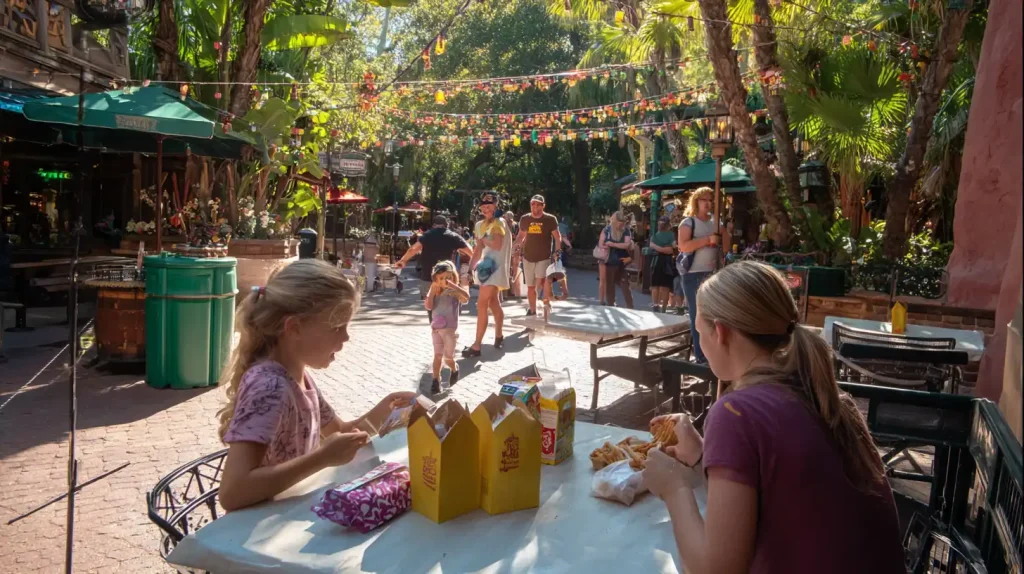
One genuinely useful fact: you’re allowed to bring your own food and non-alcoholic drinks into the parks. Many families pack a lunch and eat at the outdoor seating in Fantasyland or Adventureland — this is fully permitted and a real way to cut costs on a family visit.
If you’re going to spend on one sit-down meal, the Blue Lagoon restaurant, built into the Pirates of the Caribbean ride with boats drifting past your table, is one of the most requested tables at the resort — it sells out well in advance, so book through the app or website as early as possible, ideally around two months ahead for peak dates.
Seasonal Events Worth Planning Around
Disney Halloween Festival (roughly late September to early November): the parks lean into Halloween decor, villain-themed entertainment, and the Villains’ Frightfully Fun Parade. It’s a distinct, well-regarded seasonal shift, and a good pick for adult visitors without kids since the atmosphere skews a bit older.
Christmas season (mid-November through early January): snow effects, Christmas market stalls, an Enchanted Christmas Parade, and elaborate castle lighting. Many visitors consider this the most atmospheric time of year to visit. Crowds spike hardest in late December; mid-November tends to be festive without the same crush.
Disney Cascade of Lights (nightly, Disney Adventure World): the new evening show on Adventure Bay combining drones, water screens, projections, and fireworks. It’s become a strong reason to pick the two-park Hopper ticket, since it only runs in the second park and after dark.
None of these cost extra beyond your standard park ticket, but they do drive attendance on their busiest dates — check the seasonal calendar alongside pricing when picking your travel dates.
Practical Tips for First-Timers
- Book tickets directly on the official Disneyland Paris site or app to see the live price calendar and avoid third-party markups.
- Bring a printed or downloaded confirmation and download the official app before you travel — it handles Premier Access, dining reservations, and live wait times.
- Reserve table-service restaurants in advance, especially Blue Lagoon, Regal View, and Bistrot Chez Rémy — walking up on the day is unreliable for the popular ones.
- Pack snacks and a refillable water bottle — outside food and non-alcoholic drinks are allowed in the parks.
- Check ride status before you go — attractions occasionally close for refurbishment, and overlays like Hyperspace Mountain can be seasonal even where the base ride is permanent.
The Honest Verdict
Disneyland Paris works best as a dedicated day rather than a half-day add-on to a Paris trip — between the RER journey, security, and simply navigating two large parks, you need most of the opening-to-close window to get real value from a ticket.
For families with children, it’s an easy yes: the park is well-run, and small French touches — Sleeping Beauty’s castle rather than Cinderella’s, different food, staff who move fluidly between French and English — give it a distinct character rather than feeling like a copy of the American parks. For adults without kids, it’s a reasonable once-and-done outing, best done in low season for a lower price; a November visit for the Christmas decorations is a solid pick if timing allows.
[INTERNAL LINK: 3 Days in Paris: First-Timer Itinerary]
FAQ
How much does Disneyland Paris cost in 2026? Tickets use dynamic pricing. A one-park adult ticket starts around €56–62 on low-demand dates and can exceed €100 on peak dates; two-park tickets range roughly €89–130+. Children under 3 enter free. Check the official price calendar for your specific dates.
How do I get from Paris to Disneyland Paris? Take the RER A train eastbound to Marne-la-Vallée–Chessy, about 40–45 minutes from central Paris. The station sits directly at the park entrance. The fare is a flat €2.50 each way under the current Île-de-France ticket system.
What is the best time to visit Disneyland Paris? Mid-May to mid-June on weekdays and early September tend to offer the best combination of lower crowds and good weather. Avoid July, August, and French school holiday periods if you can.
Is Premier Access worth buying? On low-demand days, probably not — standby waits are usually manageable without it. On peak summer dates with a short list of must-ride attractions, Premier Access One for two or three rides is worth considering. The full-day Ultimate pass makes the clearest sense only on the busiest dates.
What are the best rides at Disneyland Paris? In Disneyland Park: Big Thunder Mountain, Phantom Manor, Star Wars Hyperspace Mountain, and Pirates of the Caribbean. In Disney Adventure World: Ratatouille: The Adventure, Crush’s Coaster, and the new World of Frozen attractions including Frozen Ever After. Check the official app for real-time wait times across both parks.