Walk into the Musée d’Orsay on a Thursday evening at 7pm and something unexpected happens. The light changes. The enormous clock faces — original railway station clocks from the 1900 Gare d’Orsay they converted into a museum — glow with the last of the sunset through their transparent dials. The great barrel-vaulted ceiling goes warm gold. The crowds from the day have mostly left. And somewhere between the Degas ballerinas and the Van Gogh self-portraits, you forget you had an agenda.
This is the Orsay at its best. It’s also the version of the museum most visitors never experience, because they come at 11am in July and spend the afternoon in a queue.
Here’s how to do it properly.
The Orsay vs. the Louvre: Which One First?
This is the real question for most Paris first-timers and nobody answers it cleanly. So here’s the honest take:
Choose the Orsay if: You have limited museum time and want to feel something. The Impressionists are more immediately accessible than much of the Louvre’s collection — Monet’s light, Renoir’s movement, Van Gogh’s color don’t require art history to hit you. The Orsay is also physically smaller and easier to navigate in 2–3 hours without feeling like you’ve failed to see everything.
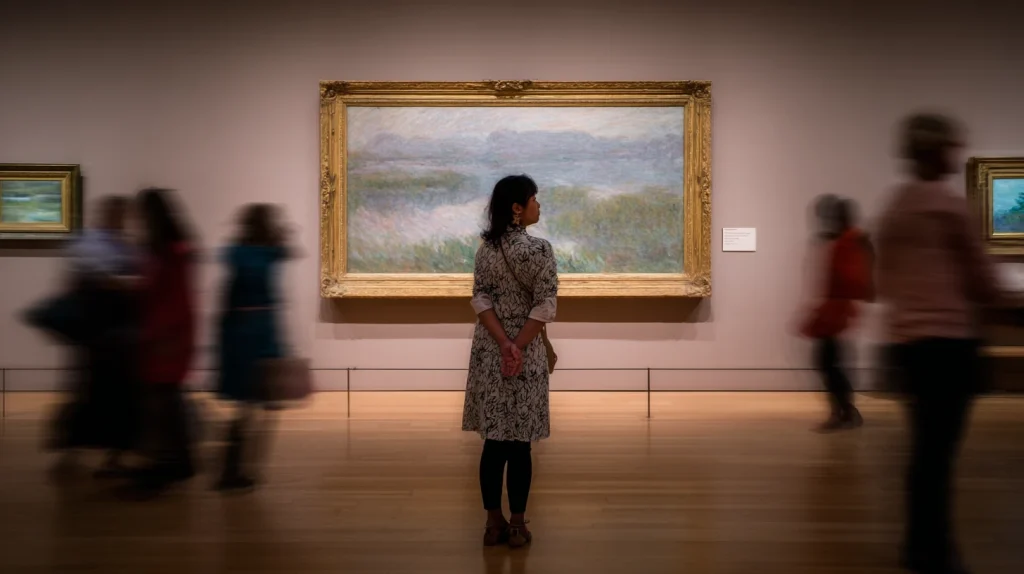
Choose the Louvre if: You have more time (4+ hours) and broader interests — ancient sculptures, Egyptian artifacts, Italian Renaissance, large-scale French Neoclassical paintings. The Louvre’s range is incomparable. The Orsay’s depth in one era is what makes it distinct.
If you have time for both, do the Louvre first (earlier in your trip) and the Orsay second. The Impressionist movement is a response to the academic painting tradition — seeing the Louvre’s traditional paintings first makes the Orsay feel like the revolution it actually was.
Tickets and Prices in 2026
Standard adult admission: €16 online, €14 at the door.
Thursday evening late opening (entry after 6pm): €12. This is the best-value ticket in the museum and, in most visitors’ experience, the best overall visit.
Free entry: all visitors under 18, EU residents under 26, first Sunday of every month (free for all), and a few other specific categories.
The Paris Museum Pass covers the Musée d’Orsay and includes timed entry — if you’re doing multiple major Paris museums, the pass is worth calculating.
Opening Hours
The museum is open Tuesday to Sunday, 9:30am to 6pm. On Thursdays, it stays open until 9:45pm.
It is closed every Monday. Also closed May 1 and December 25.
Tuesdays are the busiest day of the week — when the Louvre is closed on Monday, many visitors shift to the Orsay on Tuesday. If you can avoid Tuesday, do.
The Thursday Evening: Why It’s Worth Planning For
Thursday late opening is the open secret of the Musée d’Orsay visit. After 6pm:
The crowds drop significantly. Visitors who came in the morning and afternoon have largely filtered out. The galleries on Level 5 — the Impressionist floor — become quieter than they are at almost any other point in the week.
The ticket costs €12 instead of €16.
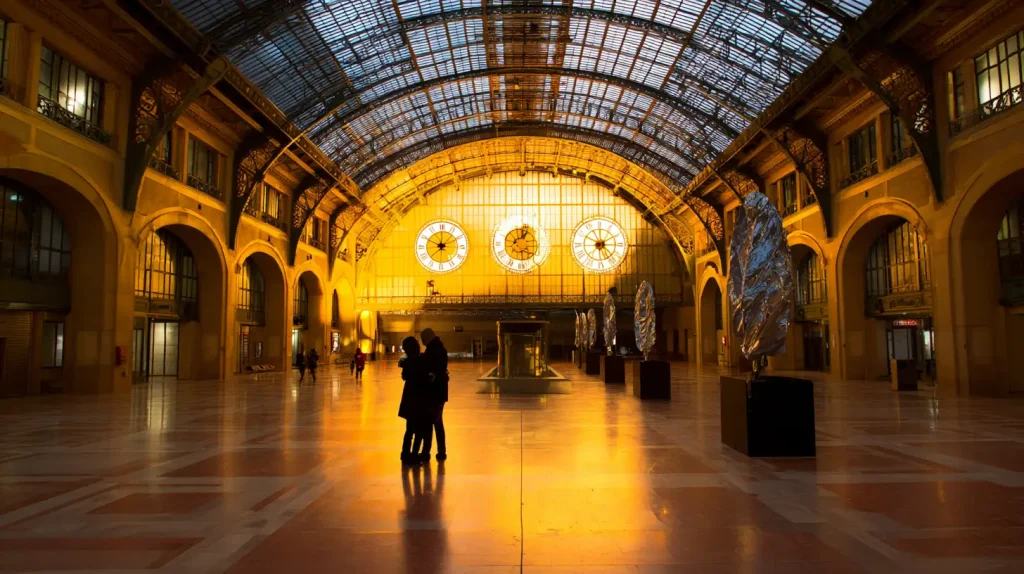
The light through the clock faces changes as the sun goes down. If you position yourself in the nave area around 7–8pm, the changing light through the huge transparent clock dials is one of those small visual experiences that Paris does better than anywhere else.
The cafeteria and the Café des Hauteurs (on the Level 5 terrace, with views toward Sacré-Cœur) are less crowded. The café is worth sitting in for a drink at this hour.
The Building: Worth Paying Attention To
Most visitors walk in and look immediately for the paintings. Worth stopping first to register the space.
The Musée d’Orsay is a converted railway station — the Gare d’Orsay, built for the 1900 Paris World’s Fair. When passenger trains became longer and the platforms too short for modern trains, it closed in 1939. It was declared a historic monument in 1978 and converted to a museum, opening in 1986.
The original Beaux-Arts architecture — the barrel-vaulted glass ceiling, the ornate stone façades, the clock towers — was preserved and integrated into the museum design. The main level retains the long nave of the original station. Sculpture is displayed there now where tracks once ran.
The building is not incidental to the collection. The art of the 1848–1914 period was being made at the same moment this station was built — the paintings inside and the architecture outside are products of the same era.
What to See: A Focused Route
The museum has five levels. Most people should spend most of their time on Level 5 — the Impressionist and Post-Impressionist galleries — and the ground floor sculpture.
Before you go up, it helps to understand the basic story of what you’re about to see.
The Impressionists were considered radicals. The Paris Salon — the official French art exhibition — consistently rejected their work in the 1860s and 70s because it didn’t follow academic rules: proper line, proper subject, proper finish. The Impressionists painted outdoors in natural light. They cared more about how light fell on water than about historical or mythological subjects. Their brushwork was loose, visible, unfinished-looking by Salon standards.
The public initially agreed with the critics. Monet, Renoir, Degas, and others were ridiculed before they were celebrated. The Orsay holds the largest collection in the world of what those critics dismissed — which makes the whole building quietly triumphant.
Ground floor (Level 0): The main nave of the former station, with monumental 19th-century sculpture. Carpeaux’s The Dance — a sensual, almost riotous group of figures — was controversial at its 1869 unveiling and still stops people mid-walk. The early Realist paintings by Courbet are here too, including The Origin of the World, which caused scandal when Courbet made it in 1866 and remains confronting today. The ground floor also houses the large academic paintings that the Impressionists were reacting against — useful context if you want to understand what the revolution was responding to.
Level 5: The heart of the museum. Here’s what to find:
Renoir’s Bal du moulin de la Galette (1876) — an outdoor dance scene in dappled sunlight, figures caught mid-movement. The brushwork is loose and immediate in a way academic painting never allowed.
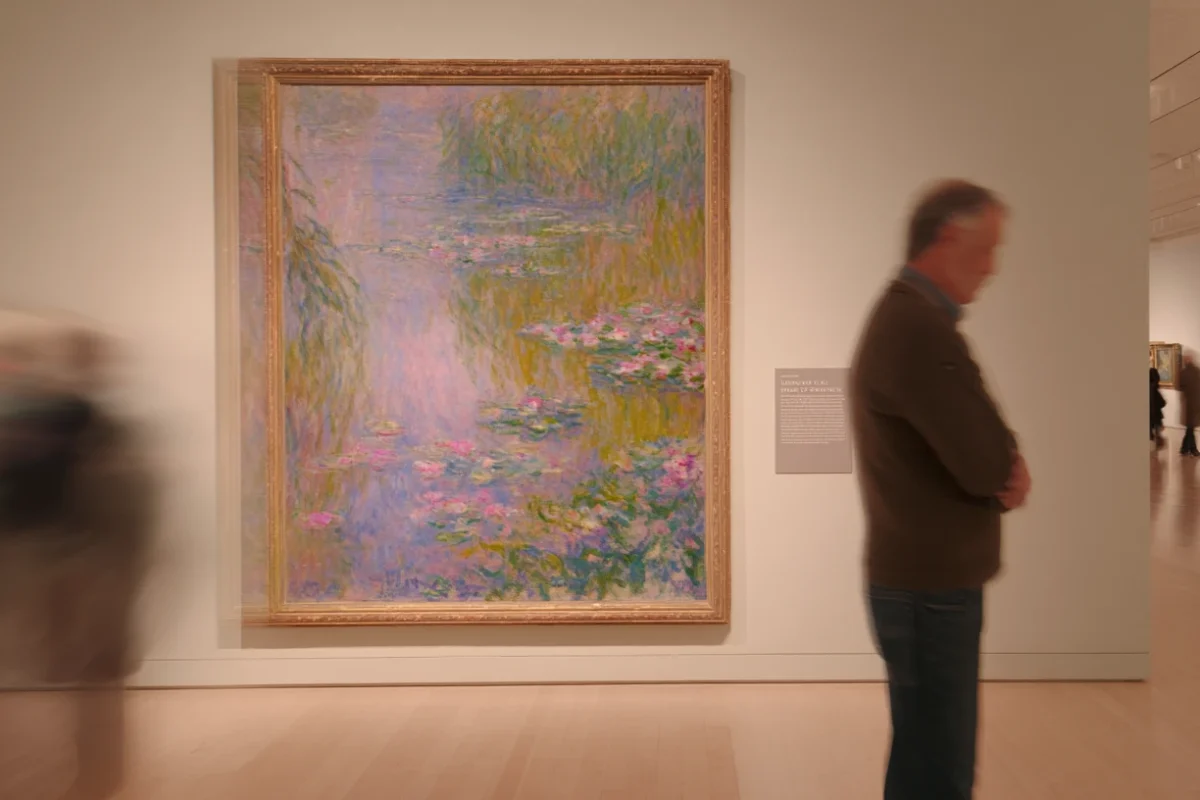
Monet’s series canvases — the cathedral studies, the haystacks, the poplars. These are about light and time rather than subject matter. If you’ve only seen reproductions, the originals are larger and more textured than you expect.
Van Gogh’s self-portraits and his Bedroom in Arles. Van Gogh spent the last three years of his life in France (Arles, then Saint-Rémy, then Auvers-sur-Oise) and painted some 900 works. The colors in person are more vivid than in reproduction.
Degas’s bronze sculptures of dancers. These are in a room on this level and are often overlooked because people come for the paintings. They’re extraordinary — caught in movement, heavy with captured weight.
Seurat’s A Sunday on La Grande Jatte is on Level 5 and requires a moment of patience. Stand back from it. Close up, it’s thousands of small dots of pure color — Pointillism, a technique Seurat invented. From 5 meters back, the dots resolve into a coherent scene of people in a park by the Seine. The technique is easier to appreciate once you know what you’re looking at.
Gauguin’s Tahiti paintings are here too — bright, flat colors and simplified forms that feel different from anything else in the collection. Gauguin left France for Tahiti in 1891 and painted until his death in the Marquesas in 1903. The paintings are controversial now in ways they weren’t then — the romanticization of Pacific culture by a French man who abandoned his family. The colors are still remarkable.
Take your time on Level 5. Forty-five minutes with focus is better than ninety minutes of walking past things. Pick five or six works and actually stop. Read the label. Look again. This is what the building’s quieter moments are for.
Level 2: Art Nouveau furniture and decorative arts. Less visited. Worth 20 minutes if you have them — the Art Nouveau movement was happening at the same time as the Impressionists and the contrast between the movements is interesting.
Getting There
The Musée d’Orsay is on the Left Bank of the Seine, facing the Tuileries garden from across the river.
Closest metro: RER C, Musée d’Orsay station. Alternatively, metro line 12, Solférino station (5-minute walk).
The museum is also a 15-minute walk from the Louvre (across the Pont du Carrousel or Pont Royal) and 10 minutes from Saint-Germain-des-Prés. Combining the Orsay with a walk through Saint-Germain and lunch on the Left Bank is one of the better Paris afternoons.
Pairing the Orsay with the Left Bank
The Musée d’Orsay sits on the edge of one of the better neighborhoods to walk through after a museum visit. Exit onto Quai Anatole France and you’re immediately on the Seine, with views of the Tuileries garden across the water.
A 10-minute walk east along the river brings you to the Pont des Arts — the pedestrian bridge once famous for love locks (the locks were removed in 2015 and replaced with glass panels, though locks still appear). Continue east and you’re in the Saint-Germain-des-Prés neighborhood, one of the more pleasant areas in Paris to walk without a destination.
Café de Flore and Les Deux Magots on the Boulevard Saint-Germain were the famous literary cafés of mid-20th century Paris — Sartre, de Beauvoir, Camus drank coffee here. Prices are high and the service is slow by design. Worth one coffee if you want the atmosphere, not worth a full meal.
For lunch or dinner after the Orsay, Rue de Buci (five minutes from the boulevard) has several well-regarded bistros with neighborhood pricing rather than tourist pricing. It’s a local market street during the day — fruit and cheese sellers, a good fromagerie — and more restaurant-focused in the evening.
Practical Notes
Photography: Permitted throughout the permanent collection. Flash is not. The natural light on Level 5 at the right time of day is actually very good for photography — no flash needed.
Bags: Larger bags must be checked at the cloakroom. Lockers are available.
Food: The Café des Hauteurs on Level 5 has views toward Sacré-Cœur through the clock face. Prices are museum-café level — not cheap, but the setting is remarkable. The ground-floor brasserie is more formal and expensive. Most visitors eat before or after the museum rather than inside.
Accessibility: The museum is fully accessible by elevator, though the original station layout creates some navigation complexity. The website has a specific accessibility guide
Temporary exhibitions: The Orsay regularly runs major temporary exhibitions that often require a separate, higher-priced ticket. These sell out well in advance. Check the website before your visit if there’s a specific show running during your dates.
FAQ
How much does the Musée d’Orsay cost in 2026?
€16 online, €14 at the door. Thursday evenings after 6pm cost €12. Free for visitors under 18 and EU residents under 26. [VERIFY on musee-orsay.fr before publishing]
When is the best time to visit the Musée d’Orsay?
Thursday evenings after 6pm: lower price, smaller crowds, better light through the clock faces. Wednesday and Friday mornings are also quiet. Avoid Tuesdays — busiest day of the week.
How long should I spend at the Musée d’Orsay?
Two to three hours covers Level 5 (Impressionists) and the ground floor properly. Art enthusiasts who want to explore every level should budget 3–4 hours. Don’t try to rush — the Impressionist galleries reward standing still more than moving quickly.
Is the Musée d’Orsay better than the Louvre?
They’re not directly comparable — different eras, different scope. The Orsay’s Impressionist collection is the best in the world for that period. The Louvre is larger and covers a wider historical range. For first-timers with limited time, the Orsay is often the more emotionally satisfying visit.
What is the Musée d’Orsay famous for?
The world’s largest collection of Impressionist and Post-Impressionist art — Monet, Renoir, Degas, Van Gogh, Cézanne, Gauguin — housed in a converted 1900 railway station. The combination of the building and the collection is what makes it distinctive