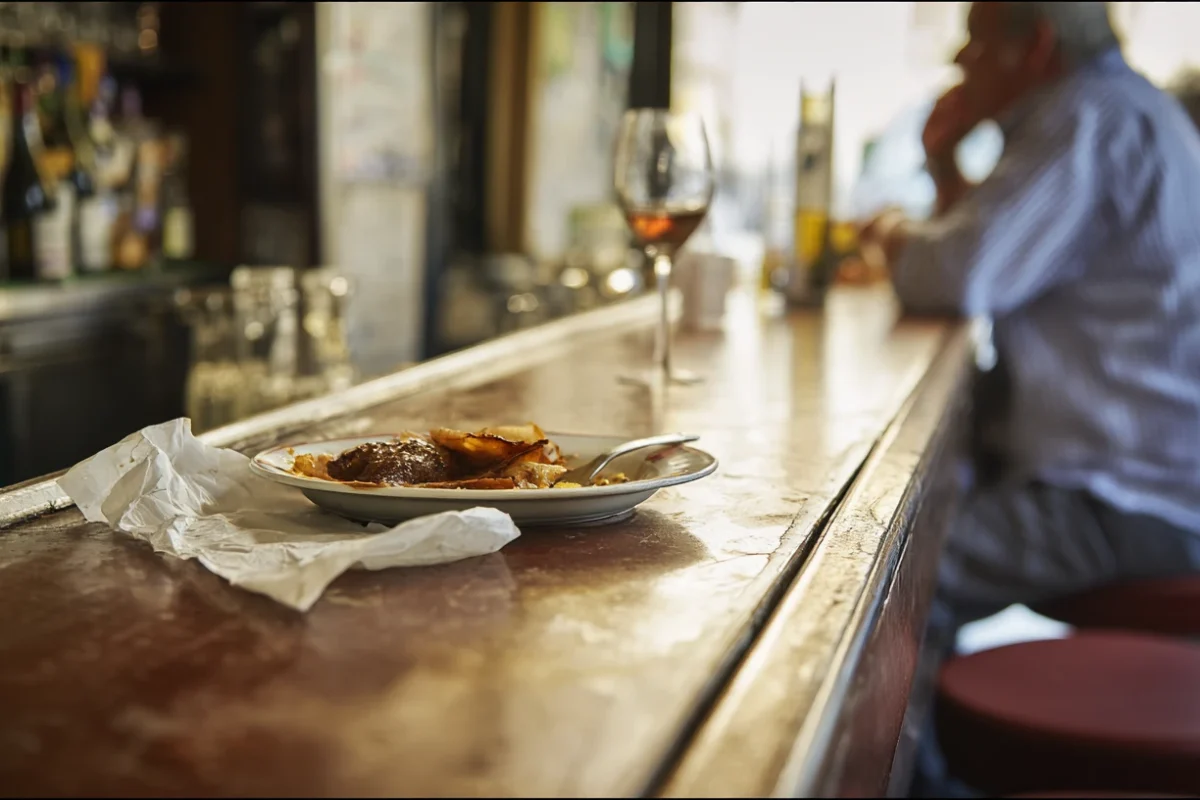
The best meal I ever had in France cost eleven euros and happened at a zinc bar in Lyon at 12:15pm on a Tuesday. A plat du jour — braised pork with lentils and a glass of Côtes du Rhône that came without asking. No menu in three languages. No Instagram lighting. The kind of lunch that ruins every other country’s food for a while.
France does this. It sets a standard and then keeps meeting it, from the corner boulangerie at 7am to the tablecloth restaurant at 9pm. But the food world here is bigger than the croissant-baguette-brie shortlist most visitors carry in their heads. It varies dramatically by region, by meal type, by season — and knowing a little of that before you land makes the whole experience sharper.
Start With the Bread (Seriously, Start With the Bread)
The baguette is not a side dish in France. It is infrastructure.
Every morning, every neighborhood boulangerie pulls baguettes from the oven on a rotating schedule — early risers get the 7am batch, lunch crowds get the noon batch. The crust should crack when you snap it. The inside should be slightly chewy, never fluffy. The smell when you walk in is something your brain files under “this is what food is supposed to be.”
Buy one from a boulangerie, not a supermarket. There is a legal standard for what a baguette can contain — a genuine artisan baguette (labeled “baguette de tradition”) is protected by a 1993 decree requiring it to be made on-site from just four ingredients (flour, water, yeast, salt) with no additives or freezing during production, which is a meaningfully stricter standard than the plain “baguette” you’ll also see on offer. Worth knowing: contrary to a fairly common misconception, the baguette’s price is not actually government-regulated in France — that was true decades ago in a different form, but today’s baguette tradition price is simply the product of bakers converging naturally around a similar figure, partly because the 1993 recipe rules make the product so consistent from shop to shop. A national price-tracking project running in 2026 puts the current average baguette tradition at around €1.25-1.30 nationally, with Paris running a bit higher — about €1.32 on average across the city, ranging from roughly €1.21 in more working-class arrondissements up to €1.37-1.38 in the priciest ones. Supermarket price wars have occasionally pushed plain (non-tradition) baguettes down to as little as 29 cents, which tells you something about the gap between mass-produced bread and the real thing.
Eat it walking home. Don’t wait.
The croissant deserves its own paragraph. A proper French croissant is buttery in a way that is almost excessive — flaky on the outside, slightly doughy and rich in the center. It leaves grease on the paper bag and crumbs on your shirt. That’s correct. A croissant that doesn’t do this is not a croissant worth eating.
Pain au chocolat is the same pastry dough wrapped around two small batons of dark chocolate. Ordering one at 8am with a café crème is one of the more legitimate reasons to visit France.
The Classic Bistro Dishes (The Ones That Are Actually Good)
French bistro food is its own category. Not fine dining, not fast food — something in between that France has perfected over two centuries.
Steak frites is the bistro baseline. Entrecôte or bavette (flank steak), served medium-rare unless you specify otherwise, with a pile of proper thin fries and either a béarnaise or maître d’hôtel butter on top. The steak in a good Parisian bistro is shockingly good. The steak in a bad tourist bistro near the Louvre is a tragedy. The difference is usually whether the menu exists in six languages with photos.
Soupe à l’oignon — French onion soup — is one of those dishes that somehow became a cliché without losing any of its quality. Sweet caramelized onions in a rich beef broth, with a thick crouton and a layer of melted Gruyère that arrives bubbling. It’s a full meal at lunch. Order it in a traditional brasserie, not a tourist café.
Croque monsieur is a grilled ham and cheese sandwich with béchamel sauce. The croque madame adds a fried egg on top. Both are common at cafés and brasseries and are one of the better quick-lunch options in Paris. The version at a random café will often be better than it has any right to be.
Oeuf mayonnaise — hard-boiled eggs with a generous amount of real French mayonnaise — sounds completely underwhelming and tastes surprisingly good. It’s a starter (entrée in French usage, meaning the first course) at many traditional bistros. Don’t skip it.
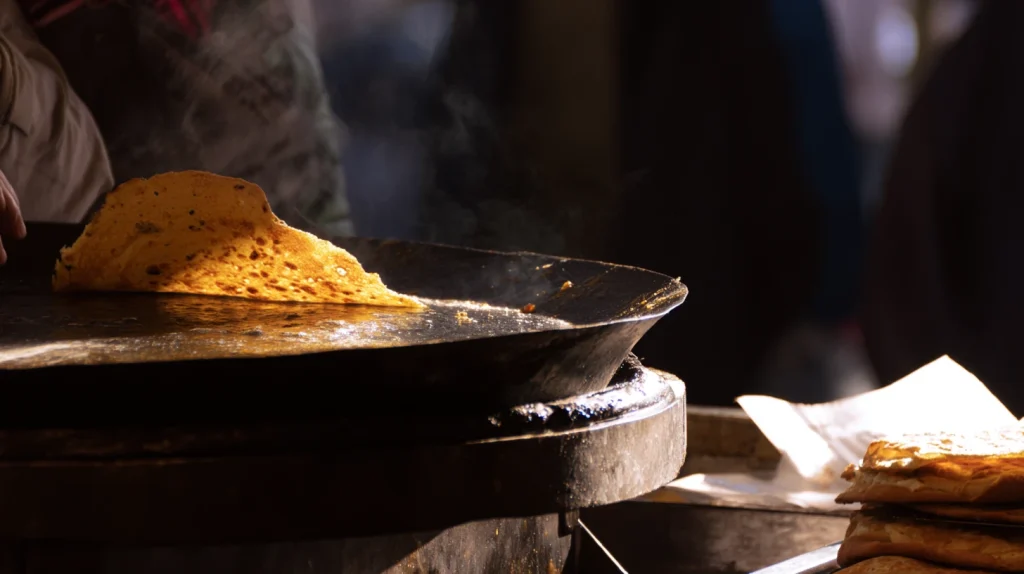
Regional Food: What You Miss If You Only Visit Paris
This is where the France food conversation gets interesting. France’s regional cooking is dramatically different from north to south, and several dishes that appear on Parisian menus are pale versions of what they are in their home regions.
Bouillabaisse — Marseille only
Bouillabaisse began as fishermen’s stew. Bony rockfish that couldn’t sell at market, thrown into a pot with saffron, tomatoes, and fennel. It is now one of the most copied dishes in France.
Do not order it in Paris. A real bouillabaisse is served in two stages: first, the saffron-orange broth, ladled over croutons spread with rouille (a garlicky, spiced mayonnaise). Then the fish separately — whole pieces of Mediterranean rockfish, scorpionfish, and whatever came in that morning. The broth is intensely flavored and unlike anything you’ve tasted.
In Marseille, the real thing typically runs somewhere in the €40-60+ per person range at a proper restaurant, and prices have been drifting upward with inflation, so treat that as a floor rather than a ceiling. Several restaurants along the Vieux-Port serve it — ask for the menu that specifies the traditional preparation. The tourist-trap version is a thin orange soup with three mussels in it. The real thing takes an hour to arrive and is worth every minute.
Cassoulet — the Southwest
Cassoulet comes from Castelnaudary, Carcassonne, and Toulouse — three towns in the Occitanie region that each claim the definitive version. It’s a slow-cooked stew of white beans, duck confit, pork sausages, and sometimes lamb, baked in a terracotta cassole until the top forms a thick golden crust.
In the southwest, this is comfort food — served in earthenware at lunch with a glass of Corbières or Minervois. It is heavy, rich, and takes two hours to stop feeling full. That’s the point.
The cassoulet you’ll find in Paris restaurants exists, but it’s rarely the same. If you travel through Toulouse, eat it there.
Tarte Flambée (Flammekueche) — Alsace
Alsace sits on France’s German border, and its food reflects five centuries of being traded between the two countries. Tarte flambée is essentially a very thin-crust pizza-like flatbread topped with crème fraîche, onions, and lardons (small bacon pieces), baked at extremely high heat.
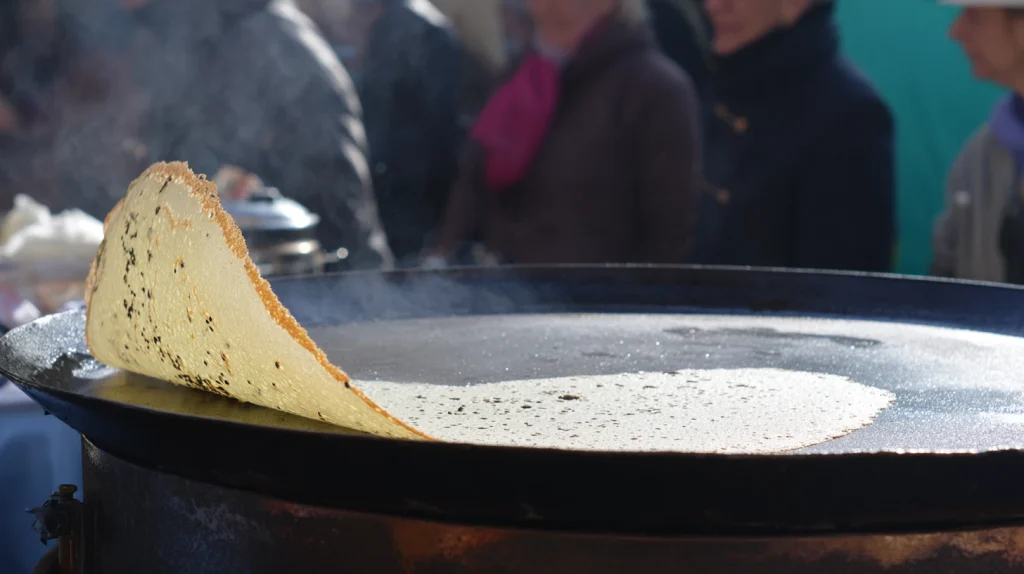
Strasbourg is the best place to eat it. A proper winstub (Alsatian wine tavern) serves them in rounds — you eat one, order another if you’re hungry. It’s not elegant food. It’s the kind of food you eat standing up or hunched over a wooden table with a glass of Riesling.
Galettes and Crêpes — Brittany
Brittany invented both. A galette is made with buckwheat flour and filled with savory things — ham and cheese, mushrooms and eggs, smoked salmon. A crêpe is wheat flour and goes sweet. Both are street food in Brittany, handed over wrapped in paper, eaten walking along the harbor.
The version in Paris crêperies is fine. The version in Rennes or Saint-Malo, made on a cast-iron billig by someone who’s been doing it for thirty years, is noticeably different. Worth the comparison if you pass through.
Cheese: How to Actually Eat It in France
France has over 1,000 named cheeses. This is not helpful information when you’re standing in front of a fromagerie counter.
What you need to know: cheese in France is a course, not a snack. It comes after the main dish and before dessert, on a wooden board, at room temperature. Cold cheese is a French hospitality crime.
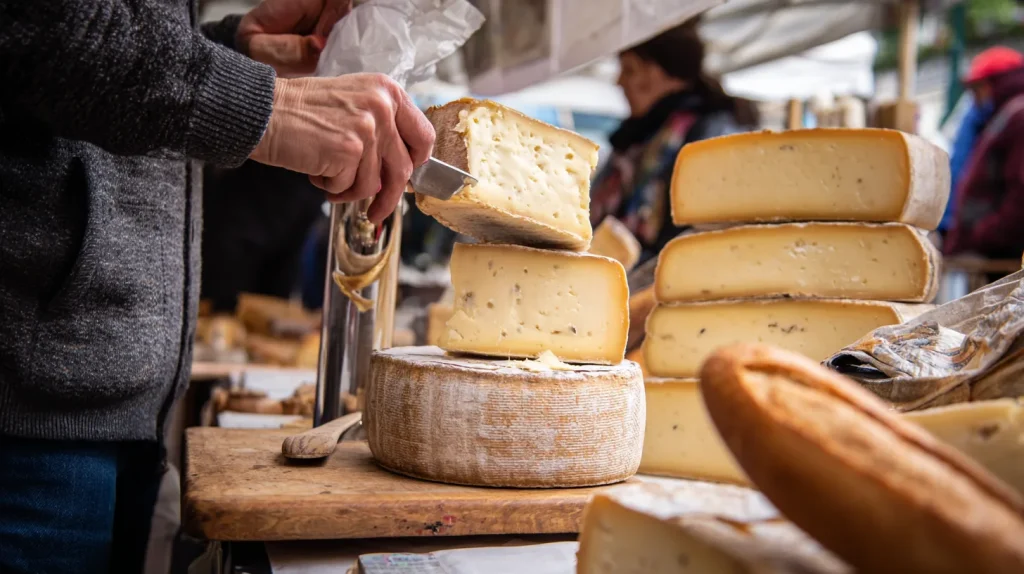
The best way to eat French cheese is at a morning market. Look for a fromager (cheese specialist) with wheels and rounds of varying ages. Ask to taste before buying. Say “un peu de ce fromage-là, s’il vous plaît” and point. You’ll get a sliver. Buy a small wedge of three or four different types, get a baguette from the adjacent boulangerie stall, find a bench. That’s the French cheese experience.
Must-try types for first-timers: Comté (nutty, aged, versatile — the best introduction to French cheese), Saint-Nectaire (soft, mushroomy, a cow’s milk cheese from the Auvergne), Époisses (washed-rind, strong smelling, extraordinary flavor — not for the faint-hearted), and a fresh chèvre from a farmers’ market if you spot one.
Brie de Meaux and Camembert are the internationally famous ones. They’re fine, but they’re also what France sends abroad. The interesting cheeses are the regional ones nobody exports.
Wine: The Part Nobody Actually Explains
France has wine classifications that can feel impenetrable, but the shortcut is regional logic: drink the wine from wherever you are.
In Burgundy, drink Burgundy — the Pinot Noir from the Côte de Nuits or the Chardonnay from Chablis. In the Loire, drink the local Muscadet with oysters or the Vouvray with fish. In Provence, order the rosé, because Provence rosé is genuinely good and not the sugary pink thing sold elsewhere.
The carafe de maison (house carafe) at a neighborhood bistro is often perfectly decent and costs roughly €5–10 depending on the establishment and the city. You don’t need to order a bottle for a good glass of wine in France.
One thing worth knowing: the French drink wine with food, not before. Ordering an aperitif (kir, pastis, or a glass of champagne) before a meal is normal. Drinking wine at the table before the food arrives is less so. Small cultural detail, but worth knowing.
Street Food Worth Knowing
Not all of France’s best food is on white tablecloths.
Socca — Nice only. A pancake made from chickpea flour, cooked on a huge round iron pan over a wood fire, cut into rough pieces and served in paper. It’s crispy at the edges, slightly soft in the middle, seasoned with nothing but black pepper. You eat it standing up outside the old town market. It costs almost nothing and is one of the foods I think about most from France.
Merguez sandwiches — particularly at Paris street markets and in neighborhoods like Belleville and the 19th arrondissement. Merguez is a spiced North African lamb sausage, grilled and served in a baguette with harissa. France’s North African community brought this and it’s now everywhere. One of the better street food experiences in Paris.
Gaufres (waffles) — not Belgian, despite what you’ve heard. French gaufres appear at fairs, markets, and seaside stands. Simple, crispy, sometimes sprinkled with powdered sugar. Not life-changing, but dependably good on a cold afternoon.
The Things Not to Order (Honest Take)
A few things appear on tourist-area menus in France that are not representative of French food and are usually disappointing:
The prix-fixe tourist menu near major monuments — the cheap three-course lunch you’ll see on a chalkboard near the Eiffel Tower or Sacré-Cœur — is almost always frozen food reheated. If the menu is laminated and has photos, walk further.
Café coffee in France varies wildly. A café (espresso) from a proper café is excellent. The “café américain” ordered to stretch it out is often watery. If you want a longer coffee, ask for a café allongé — the same espresso with hot water added at the machine, which tastes better than a café américain poured from a pot that’s been sitting.
Macarons near tourist attractions: the boxes of colorful macarons you see near the Louvre and the Eiffel Tower are generally not from reputable patisseries. Ladurée and Pierre Hermé are the benchmark — there are others of equal quality, but you want a proper patisserie, not a souvenir shop with baked goods.
A Word on Eating Times
France still runs on French meal times, and fighting this will leave you hungry and confused.
Lunch is served roughly 12pm to 2pm. Many kitchens stop taking orders at 2pm or 2:30pm sharp. If you arrive at 2:45pm and the restaurant looks open, the kitchen is closed. This catches visitors constantly.
Dinner doesn’t really start until 7:30pm, and 8pm or 8:30pm is more normal. Restaurants open their kitchens at 7pm and fill steadily from 7:30pm. Showing up at 6pm and finding a half-empty dining room doesn’t mean you got lucky — it means you’re eating before the French do.
In between, the café is your friend. Brasseries serve food all day. Markets run in the morning. Bakeries are always open.
suggested internal link — France Travel Guide: What to Know Before You Go
FAQ
What is the most famous French food? The baguette is probably the single most iconic French food — a daily item eaten by nearly everyone in France, made to strict legal standards under the “tradition” designation, and a genuine part of everyday life rather than a tourist item. For dishes, boeuf bourguignon and bouillabaisse are the most internationally recognized.
What should I eat in Paris specifically? Paris classics worth seeking out: a café crème and croissant in the morning, steak frites at a proper neighborhood bistro for lunch, French onion soup at a traditional brasserie, and a cheese course with local wine in the evening. The Marais neighborhood has excellent Jewish-style falafel that’s also a Paris institution.
Is French food actually as good as its reputation? Yes. The baseline quality of everyday food in France — a market baguette, a correctly made bistro steak, a wedge of Comté from a fromagerie — is genuinely higher than almost anywhere else in Europe. The reputation is earned.
What’s the best French cheese for first-timers? Comté is the most accessible — nutty, slightly sweet, versatile, and widely available. From there, a mild Brie de Meaux or a Saint-Nectaire are gentle next steps before going toward stronger washed-rind or blue cheeses.
Can I eat well in France on a budget? Yes. The market, the boulangerie, the neighborhood bistro plat du jour — France has a strong tradition of good everyday food at reasonable prices. A market lunch of bread, cheese, charcuterie, and fruit costs roughly €10–15 and is better than most restaurant meals elsewhere. The tourist trap exists but it’s avoidable.
Baguette pricing corrected and updated against a large-scale 2026 nationwide bakery price survey (the “Baguette Index” project, which called over 5,000 bakeries): the commonly repeated claim that baguette prices are government-regulated is not accurate — pricing is a natural market convergence, not a fixed rate, driven partly by the 1993 decree standardizing what can legally be called a “baguette de tradition.” Current Paris average is closer to €1.32 than the €1.20 figure often quoted, with meaningful variation by arrondissement. Other prices in this piece (bouillabaisse, house wine) are given as ranges rather than fixed figures, since restaurant-to-restaurant pricing varies more than a single number can honestly capture.