
The first question most people ask is: do I even need a visa? The second question, increasingly in 2026, is: wait, what’s this ETIAS thing I keep seeing mentioned? Both questions have clear answers — but only if you know which category of traveler you fall into. And on the ETIAS question specifically, there’s a genuinely important update as of this writing that a lot of travel content published earlier in 2026 doesn’t yet reflect.
France is part of the Schengen Area, a zone of European countries that share open internal borders. What this means practically: entry rules for France apply to the entire Schengen Area, not just France specifically. A visa for France lets you travel freely across most of Europe. And the 90-day limit applies to the whole zone, not just France.
This guide breaks down the requirements by traveler type, explains what ETIAS is and where its launch actually stands right now, and covers what to do if you do need a full visa.
Step One: Which Category Are You In?
Category 1 — EU, EEA, and Swiss citizens No visa. No ETIAS. No maximum stay. You can live, work, and travel in France freely as an EU/EEA or Swiss national. Show your national ID card or passport at the border and that’s it.

Category 2 — Visa-exempt nationalities (US, UK, Canada, Australia, Japan, and 60+ others) You don’t need a traditional visa for short tourist stays. This group will eventually need an ETIAS travel authorization before arrival — but as explained below, that requirement has been delayed and does not yet have a confirmed date.
Category 3 — Everyone else If your nationality is not on the visa-exempt list, you need to apply for a Schengen short-stay visa at a French consulate or embassy before your trip. This takes time, documents, and planning. The rest of this guide covers this process in detail.
To check exactly which category your nationality falls into, the official France-Visas wizard at france-visas.gouv.fr is the only source you should trust. Visa policies change and travel blogs — including this one — can go out of date. A five-minute check on the official site before booking is the one step that costs nothing and could save a lot.
ETIAS: Important Update — The Launch Date Has Been Pulled
This is the change causing the most confusion in 2026, and it’s worth being very direct about it because the situation shifted again very recently.
ETIAS (European Travel Information and Authorisation System) is Europe’s version of the US ESTA or Australia’s ETA. It’s an online pre-authorization that visa-exempt travelers will eventually need to obtain before entering the Schengen Area. It’s not a visa. It won’t require an appointment, documents, or a consulate visit. But you will need to apply for it before you travel, once it’s live.
What it will cost: €20 per adult application (free for under-18s and over-70s).

How long it will last: 3 years, or until your passport expires — whichever comes first.
Where the launch date actually stands right now: For most of 2025 and the first half of 2026, the official target was “last quarter of 2026” (October-December). As of mid-July 2026, the EU quietly removed that date from the official ETIAS website (travel-europe.europa.eu/etias), which now states only that ETIAS “is currently not in operation and no applications for travel authorizations are collected at this point.” This followed reporting that the EU agency building the system, eu-LISA, had internally concluded a 2026 launch was “no longer feasible.” A revised timeline is expected after eu-LISA’s board meeting in September 2026, and independent reporting points to a 2027 launch as the more realistic outcome. There is currently no confirmed date.
What this means practically: you do not need to do anything about ETIAS right now. There is no application portal open, and any website currently claiming to process ETIAS applications for a fee is not legitimate — treat those as scams. When a real launch date is set, the EU has said it will announce it several months in advance, and it’s expected to open with a “soft” transition period where travel without it is still possible for a time before enforcement becomes strict.
One separate system worth knowing about, because it’s easy to confuse with ETIAS: the Entry/Exit System (EES), a biometric border-check system (fingerprints and a photo taken at first entry, replacing manual passport stamping) has already gone live as of April 10, 2026 and is a different, already-operational system. If you’re travel-exempt and heading to France now, EES is what you’ll actually encounter at the border — not ETIAS. Budget a little extra time at busy airports and land crossings for the biometric capture on your first EES-covered entry.
The bottom line: If you hold a US, UK, Canadian, or Australian passport, you do not need ETIAS to visit France right now, and there’s no reliable date yet for when that changes. Check the official EU ETIAS page before you travel regardless, since this is exactly the kind of detail that can shift again.
The 90/180 Rule: What Visa-Exempt Travelers Need to Understand
Whether you eventually travel under ETIAS or the current visa-free arrangement, one rule governs your stay: 90 days in any 180-day rolling period across the entire Schengen Area.
This doesn’t mean 90 days per country. It means 90 days total across all Schengen countries combined in any 180-day window.
So if you spent 45 days in Spain in March, then 30 days in Italy in April, you’ve used 75 of your 90 days. You’d have 15 days left for France before hitting your limit — not 90.
The rolling 180-day window catches people off guard. It’s not a calendar-year reset. The clock runs continuously. If you’re planning an extended Europe trip, use the Schengen 90/180 calculator at schengenvisainfo.com to track your days carefully.
Overstaying is a serious matter. It can result in fines, deportation, and bans on future Schengen entry. With EES now live at the border, entry and exit dates are recorded biometrically rather than by passport stamp, which makes overstays considerably easier for authorities to catch than in the past. Don’t wing it.
If You Need a Full Schengen Visa: The France Application Process
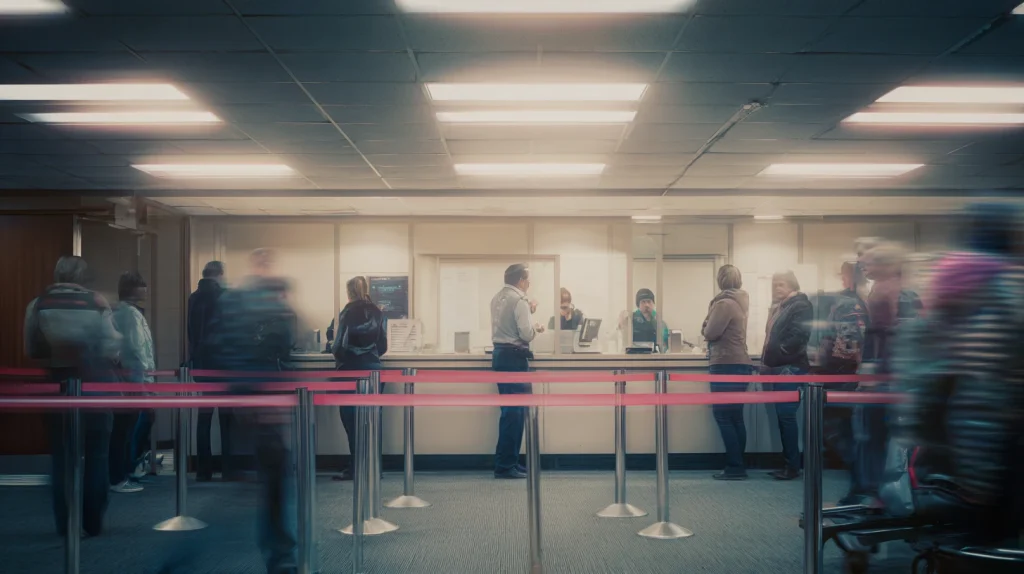
For travelers from countries not on the visa-exempt list, here’s how the France Schengen visa process works.
How to apply
All France short-stay visa applications go through the official france-visas.gouv.fr portal. You complete the form online, then attend an in-person appointment at a French visa application center or consulate in your country to submit documents and have your biometrics taken (fingerprints and photo).
You can apply up to 6 months before your travel date, though the exact window can vary slightly by consulate. During busy periods — especially spring and summer — appointment slots fill quickly. Apply early, ideally 3-4 weeks ahead at minimum.
Processing time: Most short-stay decisions come within 10-15 working days, though it can take longer during peak season. Don’t book non-refundable flights before your visa is approved.
What Documents You’ll Need
France is known for being stricter than many other Schengen countries on document quality and consistency. Generic applications get rejected. Here’s what you need and what France looks for specifically.
Valid passport Legally, a Schengen visa requires your passport be valid at least 3 months beyond your planned exit date. In practice, many consulates — France’s included — prefer to see at least 6 months of validity remaining at the time you apply, and if your passport is close to that 6-month mark, the visa duration they grant you may be shortened to keep the 3-month buffer intact. It must also have been issued within the last 10 years, have at least 2 blank pages, and be signed. France also looks at your travel history — previous visas to other countries can work in your favor as evidence that you return home after trips.
Passport photos Size 3.5 × 4.5 cm, white or light grey background, taken within the last 6 months. France rejects photos more often than many other Schengen countries. No shadows, no heavy editing, neutral expression, no glasses.
Completed application form Done online at france-visas.gouv.fr. France cross-checks your declared travel dates, accommodation, entry points, employment, and income. Any mismatch between documents is a red flag.
Biometrics Fingerprints and digital photo, taken in person at the application center. Valid for 59 months — if you’ve applied for a Schengen visa in the last 5 years, your biometrics may already be on file.
Proof of travel purpose A realistic, simple itinerary of where you’re going, where you’re staying, and what you plan to do. Keep it logical — an overly ambitious schedule that doesn’t match your finances is one of the most common silent rejection triggers. France wants to see a coherent trip, not a highlight reel.
Flight reservation You don’t need to buy a non-refundable ticket before your visa is approved. A temporary or refundable booking showing intended entry and exit dates is sufficient. Buying a ticket you might lose is not required and not advisable.
Proof of accommodation Hotel bookings with confirmation reference, address, and contact details — refundable bookings from major platforms are generally accepted. If staying with someone in France, you need a formal invitation letter (attestation d’accueil) — not a casual message. Unverifiable bookings get flagged.
Proof of financial means Typically 6 months of bank statements for France specifically (some other Schengen consulates ask for only 3), showing regular income, stable spending patterns, and sufficient funds for your trip. Current guidance suggests French consulates commonly look for evidence of at least €65 per day for the duration of your stay, though this isn’t an official published minimum and can vary by case — treat it as a reasonable planning figure rather than a hard rule. Your statements should show you can comfortably afford the trip without strain. Large last-minute deposits with no explanation are a problem — French visa officers are looking for money you consistently have, not money someone loaned you the week before your appointment.
Travel medical insurance Must cover all Schengen countries, be valid for your entire stay, and provide at least €30,000 in medical coverage. France checks that dates on the policy match your travel exactly. A policy that starts a day late or ends a day early gets rejected.
Employment or business proof If employed: a letter stating your employer, job title, length of employment, salary, and approved leave period. Keep it factual and brief. If self-employed: business registration documents and income evidence.
suggested internal link — How Much Does France Cost? Full Travel Budget Breakdown
Common Reasons France Visas Get Rejected
France has a higher refusal rate than some other Schengen countries. The most common reasons:
- Documents that look inconsistent across different parts of the application
- Travel plans that don’t match the declared finances
- Last-minute bank deposits that appear to be borrowed money
- Generic itineraries with no personal logic
- Insurance that doesn’t cover the full dates of travel
- No demonstrated ties to the home country (job, family, property) showing intent to return

France is looking for a picture that makes sense — a real person taking a real trip with real money and real reasons to come back home.
One thing worth saying: France isn’t trying to catch people out unfairly. The system rewards straightforward, honest applications. If you have a real reason to visit, real finances to support it, and a real job or family waiting at home, the application is genuinely manageable — even as a first-time applicant from a country with a higher rejection rate. The paperwork is the hard part. The decision itself, when everything is in order, usually goes through.
Passport Requirements Regardless of Visa Status
One thing that applies to everyone entering France, regardless of nationality:
Your passport must be valid for at least 3 months beyond your planned departure from the Schengen Area — that’s the legal EU minimum. Many consulates and airlines apply a stricter informal standard and recommend 6 months of validity beyond your travel dates to avoid any edge-case issues, and it’s the safer target if you’re renewing anyway.
Check your passport expiry date before booking. Passport renewal backlogs can be significant. Allow at least 6–8 weeks for renewal in most countries, longer in peak periods.
Traveling With Children
If you’re traveling to France with a minor who is not accompanied by both parents, France may ask for a parental consent letter. This applies at border control and is particularly important when:
- One parent is traveling alone with the child
- The child is traveling with someone other than a parent
- The child holds a different nationality from the accompanying adult
Requirements vary by situation but typically include: birth certificate, parental consent letter signed by the non-traveling parent, copies of both parents’ passports. If there are custody arrangements, divorce decrees or court orders may be needed. Don’t leave this to the last minute — French border officers can and do ask.
suggested internal link — Is France Safe to Visit? Honest Safety Advice for Travelers
FAQ
Do Americans need a visa to visit France in 2026? Not a traditional visa. US citizens can enter France visa-free for up to 90 days within any 180-day period. ETIAS — a new online travel authorization — was expected to launch in Q4 2026, but as of mid-2026 that date has been removed from the official EU site with no confirmed replacement; a 2027 launch now looks more likely. Nothing is required from US travelers on this front right now — check the official ETIAS page before your trip since the timeline is actively moving.
Do UK citizens need a visa for France after Brexit? No full visa is required for short tourist stays. UK nationals can enter France for up to 90 days in any 180-day period, and will eventually be subject to the same ETIAS requirement as US and Canadian travelers once it becomes mandatory — though, as above, there’s currently no confirmed launch date. The 90-day limit now applies where it did not when the UK was in the EU.
How long does a France Schengen visa application take? Most short-stay visa decisions are made within 10-15 working days. Allow at least 4–6 weeks if applying during peak season. Never apply with less than 3 weeks to spare, and don’t book non-refundable travel until your visa is approved.
Can I extend my stay in France beyond 90 days? Not on a tourist visa or (eventually) ETIAS. For stays longer than 90 days, you’d need a long-stay visa (visa de long séjour) applied for before arrival. This is a separate, more involved process designed for students, workers, or those with family ties in France.
What happens if I overstay my Schengen limit in France? Overstaying can result in fines, detention, deportation, and a ban on future Schengen entry. It’s now tracked through the Entry/Exit System (EES), which has been live at Schengen borders since April 2026 and biometrically records entry and exit — making overstays considerably more visible to authorities than under the old passport-stamp system. Don’t risk it. Keep track of your days.
ETIAS launch status verified August 2026 directly against the official EU travel-europe.europa.eu/etias page and multiple independent reports of the mid-July 2026 removal of the “Q4 2026” target — this is a fast-moving situation and the single most important update in this guide relative to earlier-2026 advice still circulating online. EES operational status (live since April 10, 2026), passport validity norms, and France-specific financial documentation guidance (6 months of statements, ~€65/day) verified against current sources, though the funds figure is not an official published minimum and should be treated as a planning guideline. Always confirm current requirements at the official france-visas.gouv.fr portal before applying, as visa policy is subject to change without much notice.