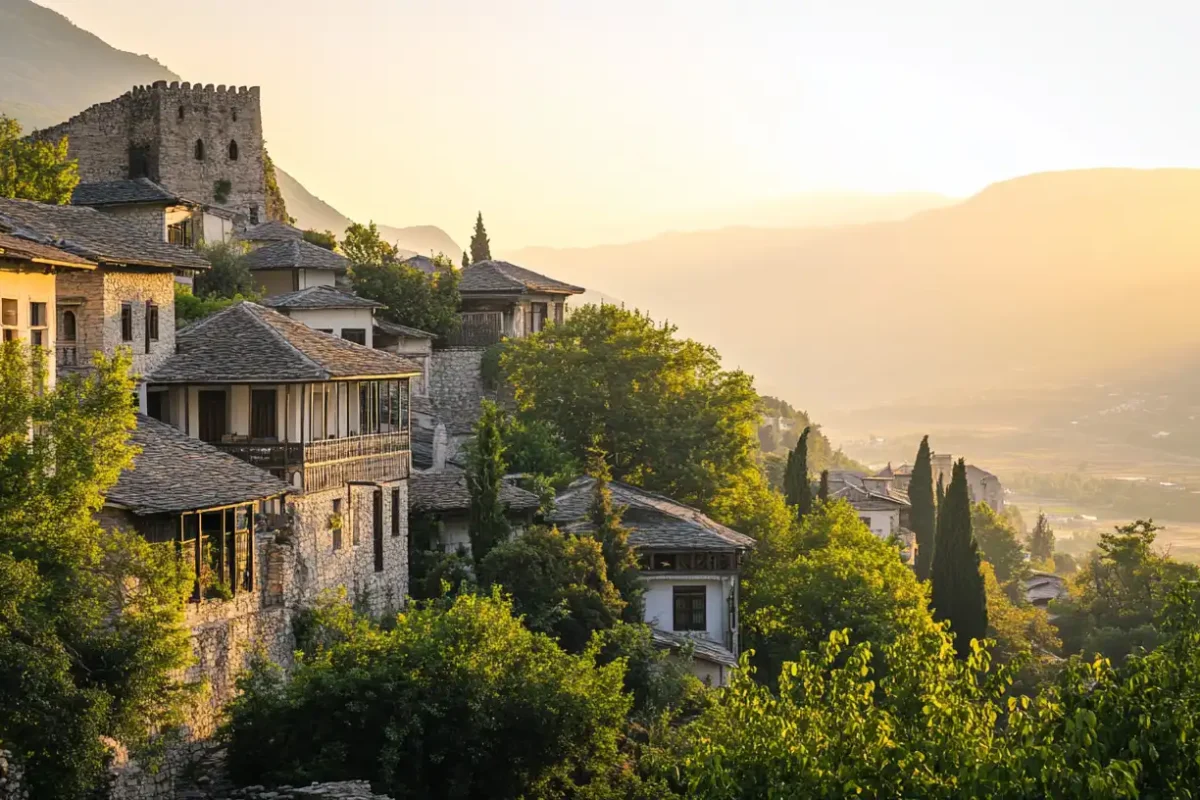
Gjirokaster is a UNESCO-listed Ottoman stone city in southern Albania, built into a steep hillside above the Drino Valley, with a castle on the ridge above and 18th-century tower houses cascading down below. It’s the birthplace of Enver Hoxha (Albania’s postwar communist dictator) and Ismail Kadare (Albania’s greatest novelist) — two men who represent everything most contradictory about the 20th century, born in the same small city. The castle contains a captured American spy plane from 1957, a Cold War artifact that landed here through circumstances that would be difficult to invent. The stone streets are genuinely medieval. The views over the valley are excellent. It is definitively worth visiting. The debate is how long.
| Best time to visit | April–June and September–November; July–August hot |
|---|---|
| Getting there | Bus from Tirana (4 hrs, $5–8); furgon from Saranda (1.5 hrs, $3); or day trip from Saranda |
| Budget per day | $35–65 USD (Albania remains very affordable) |
| Visa for Americans | No visa required; 90 days on arrival |
| Language | Albanian; English functional in tourist sector |
| Currency | Albanian Lek (ALL); ~110 ALL to $1 USD; cards in hotels, cash for markets |
Is Gjirokaster Actually Worth It?
The honest split: most travelers who spend half a day feel satisfied. Most travelers who stay overnight wish they’d stayed longer. A day trip from Saranda — the Albanian Riviera base town 90 minutes away — covers the castle and a walk through the old bazaar at a pace that doesn’t feel rushed. An overnight adds the morning quiet in the stone alleys (genuinely better than any afternoon), the Blue Eye spring on the way back to Saranda, and the ability to eat dinner at the one or two restaurants that are genuinely worth the time.
One honest negative: some travelers find Gjirokaster’s atmosphere melancholy to the point of bleakness, particularly in the off-season when the tourist trickle thins out. The city has struggled economically, and the population has declined. The castle grounds contain a half-functional museum, an American spy plane, and some indifferent signage. The old bazaar has carpet shops that feel perfunctory. You are seeing a city that has preserved its architecture better than its vitality. That’s true and worth knowing before you go.
The Castle
The Gjirokaster Fortress sits 300m above the town on the ridge, built and rebuilt from the 4th century through the Ottoman period. The current structure is mostly from the 17th–19th centuries. Entry costs 400 ALL ($3.65 USD). The climb from the old bazaar takes 20–30 minutes on cobblestones; you can also drive to a parking area near the top.
Inside the castle: the Museum of Arms displays weapons captured from German and Italian forces in World War II — reasonably interesting for the historical context, less interesting for the labeling. The clock tower is climbable and has the best view. The American spy plane — a Lockheed T-33 forced down in 1957 during a Cold War reconnaissance mission — sits on the castle grounds with minimal explanation. It’s a surreal object in a surreal setting. The inscription on a plaque nearby was apparently updated at various points depending on the political relationship between Albania and the United States. The plane is genuinely one of the stranger things you can stand next to in the Balkans.
The Old Bazaar and Tower Houses
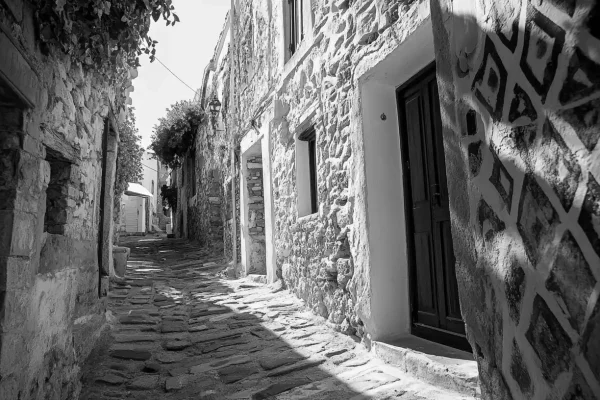
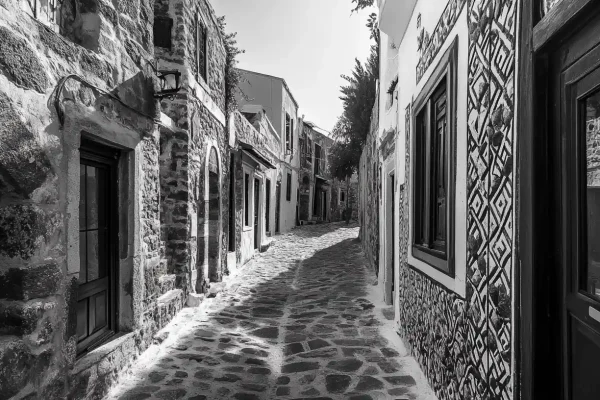
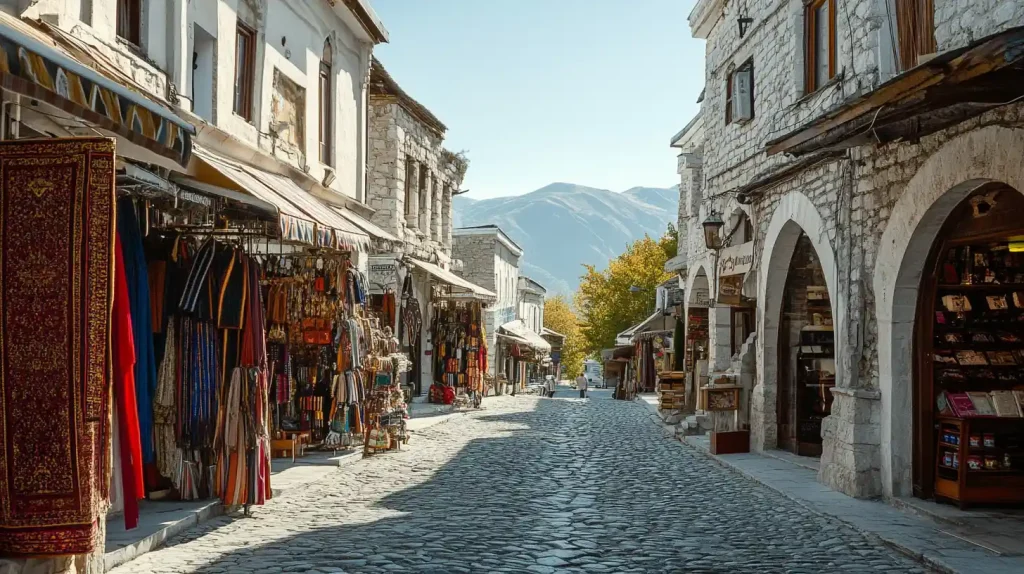
The old bazaar (Pazari i Vjetër) runs along the slope below the castle — covered shops, a few restaurants, the cobblestoned main drag. It’s smaller than the name suggests and the commercial energy is limited, but the architecture is well-preserved and the views back up toward the castle are excellent from several points. Walk it slowly in both directions and look at the facades rather than the shop windows.
The Ottoman tower houses (kulla) that define Gjirokaster’s appearance are technically difficult to enter: most are private residences or closed. The Skënduli House (admission 300 ALL/$2.75 USD) and the Zekate House (free, or by donation) are the two accessible examples. Zekate is the better visit — an 18th-century two-tower residence still owned by descendants of the original family, with the original furnishings partially intact and a rooftop view over the city. The family member who shows you around often includes family history going back 200 years. Allow 45 minutes.
Day Trip Add-On: The Blue Eye
Halfway between Gjirokaster and Saranda, the Blue Eye (Syri i Kaltër) is a freshwater spring emerging from an underground cave — a deep, circular pool of intensely blue-turquoise water surrounded by beech trees and a small stream. The color comes from the depth of the cave below (divers have reached 50 meters and not found the bottom). Swimming is officially prohibited to protect water clarity; many visitors ignore this. Entry 200 ALL ($1.82 USD). Combine it with a Gjirokaster day trip as a natural stop on the 90-minute drive back to Saranda.
Getting to Gjirokaster from the US
Fly to Tirana (TIA) — connections via Vienna, Rome, Istanbul, or London. Round trips from US cities typically $700–1,000. From Tirana, furgon (shared minivan) or bus to Gjirokaster runs daily, about 4 hours, $5–8 USD. From Saranda (the main Albanian Riviera base), furgon to Gjirokaster takes about 1.5 hours, $3 USD. Most travelers combine Gjirokaster with the Albanian Riviera circuit: Saranda base, day trip or overnight in Gjirokaster, back to Saranda for the coast.
Where to Stay
Budget ($15–30/night): Stone City Hostel and Guesthouse Kotoni — both well-located in the old city, both with helpful staff and good information about local context. Stone City’s terrace has an excellent view of the castle.
Mid-range ($45–80/night): Gjirokastra Boutique Hotel — a converted old city building with the best rooms in the UNESCO zone. Guesthouses in the old town consistently offer better atmosphere than modern hotels on the valley floor below.
Practical Tips
Comfortable shoes with grip — Gjirokaster’s cobblestones are steep, uneven, and in some places polished smooth by centuries of foot traffic. In rain they become genuinely slippery. Don’t visit in flip-flops.
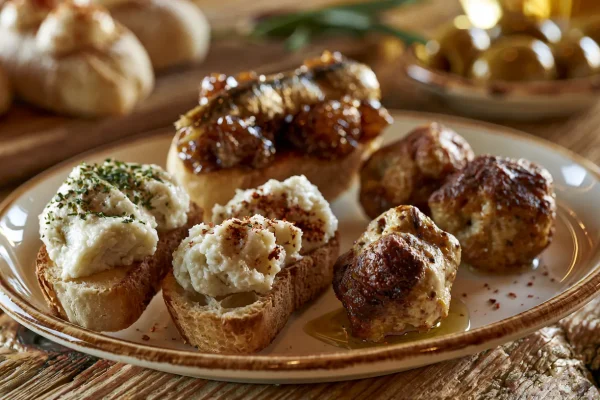
Dinner: Kujtimi Restaurant in the old bazaar consistently has the best food in the city — lamb byrek (flaky pastry stuffed with lamb and onion), grilled meats, local wine. Budget 1,500–2,500 ALL ($14–23 USD) per person for a full dinner with drinks.
Frequently Asked Questions
Is Gjirokaster worth visiting in Albania?
Yes — the UNESCO-listed Ottoman stone city and hilltop fortress are genuinely impressive, and there’s nothing quite like it elsewhere in Albania. The debate is duration: a half-day day trip from Saranda covers the highlights adequately. An overnight lets you experience the city’s morning calm, visit the Zekate House, and add the Blue Eye spring. Skip it only if your Albania itinerary is very tight and you’ve already prioritized the Riviera and Tirana.
How do I get from Saranda to Gjirokaster?
Furgon (shared minivan) from Saranda to Gjirokaster runs several times daily, taking about 1.5 hours and costing around 300 ALL ($2.75 USD). A taxi costs about 3,000–4,000 ALL ($27–36 USD) one way and allows you to stop at the Blue Eye spring on the return. Many guesthouses in Saranda can arrange day tours combining both for $30–50 per person.
What is the Gjirokaster Castle famous for?
The Gjirokaster Fortress is a medieval Albanian castle rebuilt extensively during the Ottoman period, sitting 300m above the city on a limestone ridge. It’s famous for its view, its Cold War-era American spy plane (a Lockheed T-33 shot down in 1957), its Museum of Arms, and being one of the best-preserved medieval fortresses in Albania. Entry 400 ALL ($3.65 USD).
Is Gjirokaster safe to visit?
Yes — Gjirokaster is safe for tourists. Albania generally has low crime rates against foreigners, and Gjirokaster is a small city where the main concerns are the uneven cobblestones and the castle climb rather than personal safety. Normal travel precautions apply.
How many days do I need in Gjirokaster?
One day (half-day from Saranda or a full overnight) covers the castle, old bazaar, and Zekate House. Two days would allow a more relaxed pace and the opportunity to hire a guide for the surrounding villages and countryside. Most travelers do half a day to one day; those who stay longer uniformly say the morning atmosphere and extra time at the Zekate House justified it.