Most Americans who go to Israel spend their time in Jerusalem and Tel Aviv. Both are extraordinary. But the north — the Galilee, the Golan Heights, the Jezreel Valley — is where the country’s best wine comes from, where the landscape shifts from Mediterranean to almost Scottish, where the Sea of Galilee sits 200m below sea level reflecting the hills, and where Jesus of Nazareth spent most of his life. The archaeological sites here — Capernaum, Tiberias, Bet She’an — are as significant as anything in Jerusalem, with a fraction of the crowds. The wineries are producing wines that are finally being taken seriously internationally. And Akko, on the Mediterranean coast, contains a Crusader city that is one of the finest intact medieval port complexes in the world. None of this gets the coverage it deserves in American travel writing.
| Best time to visit | March–May and October–November; summer is hot and July–August crowded |
|---|---|
| Getting there | Fly Tel Aviv (TLV); car rental recommended for the north (2.5 hrs from TLV) |
| Budget per day | $120–180 USD (comparable to Western Europe) |
| Visa for Americans | No visa required; passport valid 6+ months |
| Language | Hebrew and Arabic; English widely spoken throughout |
| Currency | New Israeli Shekel (NIS/ILS); cards widely accepted; ~3.7 NIS to $1 |
Is Northern Israel Worth the Drive from Tel Aviv?
Absolutely. The north is the best argument for renting a car in Israel. Public transport reaches the main cities but misses the wineries, the smaller archaeological sites, and the flexibility to stop at a Druze village for fresh pita and labneh on the road to the Golan. A 3–5 day loop from Tel Aviv through Akko, the Galilee, Golan Heights, and back via Nazareth covers the highlights and can be extended indefinitely if the wine region captures you.
Important current context: Check US State Department travel advisories before booking. Northern Israel, particularly near the Lebanese border and Golan Heights, has experienced heightened security situations in recent years. Conditions change; verify current status before finalizing plans.
Akko: The Crusader City
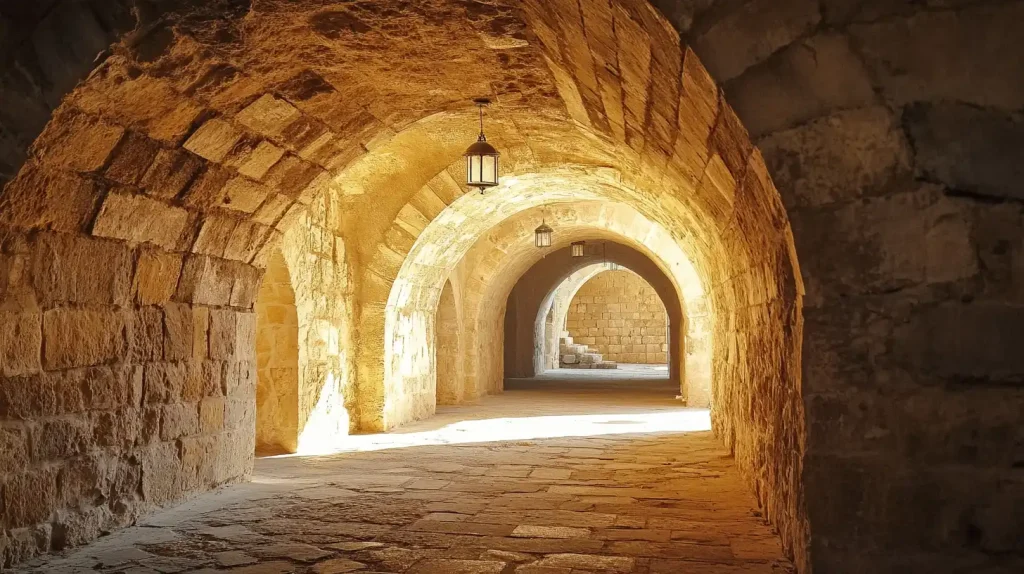
Akko (also spelled Acre) is on the Mediterranean coast, about 25 minutes north of Haifa, and contains one of the best-preserved Crusader cities in the world — a UNESCO World Heritage Site. The Crusaders built their administrative center here after Jerusalem fell in 1099, and the city remained in Crusader hands until 1291. What you see today is the underground city: enormous Crusader halls, a refectory, a treasury, and a labyrinthine network of tunnels that extended to the sea, excavated and opened to visitors. Entry to the Crusader City complex costs about NIS 40 ($11 USD). Allow 2–3 hours.
Akko’s old city still functions as a working Arab town above the Crusader level — the bazaar, the mosques, the fishing harbor all operate normally. The restaurants in the harbor serve some of the best fish in Israel; Uri Buri on the waterfront (reserve ahead) is one of Israel’s finest fish restaurants at $80–120 per person for the full experience. The more honest option for the same fish quality: the smaller harbor restaurants where the boats dock, for a third of the price.
The Galilee Wine Region
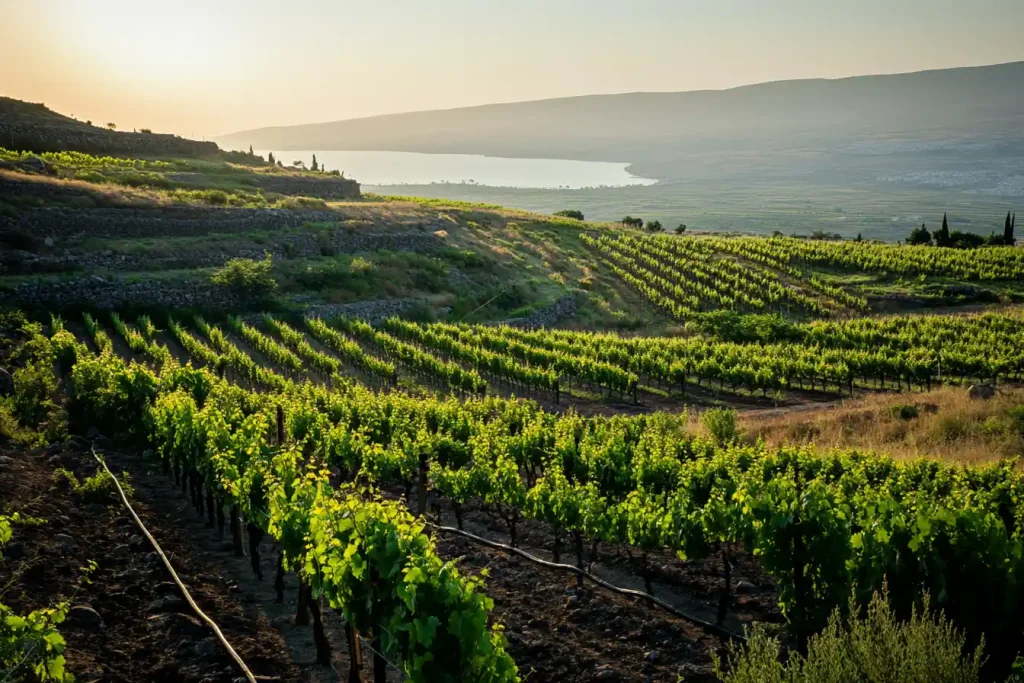
Israel’s wine industry has been transformed in the past 20 years, and the Galilee and Golan are where the best bottles come from. The combination of altitude (Golan vineyards sit at 700–1,000m), cooler temperatures, and basalt-rich volcanic soils produces particularly good Cabernet Sauvignon, Syrah, and increasingly interesting white varieties. Wineries are concentrated around the towns of Metulla and Katzrin.
The easiest visit: Yarden Winery near Katzrin on the Golan Heights — the country’s largest quality winery, consistently producing good wines, with a visitor center, organized tastings ($15–20 per person for a flight), and a stunning view over the volcanic plateau. Reservations recommended in spring and fall. The Castel Winery in the Judean Hills (technically south of the Galilee, near Jerusalem) and Domaine du Castel are the most critically acclaimed Israeli producers; worth tracking down their wines even if you can’t visit.
The Sea of Galilee (Kinneret)
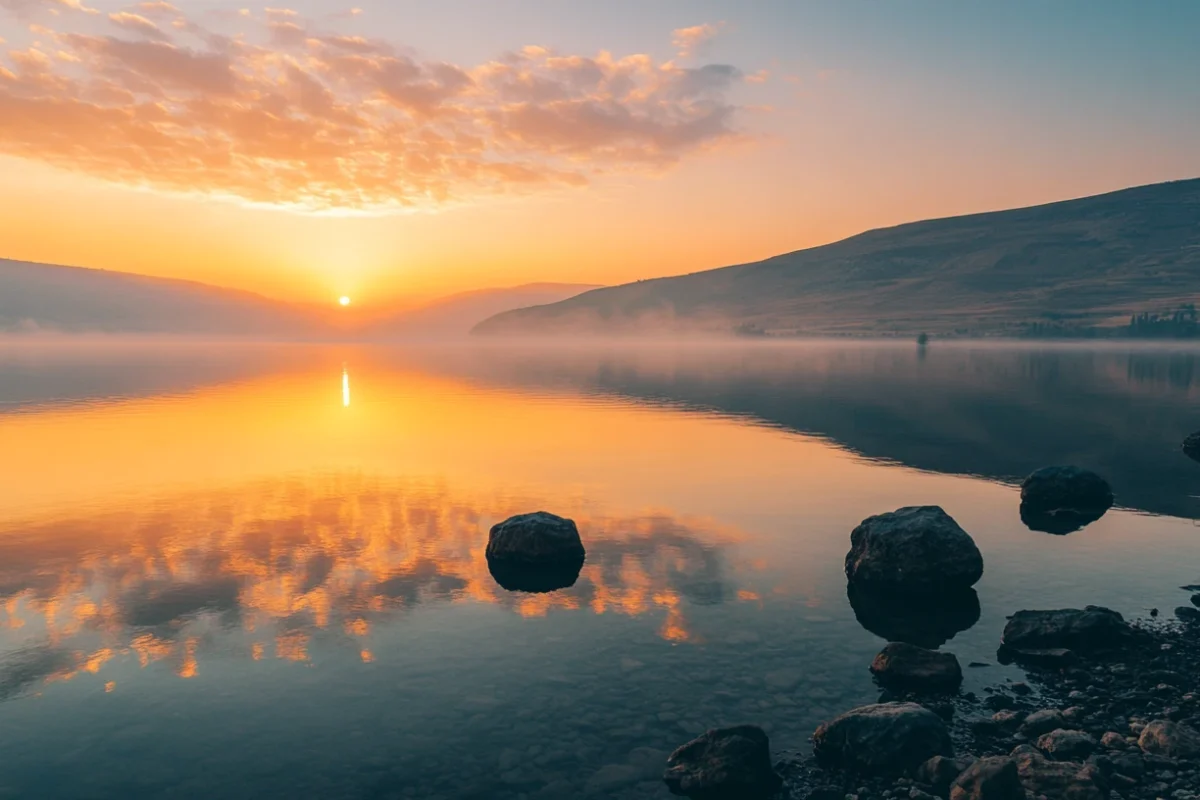
The Sea of Galilee is a freshwater lake, 21km long, 200m below sea level, and surrounded by the hills of Galilee and Golan Heights. It is the primary water reservoir for Israel and one of the most historically significant bodies of water in the world — nearly every major event of Jesus’s ministry in the Gospels is set on or near its shores. Whether you’re interested in that context or not, the lake is beautiful and the villages around it have a lived-in character that’s genuinely appealing.
Capernaum (Kfar Nahum), on the northwest shore, was the town where Jesus based his ministry — the ruins of the 4th-century synagogue built over the 1st-century synagogue where he is said to have taught are still visible. Entry NIS 15. The octagonal Byzantine church built directly over the site identified as Peter’s house is an extraordinary piece of religious architecture. Spend 90 minutes here.
Tiberias, on the west shore, is the main city and has decent restaurants and hotels at mid-range prices. The hot springs just south of Tiberias (Hamat Tiberias) have been used since Roman times; entry about NIS 35.
Bet She’an: The Roman City
In the Jezreel Valley south of the Galilee, Bet She’an is one of the best-preserved Roman cities in the Middle East — a significant colonnaded cardo, a large theater, Byzantine mosaics, and the general atmosphere of walking through a Roman city that hasn’t been buried under centuries of medieval construction. Entry NIS 35 ($9.50 USD). Less visited than Caesarea (the other major Roman site in Israel) and significantly more impressive in scale. Allow 2 hours. Come in the morning before the heat builds.
Getting to Northern Israel from the US
Fly to Tel Aviv Ben Gurion (TLV) — direct flights from New York, Los Angeles, Miami, and other US hubs, typically $800–1,100 round trip on United, Delta, or El Al. From Ben Gurion, rent a car at the airport (prices start around $50–70/day for a compact; book well ahead in spring and holidays). Drive north on Route 2 or Route 6 to Akko and the Galilee — about 2–2.5 hours to Akko, 2.5–3 hours to Tiberias.
Where to Stay
Budget ($60–90/night): Guesthouses in Tiberias and smaller Galilee villages. The city of Safed (Tzfat) is an artists’ colony and spiritual center at 900m altitude with reasonably priced guesthouses and one of the most atmospheric old cities in Israel.
Mid-range ($100–160/night): Boutique hotels around the Sea of Galilee — Scots Hotel in Tiberias (a historic 19th-century building) or small agritourism properties in the Galilee hills.
Splurge ($200+/night): Several luxury boutique hotels in the Galilee wine country, some attached to wineries.
Practical Tips
A car is essential for the north. Public buses connect major cities (Haifa, Tiberias, Akko) but don’t serve wineries, archaeological sites, or the Golan Heights practically.
Food in the Galilee is some of Israel’s best: Druze flatbread and fresh labaneh from roadside stands, St. Peter’s fish (tilapia) from the Sea of Galilee, local honey and olive oil at farm stands on the Golan. Budget for eating well — this is one of the genuine pleasures of the north.
Check current border/security status near the Lebanese border before visiting the northernmost areas (Metulla, Rosh Hanikra, etc.).
Frequently Asked Questions
Is it safe to travel in northern Israel?
The Galilee interior, Sea of Galilee, and main tourist areas are generally well-visited and considered safe by most international travel standards. Areas near the Lebanese border and northern Golan have experienced varying security situations. Always check current US State Department advisories before travel — conditions in the region change. Most organized tourism to the Galilee, Akko, and Bet She’an operates normally.
What wine should I look for from northern Israel?
The Golan Heights Winery (brand: Yarden, Gamla, Hermon) produces consistently reliable bottles across price points. For serious wine: Galil Mountain Winery, Dalton Winery, and Pelter Winery (Upper Galilee). For the most critically acclaimed Israeli wine overall: Domaine du Castel and Castel Winery (Judean Hills, near Jerusalem). Israeli Cabernet Sauvignon and Syrah from volcanic Golan soils are the best expressions of what the region does.
How do I visit Akko from Tel Aviv?
By train from Tel Aviv to Akko via Haifa — about 2.5 hours total, direct trains run frequently, NIS 45 ($12 USD). By car, about 1.5–2 hours from Tel Aviv on Route 2 or Route 6 to Route 4 north. Walking the old city and Crusader halls is easy from the train station. A day trip from Tel Aviv is very manageable.
What is special about the Galilee region of Israel?
The Galilee is historically the region where Jesus spent most of his life and ministry — nearly every major Gospel event outside Jerusalem is set here. It’s also Israel’s best wine region (particularly the Golan Heights and Upper Galilee), has the largest freshwater lake in the country (the Sea of Galilee), contains excellent archaeological sites (Capernaum, Bet She’an, Tzipori), and has a diverse living population of Jews, Arabs, Druze, and Christians that makes it culturally distinct from the rest of Israel.
Do I need a car to visit the Galilee?
Strongly recommended. Buses connect major cities (Haifa, Tiberias, Nazareth, Akko) but the wine country, smaller archaeological sites, Golan Heights viewpoints, and Druze villages are not practically accessible by public transport. Renting a car from Tel Aviv airport and driving north is the standard approach for independent travelers.