In July, while the rest of the Arabian Peninsula bakes at 48°C, the Dhofar mountains above Salalah receive the Indian Ocean monsoon and turn green. Not slightly green — emerald, rolling, misty green, with waterfalls coming off limestone escarpments and frankincense trees dripping with moisture and temperatures sitting in the low 20s Celsius. The rest of Oman is a furnace. Salalah in July is wearing a jacket in the evenings. This phenomenon — the Khareef — has been attracting Gulf residents for decades and is almost completely unknown to American travelers. That gap is worth closing.
| Best time to visit | Mid-July to mid-August (peak Khareef, greenest and wettest) |
|---|---|
| Getting there | Fly to Muscat (MCT), 90-min domestic flight to Salalah (SLL); or drive 1,100km |
| Budget per day | $80–150 USD (mid-range); $200+ during peak Khareef season |
| Visa for Americans | eVisa required ($20 USD) at evisa.rop.gov.om; or visa on arrival |
| Language | Arabic; English at hotels and major attractions |
| Currency | Omani Rial (OMR); 1 OMR ≈ $2.60 USD. Cards at hotels; carry cash for markets |

Is the Khareef Trip Worth It from the US?
If you’re coming specifically for the Khareef from the US, it’s a long-haul trip — expect 16–20 hours of travel including the domestic leg from Muscat. The question is whether the phenomenon justifies it on its own. The honest answer: the Khareef alone might not justify flying from New York to Salalah specifically. But Salalah combined with a few days in Muscat and the Wahiba Sands desert — a logical 10–12 day Oman itinerary — is an exceptional trip with the Khareef as one of several highlights.
If you’re already in the Gulf region (visiting Dubai, Abu Dhabi, Muscat), the flight to Salalah is short and cheap. In that context, the Khareef is a no-brainer addition. The experience of stepping off a plane into a region that has no business being green and cool in July, but is, is genuinely disorienting in the best possible way.
Wadi Darbat: The Khareef at Its Most Dramatic
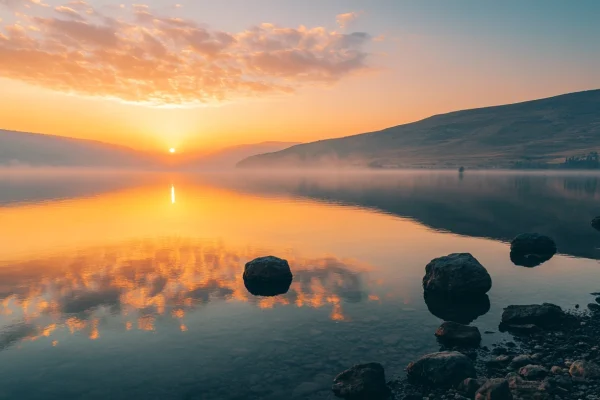
Wadi Darbat is about 30km east of Salalah, in the Dhofar mountains. During the Khareef, water collects above the escarpment and creates a lake surrounded by green mountains and fed by several waterfalls that cascade down the limestone cliffs. At peak season (mid-July to mid-August), the main waterfall can be genuinely powerful — loud enough to hear from the road.
Access is by car. The road winds up through the mountains with views that keep getting better. At the wadi itself, there are paddle boats for rent (about 3 OMR / $8 USD per hour), and flat areas along the shore where Omani families spread out picnic blankets and spend the day. Camels graze on the grass beside the lake — actual camels, on actual grass, in Oman, in July. The cognitive dissonance never quite resolves.
Come early in the morning (before 9am) to avoid the weekend crowd from Salalah. The fog burns off by mid-morning and the colors are richest in the morning light anyway. The drive up through the mountains is part of the experience — the mist on the road is thick enough that your headlights make sense at 9am.
Al Mughsail Beach and the Blowholes
About 40km west of Salalah, Al Mughsail is a long white sand beach backed by limestone cliffs. During Khareef, the Arabian Sea swells create dramatic blowhole effects — seawater shoots up through fissures in the clifftop, sometimes reaching 10–15 meters in height. The blowholes are loud and unpredictable. Children find them terrifying and delightful simultaneously.
The beach itself during Khareef is windswept and dramatic rather than calm and swimmable — the monsoon keeps the sea rough. The drive west along the coast from Salalah to Al Mughsail is about 45 minutes through limestone coastal hills with frankincense trees visible from the road.
Marneef Cave, just below the blowhole viewpoint, is a sea cave accessible on foot from the beach. The interior is cool and shadowed, with the ocean visible through several openings. Not a tourist installation — just a limestone cave you walk into. Free.

Frankincense: Salalah’s Ancient Trade
Dhofar was the primary source of frankincense for the ancient world for 3,000 years. The trade route extended from here to ancient Egypt, Rome, and the courts of the Levant. That history is still visible: the Boswellia sacra trees — the frankincense trees — grow wild in the Dhofar mountains, their resin still harvested by hand. During Khareef they’re unusually lush and green instead of their normal sparse dry-season appearance.
Al Baleed Archaeological Park in Salalah is a UNESCO site — the ruins of the ancient port city of Zafar, which was the main export hub of the frankincense trade from the 1st to 13th centuries. The Frankincense Land Museum adjacent to the site tells this story properly, with good English-language interpretation. Entry to both is about 4 OMR ($10 USD) combined.
Buy actual frankincense at Haffa Souq market — blocks of resin in small white, yellow, and pale green lumps, sold by weight for about $3–8 USD per 100g. It’s the real thing, not a tourist product. You burn it on a small charcoal brazier (mabkhara) available for $5–10 USD at the same market.
Getting to Salalah from the US
Most Americans route through Muscat (MCT) or Dubai. From New York, flights to Muscat run $700–1,100 round trip on Oman Air (with a brief stop, often UAE) or Qatar Airways via Doha. From Muscat, domestic Oman Air flights to Salalah (SLL) run 90 minutes and cost about $60–120 USD one way. During Khareef season (July–August), these flights book up fast — secure your Muscat–Salalah ticket at least 6–8 weeks in advance. Driving the 1,100km from Muscat takes 10–12 hours through desert and is a real drive, not a scenic road trip. Fly.
Where to Stay
Budget ($50–80/night): Small hotels and furnished apartments throughout Salalah — the Salalah City Hotel and similar properties work well as a base. Book early; accommodation fills during peak Khareef.
Mid-range ($100–180/night): Millennium Resort Salalah — beachfront, pool, good breakfast, well-reviewed. Convenient location between town and the coastal attractions.
Splurge ($250+/night): Anantara Al Baleed Salalah Resort — directly overlooking the archaeological site, two pools, high-quality rooms. One of the better luxury options in Oman outside of Muscat.
Best Time for Khareef
Mid-July to mid-August is the peak — maximum greenery, full waterfalls at Wadi Darbat, mist rolling through the Dhofar mountains. June can be variable as the monsoon sometimes arrives late. By September the monsoon starts retreating and the waterfalls weaken, though the landscape stays distinctly green through late September. Early Khareef (mid-June to early July) is worth considering if you can get significantly cheaper flights — conditions are already good, just not at their absolute peak.
Practical Tips
Rent a car in Salalah. The main attractions (Wadi Darbat, Al Mughsail, the frankincense sites) are 20–50km from town. Taxis exist but are slow and inconsistent for day trips. Car rental runs $30–50 USD/day.
Pack a light rain jacket and one warm layer for evenings. The Khareef means drizzle and mist, not tropical downpours — but the evenings get genuinely cool and the mountain roads can be wet.
Khareef driving: fog on the mountain roads can reduce visibility to under 50m in the mornings. Drive slowly and use fog lights. The roads are good quality; the weather is the variable.
Currency: the Omani Rial is strong. 1 OMR = about $2.60 USD, so prices that look small are often reasonable but not cheap. Meals at local restaurants: 2–4 OMR ($5–10 USD). Good hotel rooms: 40–70 OMR ($100–180 USD) per night during Khareef.
The one thing most visitors miss: the post-Khareef window. Late September to October, the mountains are still visibly green but crowds have dropped and prices are lower. Worth considering if your travel schedule is flexible.
Frequently Asked Questions
What is the Khareef season in Salalah?
Khareef is Salalah’s monsoon season, running from late June through September. The Indian Ocean monsoon brings drizzle, mist, and cool temperatures (20–27°C) to the Dhofar region, turning the normally dry mountains bright green. It’s a rare natural phenomenon — the only place in the Arabian Peninsula that experiences a monsoon transformation of this kind.
When is the best time to visit Salalah for the Khareef?
Mid-July to mid-August for peak conditions — maximum greenery, full waterfalls at Wadi Darbat, and the characteristic fog rolling through the mountains. June and September are shoulder Khareef months with good conditions but less intensity.
How do I get from Muscat to Salalah?
Fly. Oman Air operates multiple daily flights on the 90-minute route for about $60–120 USD one way. Driving is 1,100km through desert and takes 10–12 hours. Domestic flights book up fast in July–August; reserve at least 6–8 weeks ahead.
What is Wadi Darbat in Salalah?
Wadi Darbat is a valley about 30km east of Salalah where water collects during Khareef to form a lake surrounded by green mountains and fed by waterfalls. It’s the most dramatic Khareef landscape in Dhofar. Camels graze on the grass beside the water. Access by car, about 45 minutes from Salalah town.
Is Salalah safe for American tourists?
Very safe. Oman consistently ranks as one of the safest countries in the Middle East for international tourism. Salalah has a relaxed, family-oriented atmosphere. The main precautions are standard Middle East travel practicalities: dress modestly in public, ask permission before photographing people, and avoid swimming in rough Khareef seas.